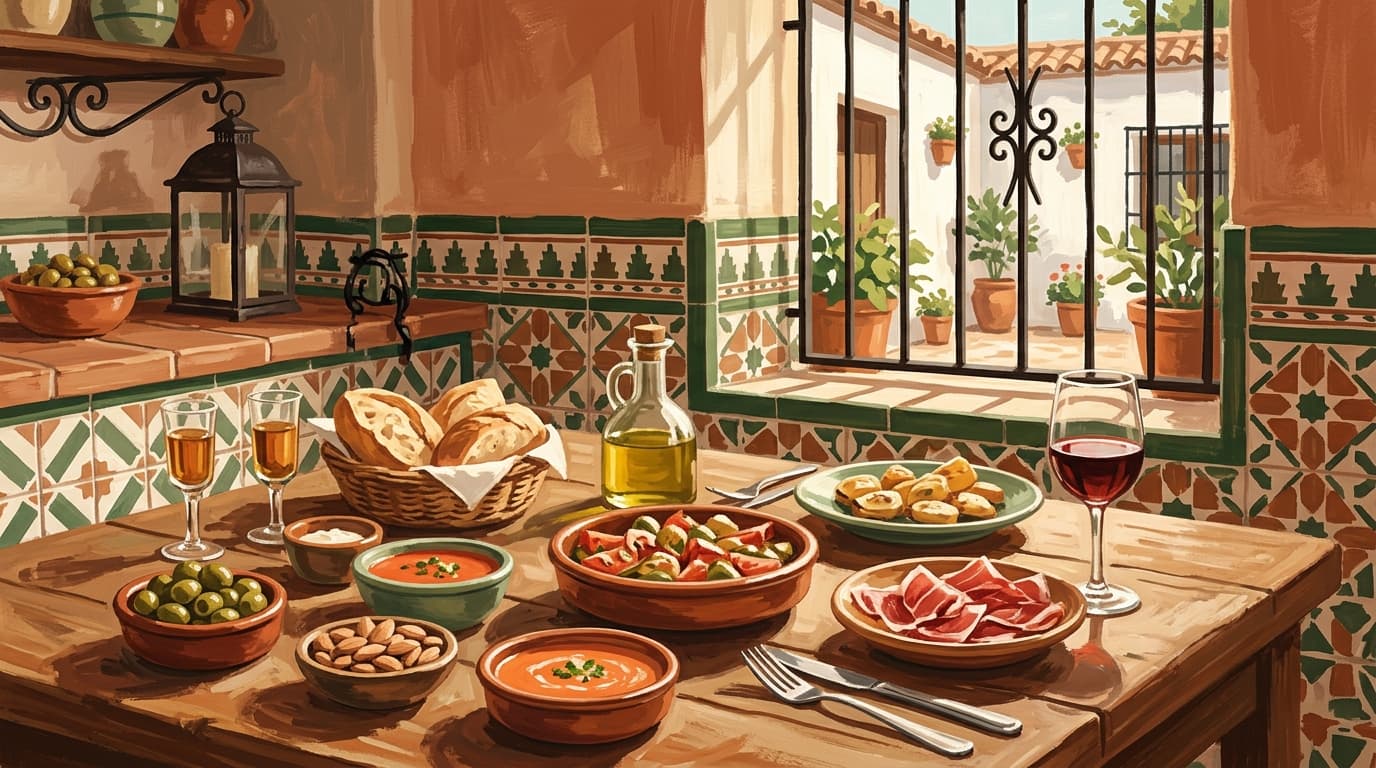
food drink
Master the Art of the Andalucían Kitchen: The Best Cooking Classes in Southern Spain
Discover the secrets of the Andalucían kitchen, from masterclasses in the markets of Sevilla to sherry-infused cooking in the hills of Cádiz.
food drink
Master the Art of the Andalucían Kitchen: The Best Cooking Classes in Southern Spain
14 April 2026 · 6 min read · 1,315 words
Skip the pre-packaged tourist menus and learn why a simple tomato soup in Córdoba tastes worlds apart from anything else. From the sherry-soaked kitchens of Jerez to the seafood stalls of Cádiz, these cooking classes offer a genuine seat at the Andalucían table.
To truly understand Andalucía, you have to spend time in its kitchens. While the region is famous for its monuments, the real pulse of southern Spain is found in the rhythmic chop of a knife against a wooden board and the hiss of olive oil hitting a hot pan. For the food-loving traveller, a cooking class is more than just a way to spend an afternoon; it is an initiation into a culture where the quality of an ingredient is debated with the same passion as a football match.
Andalucían cuisine is defined by its despensa (pantry). It is a larder stocked with liquid gold olive oil from Jaén, salt-baked tuna from the Almadraba nets of Cádiz, and the intense, sun-dried peppers of the eastern provinces. Taking a class here allows you to deconstruct these flavours. You learn that a sofrito—the slow-cooked base of onions, garlic, and peppers—cannot be rushed, and that the secret to the perfect salmorejo (a thick, cold tomato and bread soup) lies entirely in the emulsification of the oil. Whether you are learning to flip a tortilla in a Triana market or baking Moorish-influenced pastries in a mountain village, these experiences provide the skills to take a piece of the south home with you.
The Ritual of the Market Tour
Most high-quality cooking experiences in Andalucía begin not at the stove, but at the Mercado de Abastos (produce market). This is where the education starts. Walking through the aisles of the Mercado Central in Cádiz or the Atarazanas in Málaga with a local chef is a revelation. You learn to spot the difference between jamón serrano and the acorn-fed jamón ibérico de bellota, identifying the oily sheen and dark hoof that signal top-tier quality.
Market tours teach you about seasonality. You might see the first habas (broad beans) of spring, which will later be sautéed with salty ham, or the arrival of boquerones (anchovies) so fresh they still smell of the Atlantic. These tours are essential because they ground the cooking in geography. You aren't just buying a fish; you are learning about the specific currents of the Strait of Gibraltar that make the local seafood so distinctive. By the time you reach the kitchen, you have a newfound respect for the raw materials you are about to transform.
Beyond the Surface: Tapas and Small Plate Mastery
While many visitors think of tapas as a specific type of food, it is actually a way of eating. In a dedicated tapas class, you move beyond the basic olives and cheese to master more complex platillos (small dishes). A staple of these classes is Rabo de Toro (oxtail stewed in red wine). It is a lesson in patience, requiring a slow braise until the meat falls away from the bone in a gelatinous, savoury sauce.
You will also likely tackle the Tortilla de Patatas. While it looks simple, the technique of frying the potatoes and onions in a generous amount of olive oil until they are soft—not crisp—is a skill that requires practice. The high-stakes moment comes with the vuelta (the flip), using a plate to turn the heavy omelette over to cook the other side. Mastering this in a professional kitchen gives you the confidence to recreate it at Sunday brunches for years to come.
[AFFILIATE: restaurant booking in Sevilla]The Rice Debate: Paella and Arroz Caldoso
Though the spiritual home of paella is Valencia, Andalucía has its own deep-rooted rice traditions, particularly in the wetlands around the Guadalquivir river. In an Andalucían cooking class, you might learn that the locals often prefer Arroz Caldoso—a "soupy" rice dish usually packed with shellfish or lobster.
Classes focusing on rice teach you the importance of the socarrat—the toasted, crunchy layer of rice that forms at the bottom of the pan. You will learn to use azafrán (saffron) for depth and Pimentón de la Vera (smoked paprika) for that characteristic earthy heat. Understanding the ratio of stock to grain is the difference between a mushy failure and a masterpiece that earns a round of applause at the table.
Ordering Like a Local
Before you step into a kitchen, you must understand how to navigate a menu. When you sit down at a traditional taberna, look for the sugerencias del día (daily suggestions) scrawled on a chalkboard; these are the items the chef found freshest at the market that morning.
Don't just order a ración (a full plate) of everything. Start with a tapa or a media ración (half portion) to see if you like the dish. If the house speciality is fritura malagueña (a mix of fried fish), ensure the oil is fresh and the batter is light and crispy. Always ask which sherry pairs with your meal—a chilled Manzanilla with seafood or a nutty Amontillado with grilled meats can elevate a simple meal into something extraordinary. If you see locals standing at the bar rather than sitting at tables, join them; the atmosphere is better and the service is often faster.
Where to Find the Best
Sevilla
Taller Andaluz de Cocina: Located inside the Mercado de Triana, this school is ideally placed for market-to-table learning. They specialise in traditional Andalucían classics. You start by picking out ingredients at the stalls surrounding the school before heading into their modern kitchen to prepare a four-course meal, usually featuring a seasonal cold soup and a traditional rice dish.
Cooking Olé: A more intimate setting that focuses heavily on the social aspect of Spanish dining. Their tapas classes are excellent for those who want to learn 3-4 different dishes in a single session, often including gambas al ajillo (garlic prawns) and a proper sangría (though they will tell you locals usually drink tinto de verano).
[AFFILIATE: restaurant booking in Sevilla]Málaga
Spain Food Sherpas: This group offers one of the most comprehensive market tours in the city, taking you through the historic Atarazanas market. Their cooking classes are held in a beautiful space in the city centre where the focus is on cocina malagueña. You might learn to make ajoblanco (a chilled almond and garlic soup) or the specific way Málaga locals prepare their fried fish.
Los Patios de Beatas: While primarily a wine bar and restaurant, they often host specialised workshops focusing on the marriage of food and wine. This is the place to go if you want to understand how the complex wines of the Sierras de Málaga interact with modern interpretations of local dishes.
[AFFILIATE: restaurant booking in Málaga]Cádiz and Vejer
Annie B's Spanish Kitchen: Based in the stunning hilltop town of Vejer de la Frontera, Annie is a local legend. Her classes are world-renowned, particularly those focused on Sherry and the tuna of the coast. A day with Annie usually involves a deep dive into the Sherry Triangle and learning how to use different types of Fino and Oloroso in your cooking.
Escuela de Hostelería de Cádiz: For those looking for a more formal atmosphere, the city's hospitality school often runs workshops. Being in Cádiz, the focus is almost always on the sea. You will learn the intricacies of cleaning and preparing fresh fish and the art of making tortillitas de camarones (crispy shrimp fritters).
Granada
Cookín’ Granada: Located near the historic centre, this school focuses on the Moorish influence that defines the city's palate. You will work with spices like cumin, coriander, and cinnamon, learning how these flavours transitioned into the modern Spanish kitchen. Their market tour takes you to the Mercado de San Agustín, a favourite amongst local chefs.
[AFFILIATE: restaurant booking in Granada]More guides
Where to Eat in Nerja: A Food Lover’s Guide to the Axarquía Coast
From wood-fired paella on the sands of Burriana to the crowded tapas bars of the old quarter, Nerja offers an authentic taste of the Málaga coastline.
6 min read
Read guide →
The Best Places to Eat in Jaén: A Guide to the World Capital of Olive Oil
Jaén remains one of the few places in Spain where the tradition of the free tapa is still treated with reverence. It is a city defined by its golden olive oil and a stubborn commitment to honest, seasonal cooking.
6 min read
Read guide →
Jamón Ibérico: The Ultimate Guide to Andalucía’s Cured Gold
Discover the art of Jamón Ibérico, from the acorn-fed pastures of Jabugo to the high-altitude curing rooms of Trevélez. Learn how to decode the colour-coded labels and where to find the finest hand-carved plates in Andalucía.
6 min read
Read guide →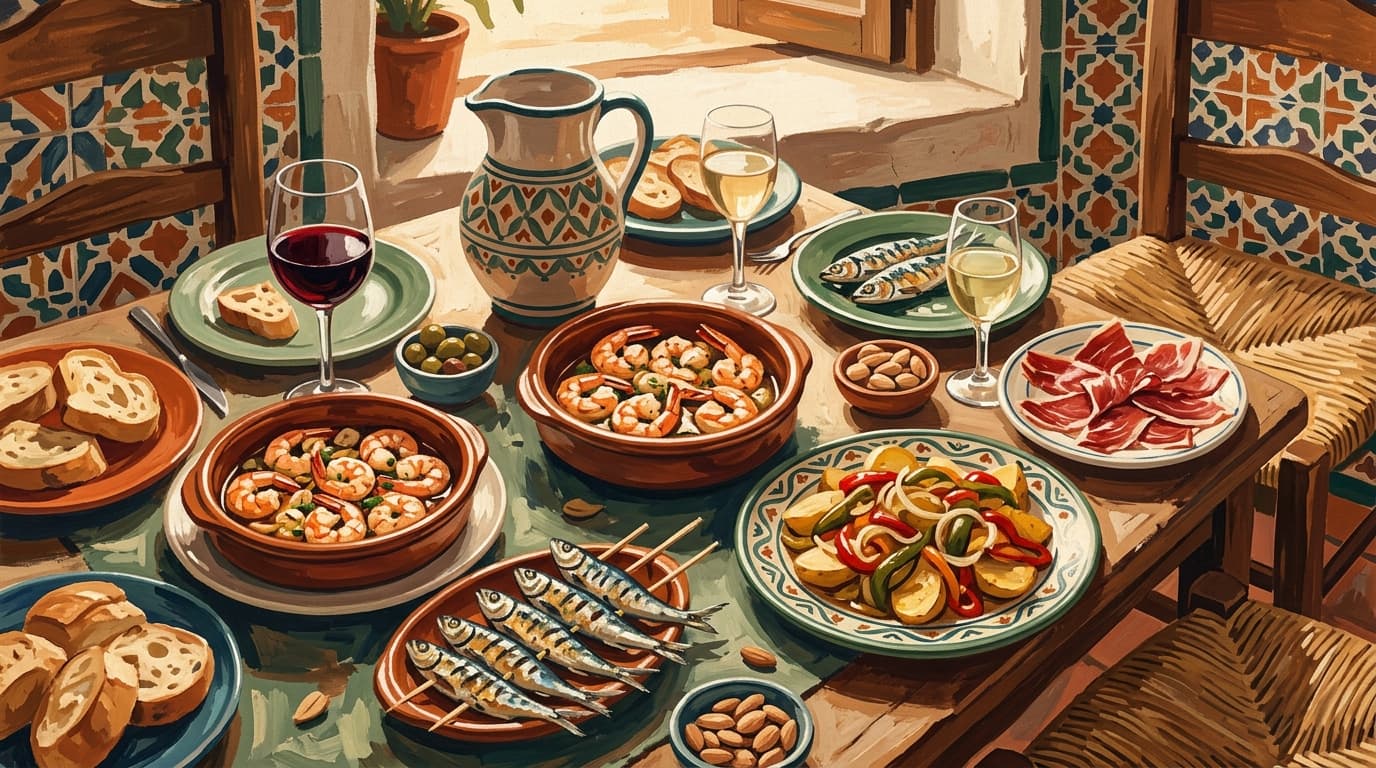
A Guide to Eating in Almería: Tapas, Seafood, and Desert Traditions
Discover the unique food culture of Almería, from the tradition of free-choice tapas to the legendary 'cherigan' toast and the freshest red prawns in the Mediterranean.
7 min read
Read guide →
A Calendar of Flavour: The Best Food Festivals in Andalucía
From the smoky beach fires of Málaga to the prestigious ham auctions in Huelva, Andalucía’s food festivals offer a seat at the table of the region’s most authentic traditions.
7 min read
Read guide →
A Guide to Seasonal Eating in Andalucía
Discover the culinary calendar of Andalucía, from the sun-drenched tropical fruits of Granada to the smoky chestnut festivals of the Sierra mountains.
6 min read
Read guide →
The Liquid Gold of Andalucía: A Deep Dive into the World’s Best Olive Oil
Discover the secrets of Andalucía's liquid gold, from the vast groves of Jaén to the art of the perfect breakfast tostada. This guide covers varieties, harvest secrets, and the best mills to visit.
6 min read
Read guide →
Where to Eat in Huelva: From Atlantic Prawns to the Heights of Jabugo
Discover the culinary secrets of Spain's southwestern corner, where the Atlantic's finest white prawns meet the world's best acorn-fed ham.
6 min read
Read guide →
A Guide to Eating and Drinking in Ronda
Ronda’s culinary identity is built on rugged mountain ingredients, world-class red wines and the slow-braised richness of rabo de toro. From refined cliffside terraces to sawdust-floored tapas bars, here is where to find the town’s authentic flavours.
7 min read
Read guide →Newsletter
More stories from Andalucía
Weekly notes, seasonal picks, and the next guides worth bookmarking.