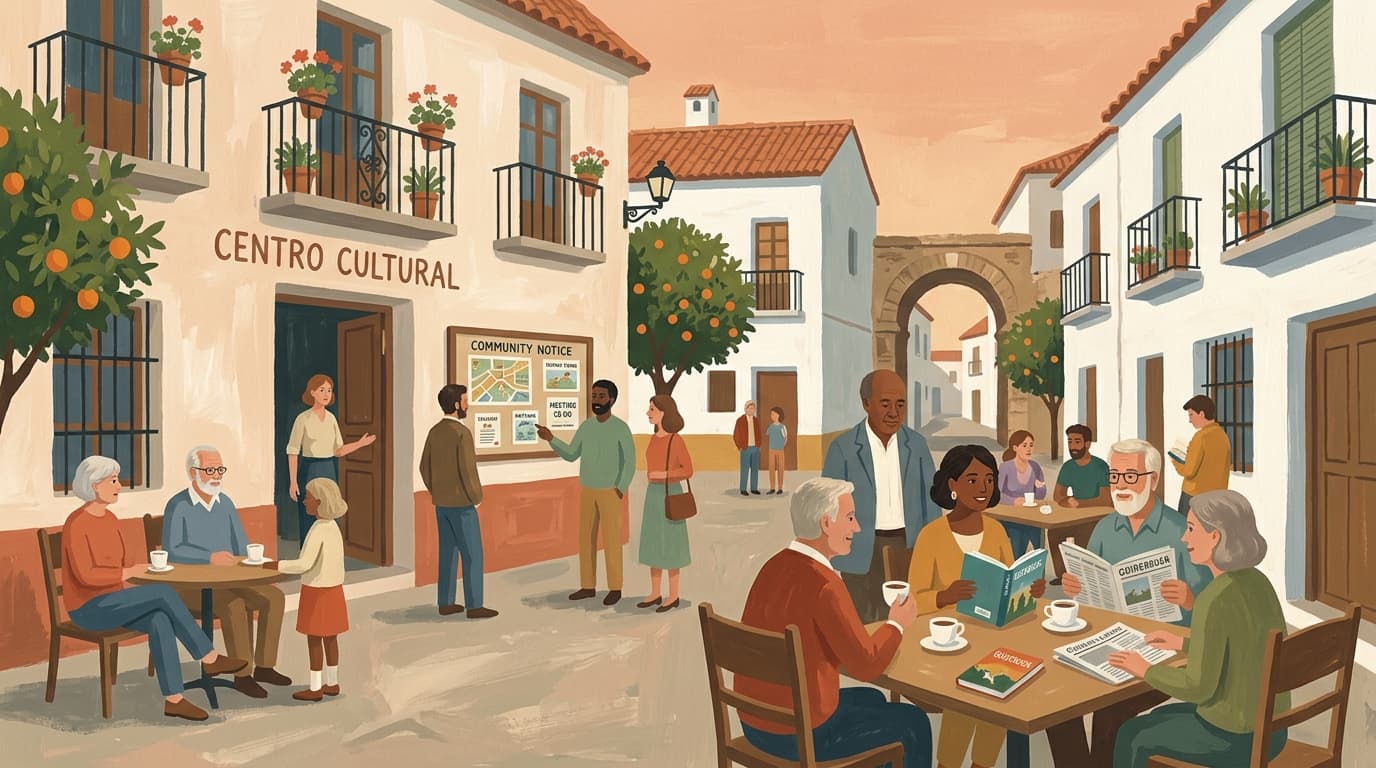
expat
Finding and Navigating Expat Communities in Andalucía
Finding a support network is a critical part of settling into southern Spain, helping you navigate everything from paperwork to social life during your first months.
expat
Finding and Navigating Expat Communities in Andalucía
14 April 2026 · 6 min read · 1,313 words
Finding a support network is a critical part of settling into southern Spain, helping you navigate everything from paperwork to social life during your first months.
Moving to Andalucía involves a significant shift in lifestyle, culture, and language. While many arrivals intend to immerse themselves entirely in the Spanish way of life, the reality of navigating foreign bureaucracy and social norms can be isolating. This is where expat communities become a practical necessity rather than just a social luxury. These groups act as informal knowledge hubs where residents share advice on everything from finding a reliable mechanic to understanding the latest changes in residency requirements.
Do you need an expat community? If you are new to the region, the answer is likely yes. Even if your Spanish is functional, having a group of people who have faced the same specific hurdles—such as the TIE application or the complexities of the Spanish tax year—provides a safety net. However, these communities vary wildly depending on where you are. The experience of an expat in a coastal town like Fuengirola is vastly different from one living in a white village in the Alpujarras. This guide outlines how to find the right group for your needs and how to use them effectively without falling into common traps.
Step-by-step process for finding your community
-
Identify your regional hub
Before moving, identify the primary expat hubs near your chosen location. In Andalucía, the largest concentrations of English speakers are found in the Costa del Sol (Málaga province), the Costa de la Luz (Cádiz and Huelva), and parts of Almería. If you are moving to a city like Seville or Granada, the community will be smaller and often more focused on working professionals or students. Researching the local population density of foreign residents will give you an idea of how much 'infrastructure' (English-speaking doctors, international schools, etc.) already exists.
Time: 1–2 hours of online research. Cost: Free.
-
Join location-specific Facebook groups
In Spain, Facebook remains the primary platform for expat communication. Search for terms like "Expats in [Town Name]" or "English speakers in [Province]." Be specific. A group for "Expats in Andalucía" is often too broad for practical help, whereas "Expats in Vélez-Málaga" will provide more relevant local advice. Join three or four groups to see which ones are well-moderated and which are full of spam.
What to bring: A valid Facebook profile. Cost: Free.
-
Vette the 'Barstool Lawyers'
Once you are in these groups, observe the quality of the advice. Many groups have long-term residents who offer invaluable help, but they also have 'barstool lawyers' who give confident but incorrect legal advice based on how things worked ten years ago. Look for groups that have a 'Files' section with updated guides on current regulations.
Time: 1 week of observation.
-
Attend a physical meet-up
Digital connection is a start, but physical meet-ups are where real friendships form. Use sites like Meetup.com or InterNations to find coffee mornings, language exchanges (intercambios), or walking groups. In coastal areas, check the noticeboards in local 'international' supermarkets or libraries for posters regarding bridge clubs, book circles, or gardening societies.
What to bring: Small change for coffee or a modest 'event fee'. Cost: €2–€15 depending on the activity.
-
Engage with charity or volunteer work
Volunteering is perhaps the most effective way to integrate and meet like-minded people. Organisations like Cudeca (cancer care), ARCH (horse rescue), or local animal shelters (protectoras) rely heavily on international volunteers. This provides a structured way to meet people while contributing to your new local area.
Time: 4–8 hours per week. Cost: Free (your time).
What you will need
- A Facebook account: Essential for accessing local 'buy and sell' groups and community news.
- WhatsApp: This is the universal communication tool in Spain. Most social groups will eventually move to a WhatsApp group chat.
- Reliable transport: Many expat meet-ups occur in specific hubs; if you live in a rural area, you will need a car to reach them.
- Healthy scepticism: Always verify legal or administrative advice with an official source.
- A basic grasp of Spanish: Even in expat circles, being able to speak a little Spanish will help you navigate the venues where meet-ups are held.
Common problems and how to avoid them
One of the most frequent issues in expat communities is the prevalence of negativity. In many online forums, you will encounter residents who spend a significant amount of time complaining about Spanish bureaucracy, the heat, or the local services. This can be draining and may skew your perception of your new home. To avoid this, seek out groups focused on specific hobbies—such as hiking, photography, or padel—where the conversation remains focused on the activity rather than grievances.
Another risk is the 'expat bubble.' It is easy to fall into a routine where you only speak English, shop at international supermarkets, and only socialise with other foreigners. While this is comfortable, it makes you vulnerable. If your social circle only consists of people who do not speak Spanish, you will struggle when you face a medical emergency or a complicated legal matter. Use expat groups as a stepping stone, not a permanent enclosure. Ensure you are also making an effort to meet your Spanish neighbours and participate in local town hall events (ayuntamiento). Finally, be wary of people offering 'cheap' services for residency or taxes within these groups. Always ensure anyone you hire is a registered professional with a physical office.
Getting help
If you find yourself overwhelmed, do not rely solely on social media. For administrative tasks like residency (TIE), driving licence exchanges, or tax returns, hire a gestor. A gestor is a specifically Spanish professional who acts as an intermediary between the public and the administration. They are not lawyers, but they are qualified to handle paperwork.
For reputable information, the British Consulate in Málaga provides regular updates via their 'Brits in Spain' Facebook page. For American citizens, the U.S. Consular Agency in Fuengirola or the Embassy in Madrid are the official points of contact. For social connection, the Royal British Legion has several active branches across Andalucía, and the American Club of the Costa del Sol offers structured networking for North Americans.
Frequently Asked Questions
Where are the largest English-speaking communities?
The highest concentration is along the Costa del Sol, specifically in Marbella, Fuengirola, and Benalmádena. In the east, Mojácar in Almería has a very high percentage of English speakers. Inland, the Lecrín Valley and the Alpujarras south of Granada are popular with those seeking a more rural but still connected lifestyle.
Are there groups specifically for Americans?
Yes. While the community is smaller than the British one, there are active American groups in Seville, Málaga, and near the Rota Naval Base in Cádiz. The American Club of the Riviera is a well-established organisation that hosts regular events for U.S. citizens and other internationals.
Is it expensive to join these clubs?
Most Facebook-based communities are free. Social clubs like the Royal British Legion or specific sports clubs usually have an annual membership fee ranging from €20 to €100. Commercial networking groups like InterNations may charge a monthly subscription for 'Albatross' (premium) access, though basic entry to events is often available for a small fee.
How do I find a group if I live in a very remote village?
In rural areas, expat communities are often smaller and more tight-knit. Your best resource is the local 'farmacia' or the village bar. Often, there will be one or two 'key' expats who have lived there for decades and know everyone. Once you find one, they can usually introduce you to the rest of the local international population.
Disclaimer: This guide is for informational purposes only. Regulations regarding residency and legal status in Spain frequently change. Always consult with a qualified legal professional or a registered gestoría before making financial or legal commitments.
More guides

Understanding the Spanish School System in Andalucía
A practical guide to navigating the education system in Andalucía, covering school types, age stages, and the enrolment process for expat families.
6 min read
Read guide →
A Practical Guide to Working Remotely from Andalucía
Working remotely from southern Spain offers a high quality of life, but it requires a clear understanding of your tax obligations and residency status.
7 min read
Read guide →
Recycling and Waste Management in Andalucía: A Practical Guide
Learn how to navigate the colour-coded bins and the 'Punto Limpio' system in Andalucía with our practical guide to Spanish waste management.
6 min read
Read guide →
Registering a Foreign Vehicle in Spain: A Practical Guide
A practical, step-by-step guide to the legal and bureaucratic requirements for registering a foreign vehicle in Andalucía, including ITV inspections and tax obligations.
6 min read
Read guide →
Setting Up Utilities in Andalucía: A Practical Guide
Setting up electricity, water, and internet in Andalucía can be a bureaucratic challenge for new residents. This guide provides a step-by-step approach to navigating Spanish utility providers.
6 min read
Read guide →
Retiring to Andalucía: A Practical Guide to Residency, Healthcare, and Finance
A practical look at the residency, healthcare, and financial requirements for moving to Andalucía, with step-by-step guidance for a smooth transition.
6 min read
Read guide →
Having a Baby in Andalucía: A Practical Guide to Maternity and Paperwork
Navigating pregnancy and childbirth in southern Spain involves managing a high-quality medical system alongside a complex administrative process.
6 min read
Read guide →
Building a Sustainable Life and Overcoming Homesickness in Andalucía
Building a life in Andalucía requires moving beyond the tourist mindset. This guide explores how to establish routines, overcome the 'six-month slump', and integrate into local communities.
6 min read
Read guide →
How to Register and Run a Holiday Rental in Andalucía
Operating a short-term rental in Andalucía requires navigating a strict registration process and evolving regional laws. Learn how to secure your VFT licence and stay compliant.
6 min read
Read guide →Newsletter
More stories from Andalucía
Weekly notes, seasonal picks, and the next guides worth bookmarking.