practical
Etiquette and Social Customs in Andalucía
A practical guide to navigating social interactions, dining habits, and local traditions in Southern Spain to ensure a respectful and seamless visit.
practical
Etiquette and Social Customs in Andalucía
14 April 2026 · 6 min read · 1,233 words
Social interactions in Andalucía are governed by a distinct set of informal rules that prioritise personal connection and a relaxed approach to time. Understanding these norms is essential for anyone looking to integrate or visit without causing accidental offence.
Andalucía is known for its open and friendly atmosphere, but this informality has its own structure. To navigate social situations successfully, you must understand the "dos besos" greeting, the importance of the "sobremesa" during meals, and the local perspective on punctuality. While locals are generally forgiving of tourists, adhering to these customs demonstrates respect and facilitates better service and social integration.
The Quick Answer: Key Rules
In Andalucía, greetings involve two kisses on the cheeks (right then left) between women, or men and women. Men usually shake hands. Dining occurs much later than in Northern Europe, with lunch at 14:00 and dinner after 21:00. Tipping is modest—usually rounding up the change or leaving 1€ to 2€. Use tú for almost everyone except the elderly or officials, and always cover your shoulders and knees when entering churches.
Greetings and Physical Contact
Physical contact is a standard part of communication in Southern Spain. Personal space is often smaller than in the UK or North America.
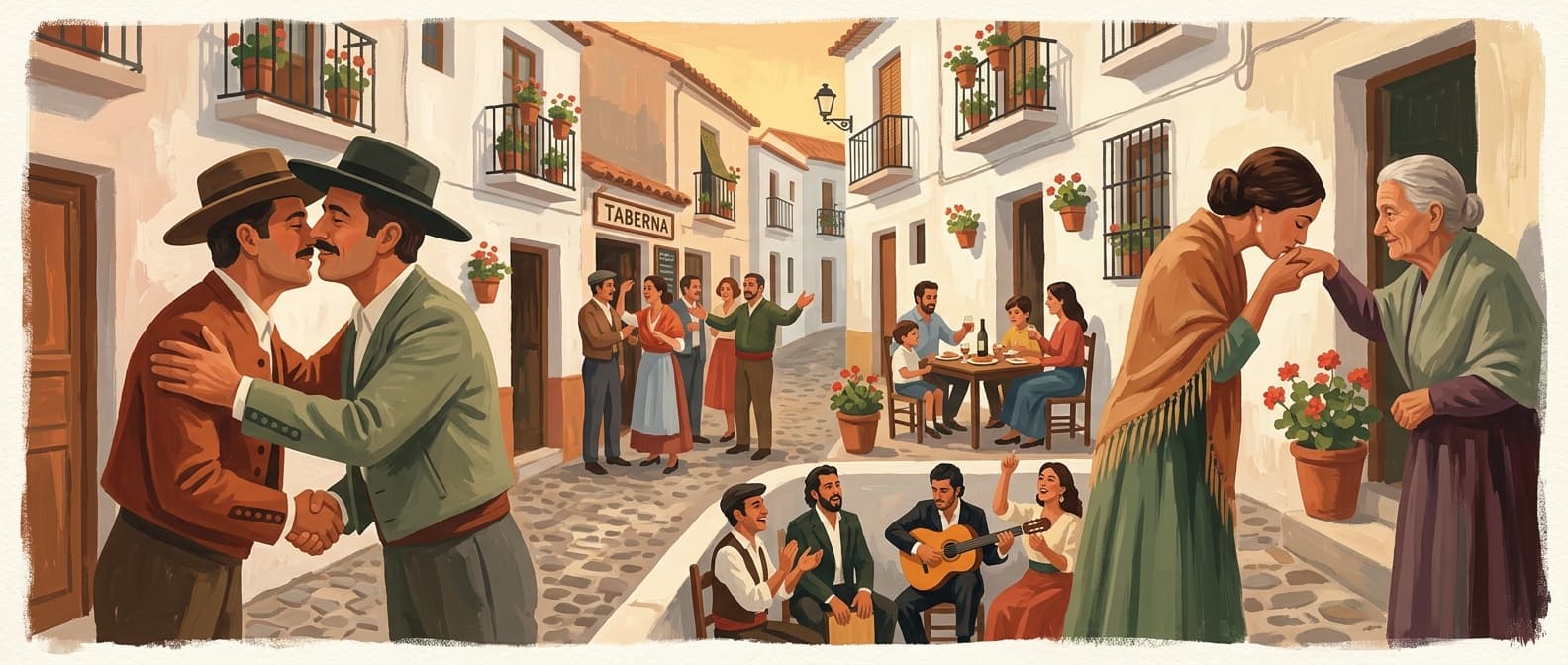
- Dos Besos: This is the standard greeting between women, and between men and women. It is not a literal kiss; you touch cheeks and make a kissing sound in the air. Always start with the right cheek.
- Men Greeting Men: A firm handshake is standard for first meetings. Between friends or family, a brief hug (un abrazo) and a pat on the back are common.
- Formal Situations: In a professional environment, such as a bank or a lawyer's office, stick to a handshake unless the other person initiates the besos.
Dining Etiquette
Dining is the centre of social life in Andalucía. It is rarely a quick affair.
- Mealtimes: Lunch (la comida) is the main meal, served between 14:00 and 16:00. Dinner (la cena) starts at 20:30 at the earliest, though 21:30 is more common. Attempting to eat dinner at 18:00 will usually find you in an empty restaurant or one catering exclusively to tourists.
- La Cuenta (The Bill): Waiters will never bring the bill until you specifically ask for it ("La cuenta, por favor"). It is considered rude in Spanish culture to rush guests out of a restaurant.
- Tipping: Tipping 10-15% is not expected. In a café, leave the small change (copper or 5-10 cents). In a restaurant, for a meal costing 50€, a tip of 2€ to 3€ is perfectly acceptable. If the service was exceptional, 5€ is considered generous.
- The Bread (El Pan): Often, a basket of bread and picos (breadsticks) is placed on the table. This is rarely free. Expect to see a charge of 0.80€ to 1.50€ per person on the bill if you eat it.
- Sobremesa: This refers to the period after a meal spent talking, drinking coffee or digestifs. It can last for an hour or more. Do not feel pressured to leave as soon as the plates are cleared.
Dress Codes
Andaluces generally take pride in their appearance. While beach towns are casual, there are clear boundaries.
- Churches and Cathedrals: These are active places of worship. You must cover your shoulders and thighs. Some major sites, like the Seville Cathedral, may refuse entry to those in tank tops or very short shorts. Men should remove hats.
- Beachwear: Bikinis and swimming trunks should be confined to the beach or poolside. Walking through a town centre or sitting in a non-beachfront restaurant without a shirt is considered low-class and may be subject to local fines in cities like Málaga.
- Evening: When going out for dinner or drinks, locals tend to dress up. Smart-casual is the safest bet. Flip-flops are rarely worn in the evening unless you are at a beach bar (chiringuito).
Volume and Social Noise
If you find a restaurant or bar extremely loud, it is usually a sign that it is popular. Andaluces speak loudly and often over one another; this is not considered aggressive or rude, but rather a sign of engagement and "animación." Do not be surprised by the volume of televisions in bars or the shouting of orders between staff.
Time-keeping and Punctuality
The concept of time in Andalucía is flexible, particularly in social contexts.
- Social Events: If invited to a party at 20:00, arriving at 20:15 or 20:20 is considered being "on time." Arriving exactly at 20:00 might find the host still in the shower.
- Business and Appointments: For doctor appointments, tours, or business meetings, you are expected to be punctual. However, do not be surprised if the other party is 5-10 minutes late.
- The Siesta: While the traditional three-hour nap is less common in modern cities, many small shops still close between 14:00 and 17:00. Plan your errands for the morning (09:30 - 13:30) or late afternoon.
Tú vs. Usted
Andalucía is significantly more informal with language than Central or Northern Spain. The use of tú (the informal "you") is widespread.
- Use Tú: For people of your own age, younger people, colleagues, and even shopkeepers or waiters in casual settings.
- Use Usted: For the elderly (typically 70+), police officers, or in very formal settings like a hospital or a court of law. When in doubt, start with Usted; if they reply using tú, you should switch.
Social Media and Photography
Spain has strict privacy laws (GDPR). While taking photos of monuments is fine, be cautious about including locals in your shots.
- Children: Never take photos of local children. This is a sensitive issue and can lead to confrontations.
- Private Property: Avoid filming into private homes or courtyards without permission.
- Street Performers: If you take a photo or video of a street performer (like a flamenco dancer), it is expected that you leave a small tip (1€ or 2€).
Frequently Asked Questions
Do I need to tip for tapas?
No. If you are standing at a bar having a single drink and a tapa, you do not need to tip. If you have several rounds, leaving the small change is sufficient.
Is it rude to decline a drink?
It is not rude, but "no" can be met with persistence. If you do not want alcohol, simply order a "sin" (alcohol-free beer) or a "mosto" (grape juice). Simply saying you are full or have to drive is usually accepted.
How do I get a waiter's attention?
Do not snap your fingers or whistle. Catch their eye and raise your hand slightly, or say "Perdona" (Excuse me) as they walk past. It may take longer than in the UK; patience is expected.
Are shops open on Sundays?
In most of Andalucía, large supermarkets and shops are closed on Sundays. In coastal areas or major cities like Seville, some shops may open during peak tourist season, but generally, Sunday is a day for family and dining out.
Summary of Key Takeaways
- Greetings: Use two kisses (right cheek first) for women/mixed company and handshakes for men.
- Dining: Eat late (14:00 lunch/21:00 dinner) and always ask for the bill when you are ready.
- Dress: Cover up in churches and save swimwear for the beach.
- Tipping: Leave small change only; large percentages are not standard practice.
Note: Customs regarding masks or health protocols may change based on local government updates. Figures and times were accurate at the time of publication.
More guides
Photography in Andalucía: A Practical Guide
A practical guide to photography in Andalucía, covering the best city spots, drone laws, golden hour timings, and museum restrictions.
5 min read
Read guide →
Mobile Data, SIM Cards and WiFi in Andalucía: A Practical Guide
Stay connected in southern Spain with this guide to local SIM cards, eSIM providers, and regional mobile coverage.
6 min read
Read guide →
Senior Travel Guide to Andalucía: Planning and Practical Advice
Andalucía is highly accessible for senior travellers, provided you account for the summer heat and steep terrain in historical quarters. This guide covers transport discounts, medical access, and mobility tips.
5 min read
Read guide →
Electricity, Plugs and Adaptors in Andalusia: A Practical Guide
A practical guide to electricity in Andalusia, covering plug types C and F, 230V voltage requirements, and essential advice for using UK and US appliances.
5 min read
Read guide →
Co-working Spaces and Digital Nomad Life in Andalucía
A practical guide to the best co-working hubs and digital nomad infrastructure across Andalucía, including costs, internet speeds, and community locations.
4 min read
Read guide →
LGBTQ+ Travel Guide to Andalucía
A practical guide to safety, nightlife, and legal rights for LGBTQ+ travellers and residents in Andalucía.
4 min read
Read guide →
Best Time to Visit Andalucía: Weather, Prices, and Festivals
Discover the best time to visit Andalucía with our practical guide to seasonal weather, price drops, and the regional festival calendar.
5 min read
Read guide →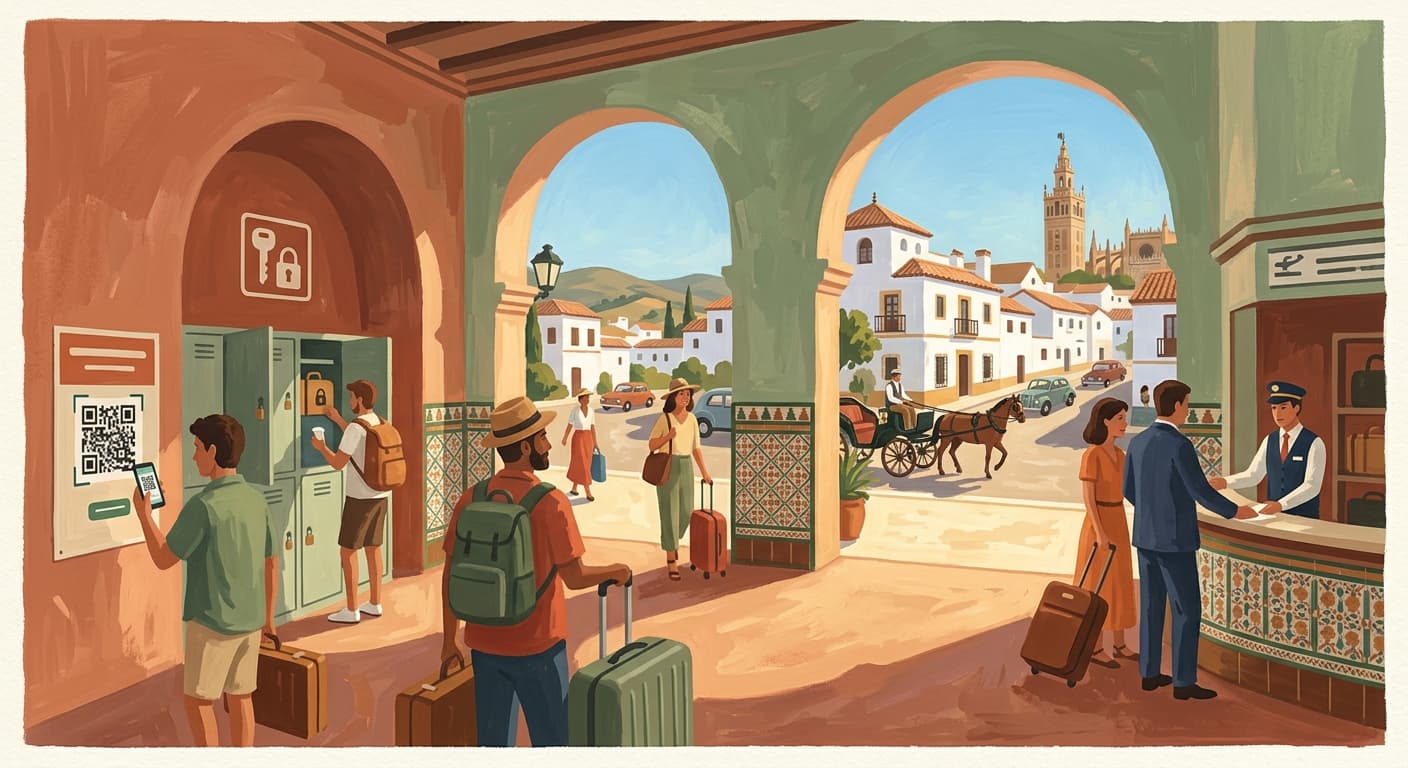
Luggage Storage in Andalucía: A Guide to Stations, Lockers, and Apps
A practical guide to luggage storage in Andalucía, covering train station lockers, airport facilities, and the best storage apps for Seville, Málaga, and Granada.
5 min read
Read guide →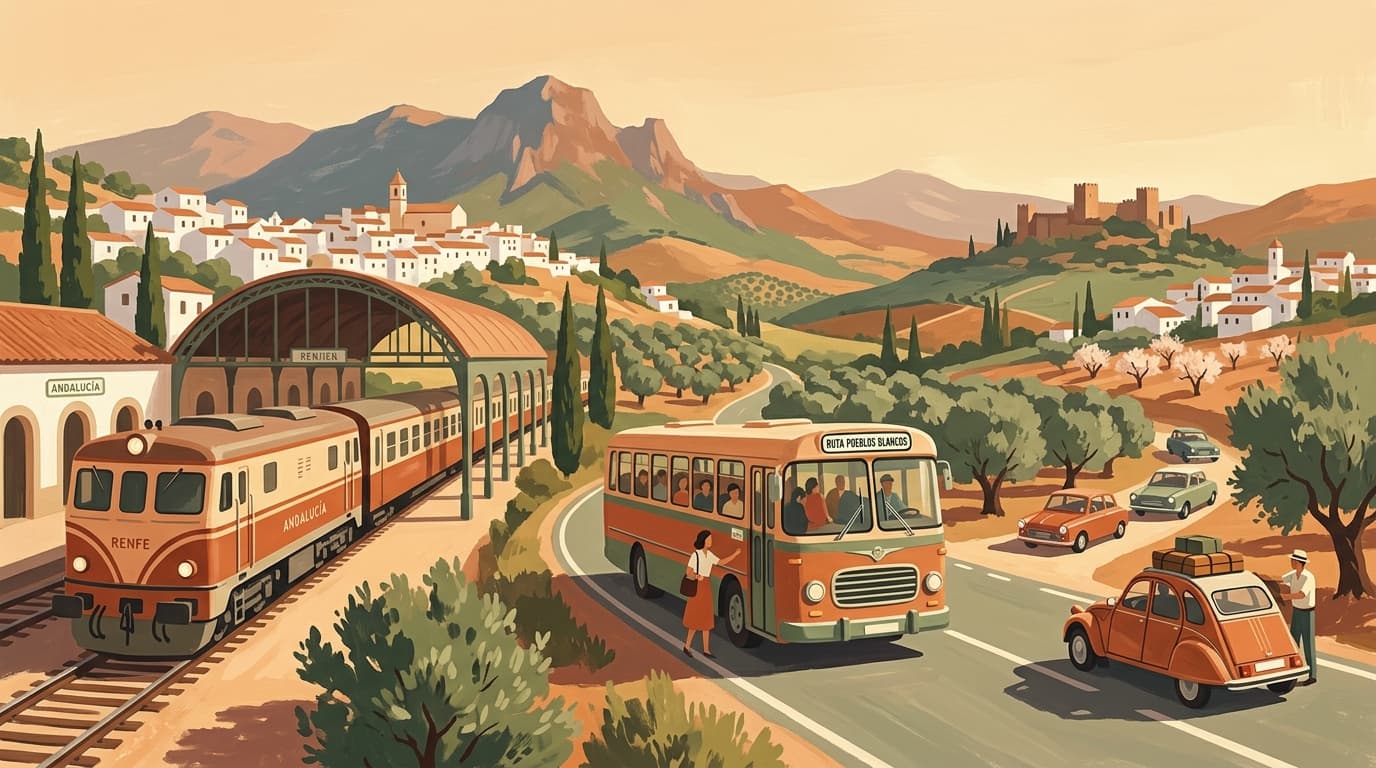
Getting Around Andalucía: Trains, Buses, and Car Hire
A practical guide to navigating Andalucía using high-speed trains, regional bus networks, and car hire for rural areas.
5 min read
Read guide →Newsletter
More stories from Andalucía
Weekly notes, seasonal picks, and the next guides worth bookmarking.