practical
Health and Safety in Andalucía: A Practical Guide
Essential health and safety information for visitors and residents in Andalucía, covering medical care, emergency contacts, and local laws.
practical
Health and Safety in Andalucía: A Practical Guide
14 April 2026 · 4 min read · 909 words
A comprehensive guide to staying safe in Andalucía, covering emergency procedures, medical care for tourists and expats, and common regional hazards.
Andalucía is generally a safe region for both tourists and residents. The primary risks involve environmental factors like high temperatures and petty theft in high-density tourist areas. By understanding how the healthcare system works, knowing which emergency numbers to dial, and recognising common street scams, you can avoid most issues during your stay.
Emergency Numbers
Spain uses a centralised emergency system. Operators often speak English, especially in coastal areas and major cities.
- 112: The primary emergency number for police, fire, and ambulance services. This is free to call from any phone.
- 061: Direct line for health-related emergencies (Ambulance).
- 091: National Police (Policía Nacional) – for reporting crimes like theft.
- 092: Local Police (Policía Local) – handles traffic and municipal issues.
Healthcare for Visitors and Expats
The healthcare system in Andalucía consists of the public Servicio Andaluz de Salud (SAS) and various private providers.
EHIC and GHIC Cards
UK and EU citizens are entitled to state-provided healthcare through the European Health Insurance Card (EHIC) or the Global Health Insurance Card (GHIC). This covers necessary treatment at public hospitals and health centres (Centros de Salud) on the same basis as a local resident.
- Coverage: Includes emergency room visits and GP appointments.
- Exclusions: It does not cover private clinics, dental work, or medical repatriation to your home country.
- Documentation: You must present your physical card and a valid passport to receive free treatment.
Private Healthcare
Non-EU citizens must have comprehensive private travel insurance. Even for those with a GHIC, private insurance is recommended to access private hospitals where English-speaking staff are more common and waiting times are shorter.
- Average Cost: A private GP consultation typically costs between €60 and €100.
- Payment: Private clinics usually require payment upfront, which you then reclaim from your insurer.
Pharmacies (Farmacias)
Pharmacies in Andalucía are identified by a large, illuminated green cross. They are the only places permitted to sell over-the-counter medicines, including paracetamol and ibuprofen.
- Opening Hours: Typically 09:30 to 14:00 and 17:00 to 20:00, Monday to Friday. Many open on Saturday mornings.
- Farmacia de Guardia: Every municipality has a designated 24-hour pharmacy on duty. Locations are posted on the door of every pharmacy and listed in local newspapers.
- Prices: Regulated by the government. A pack of 1g Paracetamol usually costs under €3.
Sun and Heat Safety
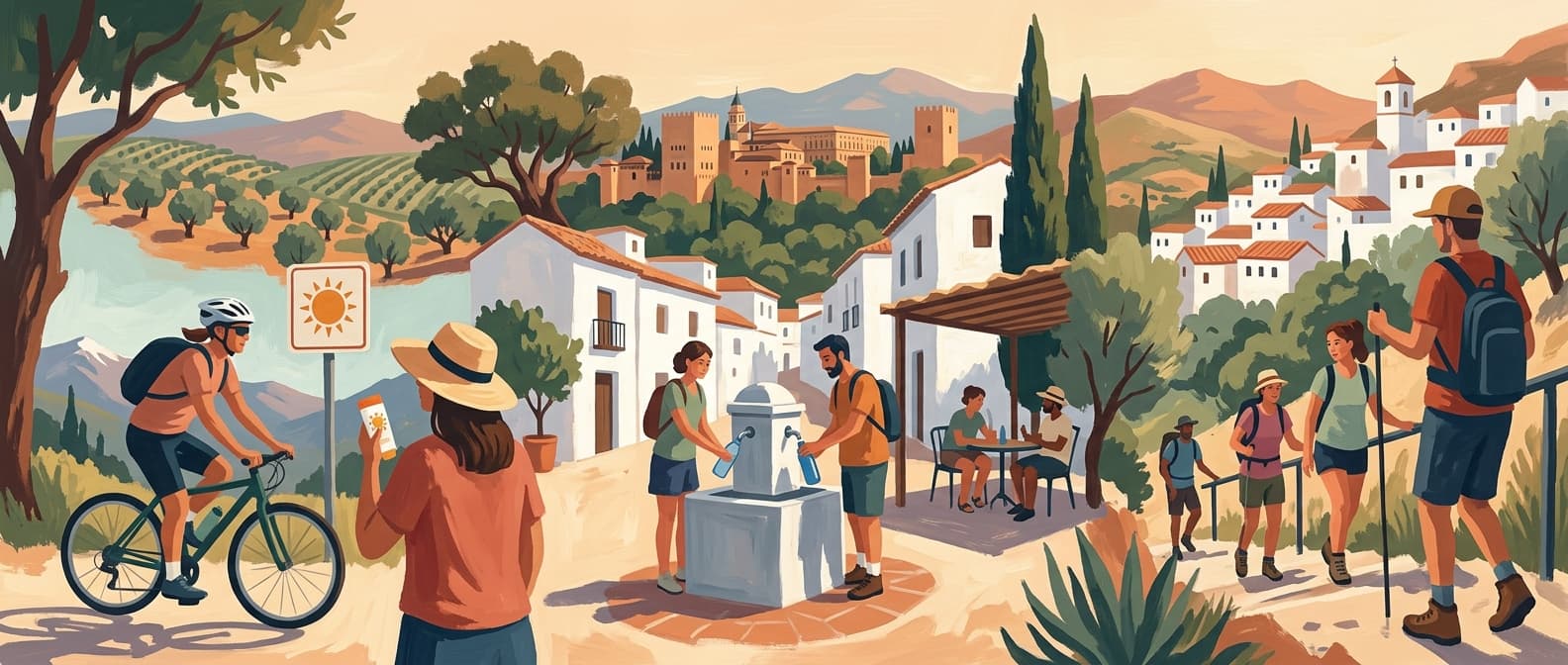
Heat exhaustion and heatstroke are significant risks in Andalucía, particularly between June and September when inland temperatures in cities like Seville and Córdoba regularly exceed 40°C.
- Hydration: Drink at least 2-3 litres of water daily. Avoid excessive caffeine and alcohol during peak heat.
- Peak Hours: Stay out of direct sunlight between 12:00 and 18:00. This is when the UV index is highest.
- Sunscreen: Use SPF 30 or higher. The UV index in Andalucía can reach 10 or 11 in summer, meaning skin can burn in less than 15 minutes.
Water Safety
Tap Water
Tap water in Andalucía is safe to drink and meets all EU standards. However, in many coastal areas, the water has a high mineral content (hard water), which gives it a distinct chemical or salty taste. Many residents prefer bottled water for drinking, which costs approximately €0.50 for a 1.5-litre bottle in supermarkets.
Beach Safety
Always check the flag system before swimming in the Mediterranean or Atlantic:
- Green: Safe to swim.
- Yellow: Caution; waves or currents may be present.
- Red: Swimming is prohibited and strictly enforced.
- Jellyfish: Look for purple flags or signs indicating "Medusas".
Common Scams and Personal Safety
While violent crime is rare, petty theft occurs in crowded areas. Be aware of the following:
- The Rosemary Scam: Common in Seville and Granada. Women offer a sprig of rosemary for "good luck" or offer to read your palm. They then demand a high fee (€5–€20) and may pickpocket you during the interaction.
- The Bird Poop Scam: Someone spills a liquid on your clothes and offers to help clean it off. While you are distracted, an accomplice steals your wallet.
- Unlicensed Taxis: Always use official taxis (white with a blue stripe on the door). Do not accept rides from individuals in unmarked cars at airports.
- Pickpockets: Be extra vigilant on public transport and at major sites like the Alhambra or the Málaga seafront.
Frequently Asked Questions
Can I get a prescription filled in Andalucía?
Yes, but you will need a physical prescription from a doctor. If you have a UK or EU prescription, a Spanish pharmacist may accept it if it contains the generic name of the drug, but it is often easier to visit a local clinic for a Spanish equivalent.
Is the water safe for brushing teeth?
Yes, tap water is perfectly safe for brushing teeth and cooking throughout the region. The only reason people avoid it is the taste in specific provinces like Almería or Málaga.
What should I do if I lose my passport?
First, report the loss to the local police (Policía Nacional) to get a denuncia (police report). You will need this report to apply for emergency travel documents at your nearest consulate (located in Málaga or Seville).
Summary
- Call 112 for all emergencies; operators generally speak English.
- Carry your GHIC/EHIC and passport for state medical treatment.
- Avoid the sun between 12:00 and 18:00 during summer months to prevent heatstroke.
- Keep valuables secure in city centres to avoid common pickpocketing scams.
More guides

Understanding Spanish Festival Culture in Andalucía
Learn the essential etiquette, dress codes, and social rules for navigating Andalucía's Ferias, Romerías, and Semana Santa celebrations.
5 min read
Read guide →Driving in Andalucía: Rules, Tolls, and Parking Guide
A comprehensive guide to driving in Andalucía, covering the latest 2024 ZBE low-emission zone regulations, motorway tolls, and specific parking rules.
5 min read
Read guide →
Mobile Data, SIM Cards and WiFi in Andalucía: A Practical Guide
Stay connected in southern Spain with this guide to local SIM cards, eSIM providers, and regional mobile coverage.
6 min read
Read guide →
Senior Travel Guide to Andalucía: Planning and Practical Advice
Andalucía is highly accessible for senior travellers, provided you account for the summer heat and steep terrain in historical quarters. This guide covers transport discounts, medical access, and mobility tips.
5 min read
Read guide →
Electricity, Plugs and Adaptors in Andalusia: A Practical Guide
A practical guide to electricity in Andalusia, covering plug types C and F, 230V voltage requirements, and essential advice for using UK and US appliances.
5 min read
Read guide →
Co-working Spaces and Digital Nomad Life in Andalucía
A practical guide to the best co-working hubs and digital nomad infrastructure across Andalucía, including costs, internet speeds, and community locations.
4 min read
Read guide →
LGBTQ+ Travel Guide to Andalucía
A practical guide to safety, nightlife, and legal rights for LGBTQ+ travellers and residents in Andalucía.
4 min read
Read guide →
Best Time to Visit Andalucía: Weather, Prices, and Festivals
Discover the best time to visit Andalucía with our practical guide to seasonal weather, price drops, and the regional festival calendar.
5 min read
Read guide →
Luggage Storage in Andalucía: A Guide to Stations, Lockers, and Apps
A practical guide to luggage storage in Andalucía, covering train station lockers, airport facilities, and the best storage apps for Seville, Málaga, and Granada.
5 min read
Read guide →Newsletter
More stories from Andalucía
Weekly notes, seasonal picks, and the next guides worth bookmarking.