practical
Language Guide for Andalucía: Communication Tips for Visitors and Expats
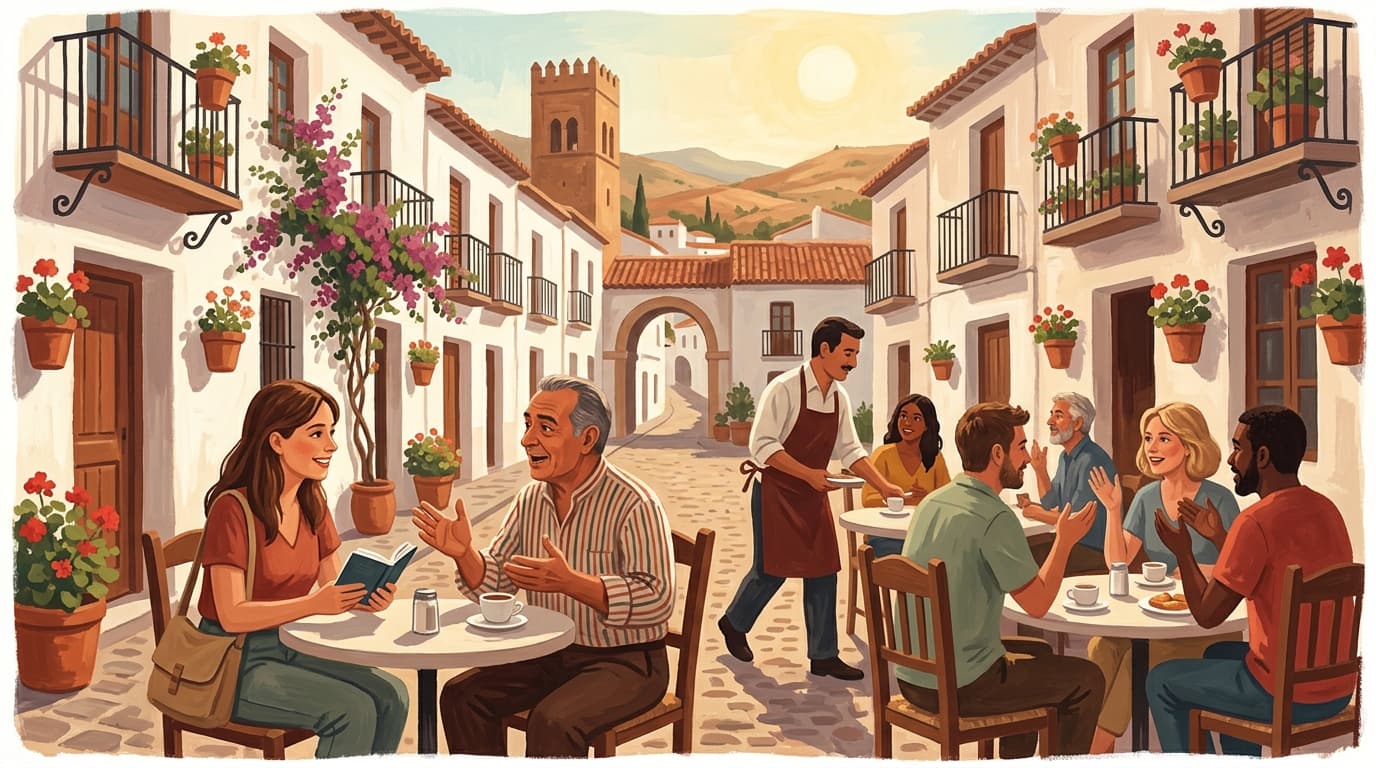
Navigating Andalucía requires more than just standard Spanish; understanding the local Andaluz dialect and knowing where English is spoken is vital for any visitor.
practical
Language Guide for Andalucía: Communication Tips for Visitors and Expats
14 April 2026 · 4 min read · 893 words
Effective communication in Andalucía requires an understanding of the regional Andaluz dialect and a grasp of basic Spanish, as English proficiency varies significantly between the coast and the interior.
While Spanish (Castilian) is the official language, Andalucía has a distinct linguistic identity. In major tourist hubs like Marbella or Málaga city, English is widely spoken in service industries. However, once you move inland or into local neighbourhoods, English proficiency drops sharply. Understanding the local accent and mastering basic social etiquette is necessary for navigating daily life and dining.
The Andaluz Dialect: Understanding the Local Sound
The Andaluz accent is often cited as one of the most challenging for learners. It is not a separate language, but a collection of dialects with specific phonetic characteristics. Most notably, speakers often omit consonants at the ends of words and between vowels.
- Dropping the 'S': The plural 's' at the end of words is often silent. "Dos cervezas" may sound like "Do cerve'a".
- Dropping the 'D': The 'd' between vowels is frequently skipped. "Pescado" (fish) becomes "pesca’o"; "helado" (ice cream) becomes "hela’o".
- Seseo and Ceceo: Depending on the specific province (e.g., Seville vs. Granada), the 's', 'z', and 'c' sounds may be pronounced identically as an 's' or as a 'th' sound.
- Shortening words: Common words are often truncated. "Para" (for/to) often becomes "pa'".
English Proficiency in Andalucía
Your reliance on English depends entirely on your location. The region can be divided into three tiers of English accessibility:
- High Accessibility: The Costa del Sol (Torremolinos to Estepona) and Gibraltar. Here, most staff in restaurants, hotels, and shops speak functional to fluent English.
- Moderate Accessibility: City centres of Seville, Granada, and Málaga. Younger staff and those in the tourism sector will speak English, but administrative staff (police, doctors, post office) may not.
- Low Accessibility: Rural villages (Pueblos Blancos), the province of Jaén, and local neighbourhoods. In these areas, expect to communicate almost exclusively in Spanish.
Note: Official government websites and medical booking systems are frequently available only in Spanish, or have poorly translated English versions.
Essential Spanish Phrases
Use these phrases to navigate basic interactions. Politeness is highly valued; always start an interaction with a greeting before asking a question.
- Hola, buenas: A versatile greeting used at any time of day.
- ¿Habla inglés?: Do you speak English?
- No entiendo: I don’t understand.
- Más despacio, por favor: Slower, please (essential for the Andaluz accent).
- ¿Dónde está...? Where is...?
- Perdone / Disculpe: Excuse me (to get attention or apologise).
- Gracias / De nada: Thank you / You're welcome.
Ordering Food and Drink
Dining out is the most common time you will use your Spanish. In Andalucía, the size of the portion is as important as the dish itself.
Portion Sizes
- Tapa: A small saucer-sized snack. In Granada and Almería, these are often free with a drink.
- Media ración: A half-portion, usually shared between two people.
- Ración: A full plate, intended for sharing among a group.
Key Dining Phrases
- Una caña: A small draught beer (usually 200ml-250ml).
- Un tubo: A tall glass of beer (approx. 330ml).
- Vino tinto / blanco / rosado: Red / white / rosé wine.
- Soy alérgico a...: I am allergic to... (e.g., los frutos secos for nuts).
- La cuenta, por favor: The bill, please.
Expect to pay between €1.20 and €2.50 for a coffee, and €1.50 to €3.00 for a caña in standard local bars. Prices in high-end tourist zones will be significantly higher.
Asking for Help and Emergencies
In an emergency, dial 112. This is the pan-European emergency number and they usually have English-speaking operators available. If you need to speak to someone on the street:
- ¡Ayuda!: Help!
- ¡Socorro!: Help! (In more dire or life-threatening situations).
- Necesito un médico: I need a doctor.
- He perdido mi bolso/cartera: I have lost my bag/wallet.
- ¿Dónde está la farmacia de guardia?: Where is the 24-hour pharmacy?
Frequently Asked Questions
Do I need to speak Spanish to live in Andalucía?
If you live in an expat enclave on the coast, you can survive with English. However, for any legal residency processes (TIE, Padron), property purchases, or utility setups, you will need a translator or intermediate Spanish. Integration into the community is virtually impossible without the language.
Is the Andaluz accent considered "bad" Spanish?
No. It is a legitimate regional variation. While it may be harder for students of "Standard" Castilian to understand initially, it is the native tongue of over eight million people and is used in local media and government.
How do I ask for the bill in a busy bar?
Catch the waiter's eye and make a writing motion with your hand, or say "La cuenta, por favor". In casual bars, it is common to pay at the bar before leaving if you haven't been served at a table.
Are menus usually in English?
In tourist areas, menus are almost always bilingual (Spanish/English). In authentic local tapas bars, menus are often handwritten on chalkboards in Spanish only. Using a visual translation app like Google Lens is recommended for these situations.
Summary
- English is common on the coast but rare in inland villages and for administrative tasks.
- The Andaluz dialect drops many consonants; ask speakers to slow down if needed.
- Learn portion sizes (Tapa, Media Ración, Ración) to avoid over-ordering.
- Always greet with "Hola" or "Buenas" before making requests.
More guides
Understanding Spanish Festival Culture in Andalucía
Learn the essential etiquette, dress codes, and social rules for navigating Andalucía's Ferias, Romerías, and Semana Santa celebrations.
5 min read
Read guide →
Driving in Andalucía: Rules, Tolls, and Parking Guide
A comprehensive guide to driving in Andalucía, covering the latest 2024 ZBE low-emission zone regulations, motorway tolls, and specific parking rules.
5 min read
Read guide →
Getting to Andalucía: A Practical Transport Guide
Reaching Andalucía is straightforward via its five main airports or the high-speed rail network from Madrid. This guide covers flight routes, train timings, and driving distances.
5 min read
Read guide →
Travel Insurance for Andalucía: A Practical Guide
Essential travel insurance advice for Andalucía, covering medical emergencies, GHIC limitations, and adventure sports requirements.
5 min read
Read guide →
Photography in Andalucía: A Practical Guide
A practical guide to photography in Andalucía, covering the best city spots, drone laws, golden hour timings, and museum restrictions.
5 min read
Read guide →
Mobile Data, SIM Cards and WiFi in Andalucía: A Practical Guide
Stay connected in southern Spain with this guide to local SIM cards, eSIM providers, and regional mobile coverage.
6 min read
Read guide →
Senior Travel Guide to Andalucía: Planning and Practical Advice
Andalucía is highly accessible for senior travellers, provided you account for the summer heat and steep terrain in historical quarters. This guide covers transport discounts, medical access, and mobility tips.
5 min read
Read guide →
Electricity, Plugs and Adaptors in Andalusia: A Practical Guide
A practical guide to electricity in Andalusia, covering plug types C and F, 230V voltage requirements, and essential advice for using UK and US appliances.
5 min read
Read guide →
Co-working Spaces and Digital Nomad Life in Andalucía
A practical guide to the best co-working hubs and digital nomad infrastructure across Andalucía, including costs, internet speeds, and community locations.
4 min read
Read guide →Newsletter
More stories from Andalucía
Weekly notes, seasonal picks, and the next guides worth bookmarking.