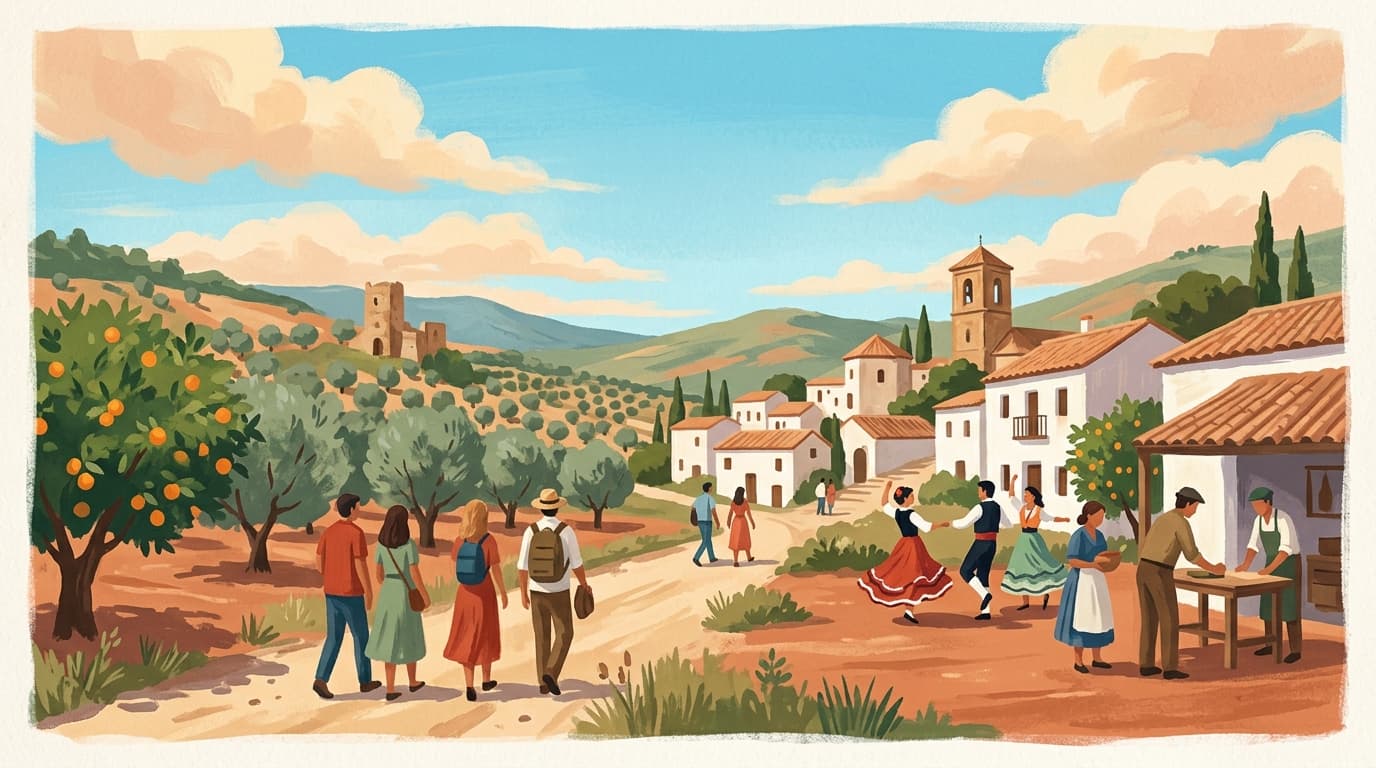
things to do
Exploring the Living Traditions of Andalucía
Discover the deep-rooted traditions of southern Spain, from the intensity of authentic flamenco to the centuries-old secrets of sherry production.
things to do
Exploring the Living Traditions of Andalucía
14 April 2026 · 7 min read · 1,390 words
From the echo of a guitar in a Seville backstreet to the scent of ageing sherry in a dark Jerez cellar, Andalucía offers more than just sunshine. Immerse yourself in the traditions that define southern Spain through hands-on workshops and authentic encounters.
Andalucía is often reduced to a postcard of white-painted villages and sun-drenched beaches, but the true pulse of the region is found in its slow-burn rituals and centuries of craft. This isn't a place where culture is kept behind glass in dusty museums; it is lived on the streets, shared over small plates of ham, and expressed through the rhythmic stomp of a wooden floorboard. To understand the south of Spain, you have to move beyond the superficial and engage with the people who keep these traditions alive.
Whether you are watching a potter in Úbeda shape clay with techniques unchanged since the Middle Ages or learning how to balance the acidity of a salmorejo in a farmhouse kitchen, these experiences provide a window into the Andalusian psyche. The region’s identity is a complex build-up of Roman, Visigoth, Moorish, and Christian influences, creating a social environment that is both deeply traditional and surprisingly open. In this guide, we look at the best ways to connect with that heritage, focusing on authenticity over commercial tourist traps. We will explore the Sherry Triangle, the flamenco peñas of Seville, and the artisan workshops that continue to define the local economy.
The Soul of the South: Flamenco in Seville
Flamenco is often misunderstood as a mere dance performance. In reality, it is a raw, emotional art form involving guitar (toque), song (cante), and dance (baile). While there are many commercial venues in Seville, the most authentic experiences are often found in the smaller peñas (private clubs) or cultural centres that prioritise the art over the spectacle.
Authentic Peñas and Tablaos
For a grounded introduction, La Casa del Flamenco in the Santa Cruz quarter offers an intimate setting in a traditional courtyard. There are no microphones or amplifiers here; the acoustics of the building do the work, allowing you to hear every breath of the singer and every click of the dancer’s heels. If you want something even more local, look for Peña Flamenca Torres Macarena. This is a non-profit club where locals gather to appreciate the art. It is less about the polish and more about the duende—that elusive moment of soul and inspiration.
Expect to pay between €20 and €35 for a high-quality show. It is worth noting that true flamenco usually starts late, though many tourist-oriented venues offer earlier slots. [AFFILIATE: flamenco show in Seville]
The Sherry Triangle: Jerez, El Puerto, and Sanlúcar
Sherry is perhaps the most misunderstood wine in the world. Far from the sticky-sweet cream sherries often associated with grandmothers in the UK, the wines of the Sherry Triangle are complex, dry, and incredibly varied. The process of making these wines, known as the solera system, is a fascinating piece of liquid history.
Sampling the Solera in Jerez de la Frontera
Bodegas Tradición in Jerez is a standout for those interested in the craft. They focus exclusively on VOS (Very Old Sherry) and VORS (Very Old Rare Sherry), wines that have aged for 20 to 30 years. A tour here often includes a walk through their private art gallery, featuring works by Goya and Velázquez, followed by a tasting that explains the difference between a salty Fino and a nutty Amontillado.
Another excellent option is Bodegas Lustau, which offers a comprehensive look at the different microclimates of the region and how they affect the flor (the layer of yeast) that protects the wine. Prices for a serious bodega tour range from €20 to €50 depending on the depth of the tasting. [AFFILIATE: sherry tasting tour in Jerez]
Hand-Crafted Traditions: Pottery and Ceramics
The Moorish influence on Andalucía is perhaps most visible in its ceramics. From the blue and white tiles of Seville’s plazas to the green-glazed jugs of the north, pottery is an essential part of the regional aesthetic.
The Green Glaze of Úbeda
In the province of Jaén, the town of Úbeda is a centre for traditional pottery. Alfarería Tito is one of the most respected workshops in Spain. Here, they still use an ancient Arab kiln, one of the few remaining in use today. You can watch the artisans work or even take part in a short workshop to understand the precision required to achieve the signature translucent green glaze.
In Seville, the Triana district remains the heart of the city’s ceramic production. While many shops now sell mass-produced items, Centro Cerámica Triana (located in an old factory) provides a brilliant overview of the history, and several small studios nearby still offer tile-painting classes where you can learn the 'cuerda seca' technique. [AFFILIATE: pottery workshop in Seville]
Culinary Heritage: Beyond the Tapas Bar
While eating tapas is a cultural experience in itself, taking a cooking class allows you to bring the flavours of the south home with you. The focus in Andalusian cooking is on the quality of ingredients: extra virgin olive oil, seasonal vegetables, and fresh seafood.
Cooking Classes in the Pueblos Blancos
Annie B’s Spanish Kitchen in the hilltop town of Vejer de la Frontera is highly regarded. Annie takes guests to the local markets to source ingredients before heading to her kitchen to prepare dishes like sherry-braised pork cheeks or Moroccan-influenced tagines, reflecting the town’s Moorish roots.
In Málaga, Spain Food Sherpas offer tours that bypass the tourist traps and take you into the central market (Atarazanas) to meet the vendors before a hands-on cooking session. These classes usually cost between €70 and €120 and typically last around four to five hours, including a very long lunch. [AFFILIATE: cooking class in Vejer de la Frontera]
The Moorish Footprint: Architecture and Atmosphere
You cannot talk about culture in Andalucía without mentioning the Al-Andalus period. For nearly 800 years, the region was a centre of science, art, and philosophy. To truly appreciate this, you need to look past the grand monuments and see how the architecture was designed to manage the heat and create a sense of tranquillity.
The Alhambra and the Mezquita
In Granada, a guided tour of the Alhambra is essential, but try to find a specialist guide who focuses on the poetry inscribed on the walls and the sophisticated water engineering of the Generalife gardens. In Córdoba, the Mezquita-Catedral is a forest of candy-striped arches that represents the layering of faiths.
To see these sites without the crowds, look for evening tours or early morning 'silent' visits. Booking at least two months in advance is vital for the Alhambra, as tickets sell out remarkably fast. [AFFILIATE: guided tour of the Alhambra in Granada]
Practical Information
Andalucía is a large region, so it is best to focus on one or two provinces if you want to go deep into the culture. The best seasons for cultural travel are spring (March to May) and autumn (September to November). During these times, the weather is pleasant for walking, and many local festivals, such as the Patios of Córdoba or the various Ferias, take place.
Expect to pay around €15–€25 for standard monument entries, while specialised workshops or private tours will start from €50 upwards. Most museums and smaller workshops close for the siesta between 14:00 and 17:00, so plan your day accordingly. Comfortable walking shoes are a requirement, as most historic centres are paved with uneven cobblestones. When visiting religious sites or traditional workshops, dressing modestly (shoulders covered) is a sign of respect, though not always strictly enforced outside of active church services.
Local Tips
To experience the culture like a local, adjust your clock. Lunch is the main event of the day, usually starting around 14:00 and lasting for two hours. Dinner rarely happens before 21:00. If you are looking for flamenco, avoid any place that includes dinner with the show; the best venues focus solely on the music and maybe a drink. Always carry a little cash, as some of the older artisan workshops and traditional sherry bars in smaller towns may not accept cards for small purchases. Finally, don’t be afraid to ask for a 'media ración' (half portion) when eating out—it is the best way to try a variety of local specialities without over-ordering.
More guides
The Best Water Sports in Almería: A Coastal Guide
Discover the rugged volcanic coastline of Almería through world-class diving, kayaking, and paddleboarding in the protected waters of Cabo de Gata.
6 min read
Read guide →
The Best Day Trips from Huelva
Huelva serves as the perfect launchpad for exploring the crimson Rio Tinto, the caves of Aracena, and the wild marshes of Doñana National Park.
6 min read
Read guide →
A Guide to Hiking and Walking in Jaén
Jaén holds the largest expanse of protected forest in Spain, offering everything from riverside strolls to high-altitude mountain challenges. This guide explores the rugged terrain of Cazorla and beyond.
6 min read
Read guide →
The Best Day Trips from Almería: From Desert Film Sets to Whitewashed Villages
Discover the rugged beauty of Almería with day trips to the volcanic Cabo de Gata coast, the cinematic Tabernas Desert, and the white-washed streets of Mojácar.
6 min read
Read guide →
Beyond the Mezquita: The Best Day Trips from Córdoba
Discover the best day trips from Córdoba, from the ruins of Medina Azahara to the white villages and olive groves of the Subbética mountains.
9 min read
Read guide →
A Guide to Rock Climbing in Andalucía: The Best Crags and Routes
With over 10,000 routes across the region, Andalucía is arguably Europe’s premier winter climbing destination for sport enthusiasts.
6 min read
Read guide →
A Guide to Golfing Across Andalucía
Discover the best golf courses in Andalucía, from the world-renowned fairways of Valderrama to the scenic coastal layouts of the Costa de la Luz.
6 min read
Read guide →
Cycling in Almería: The Ultimate Guide to Desert Trails and Mountain Passes
Discover the rugged beauty of Almería on two wheels, from the cinematic Tabernas Desert to the challenging switchbacks of the Alto de Velefique.
6 min read
Read guide →
Mastering the Atlantic: A Guide to Water Sports in Huelva
From the Atlantic swells of Islantilla to the rust-coloured waters of the Río Tinto, Huelva offers a distinct maritime playground for kayaking, surfing, and sailing.
6 min read
Read guide →Newsletter
More stories from Andalucía
Weekly notes, seasonal picks, and the next guides worth bookmarking.