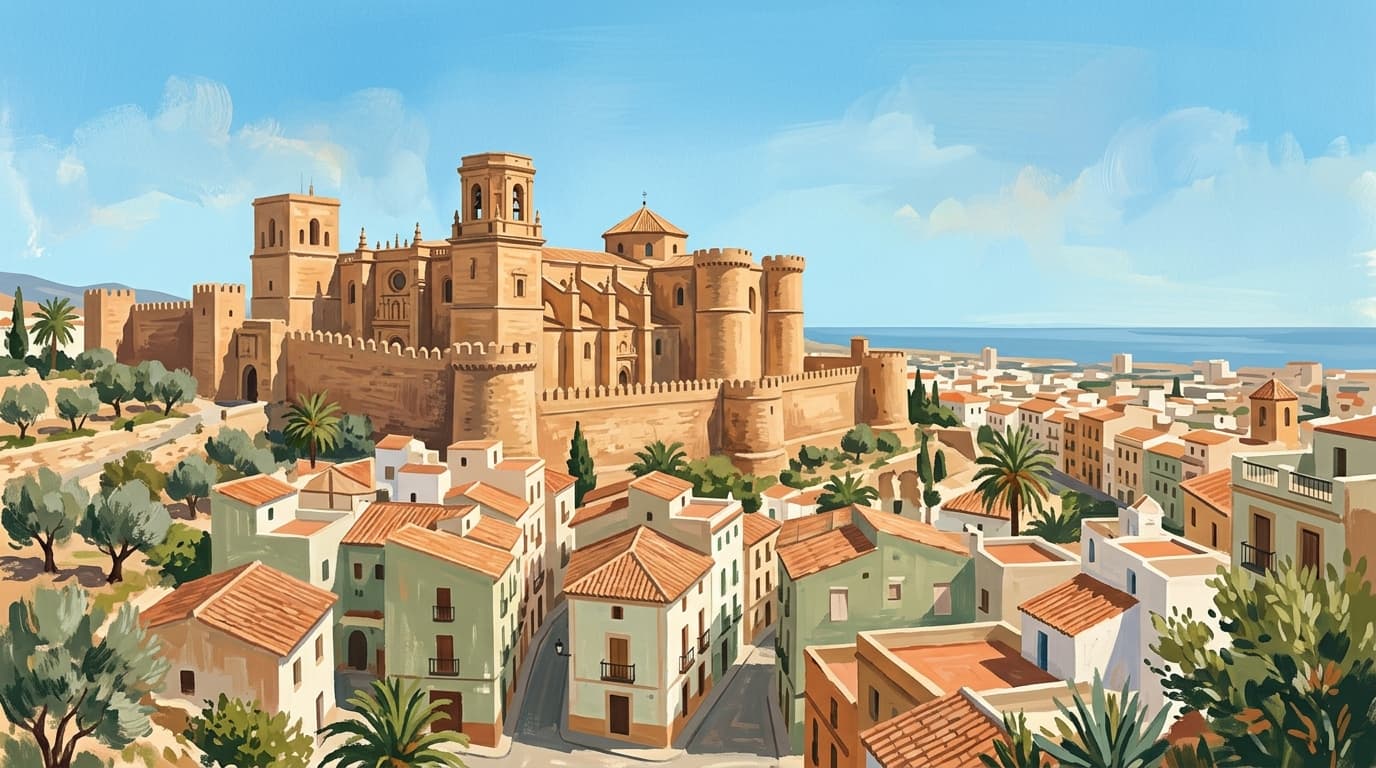
Unlike the delicate spires found in northern Europe, Almería’s cathedral is a sturdy bastion of stone built to withstand pirate raids. Its surrounding streets offer a grid of palm-lined squares and traditional bars where the local custom of complimentary tapas still thrives.
Almería remains one of the less explored provincial capitals in Andalucía, yet its centre contains a unique architectural landscape shaped by its maritime history. The city’s development was long dictated by its proximity to the Mediterranean, which brought both prosperity through trade and the constant threat of North African corsairs. This danger directly influenced the design of the Cathedral of the Incarnation, a building that functions as both a sanctuary and a military barracks.
Moving away from the cathedral’s thick walls, the city centre unfolds into the Plaza Vieja and the wide, 19th-century Paseo de Almería. This area is the social core of the city, where the pace of life remains unhurried and culinary traditions are fiercely protected. Navigating the centre provides a clear view of how Almería transitioned from a powerful Moorish stronghold into a modern Mediterranean port. It is a city of low-rise buildings, bright white light, and a distinct lack of pretension.
What to See & Do
The Cathedral-Fortress of Almería
The Catedral de la Encarnación is the only one of its kind in Andalucía. After an earthquake destroyed the previous mosque-turned-church in 1522, Bishop Diego de Villalán commissioned a new structure that could protect the population from Berber pirate attacks. The result is a Renaissance-Gothic hybrid with flat roofs for artillery, battlements, and six massive towers. Look for the 'Sol de Portocarrero' on the eastern exterior wall; this sun-with-a-face carving has become the unofficial symbol of the entire Almería province.
Inside, the atmosphere shifts from military to ecclesiastical. The choir stalls are particularly impressive, carved from walnut, and the high altar is a fine example of Neoclassical design. The cloister, built in the 18th century, offers a quiet space with palm trees that contrasts sharply with the austere, fortress-like exterior.
Plaza Vieja (Plaza de la Constitución)
A short walk from the cathedral brings you to the Plaza Vieja, a 19th-century enclosed square surrounded by colourful buildings and arched walkways. This is where you will find the Ayuntamiento (Town Hall). In the centre of the square stands the 'Pingurucho', a tall marble column dedicated to the Martyrs of Liberty—19 liberals who were executed in 1824 after an unsuccessful attempt to overthrow the absolute monarchy of Ferdinand VII. The square is often used for outdoor concerts and local festivals.
Paseo de Almería and the Central Market
The Paseo de Almería is the city’s main commercial artery, lined with shops, banks, and cafes. It marks the transition from the old Moorish quarter to the newer parts of the city built during the mining boom of the 1800s. Just off this street is the Mercado Central, a magnificent iron-and-glass structure designed by a student of Gustave Eiffel. It is the best place to see the local catch of the day, including the famous red prawns from Garrucha, and to buy locally grown fruit and vegetables from the nearby Poniente plains.
Refugios de la Guerra Civil
Underneath the city centre lies one of the most significant historical sites in Almería: the Civil War Shelters. Built between 1937 and 1938 to protect civilians from aerial bombardment, this 4.5km network of tunnels is incredibly well-preserved. Guided tours take you through a portion of the tunnels, showing the operating room, storage areas, and the drawings left on the walls by children. It provides a sobering look at the city's 20th-century history.
Practical Information
Cathedral Opening Times: Monday to Friday from 10:00 to 18:30; Saturday from 10:00 to 19:00; Sunday from 13:30 to 18:30. Note that the cathedral is closed to tourists during mass services.
Ticket Prices: General admission is €7, which includes an audio guide. Reduced rates of €5 are available for seniors (65+) and students, while children under 12 enter for free.
How to Get There: If arriving by train or bus at the Estación Intermodal, the city centre is a 15-minute walk up the Avenida de la Estación and along the Paseo de Almería. Local bus lines L1, L2, and L6 stop frequently near the Cathedral and the Central Market.
Parking: Driving into the historic centre is difficult due to narrow streets and pedestrian zones. The most convenient car parks are the underground Parking Real (near the Cathedral) and Parking Obispo Orberá (near the Central Market).
Where to Eat Nearby
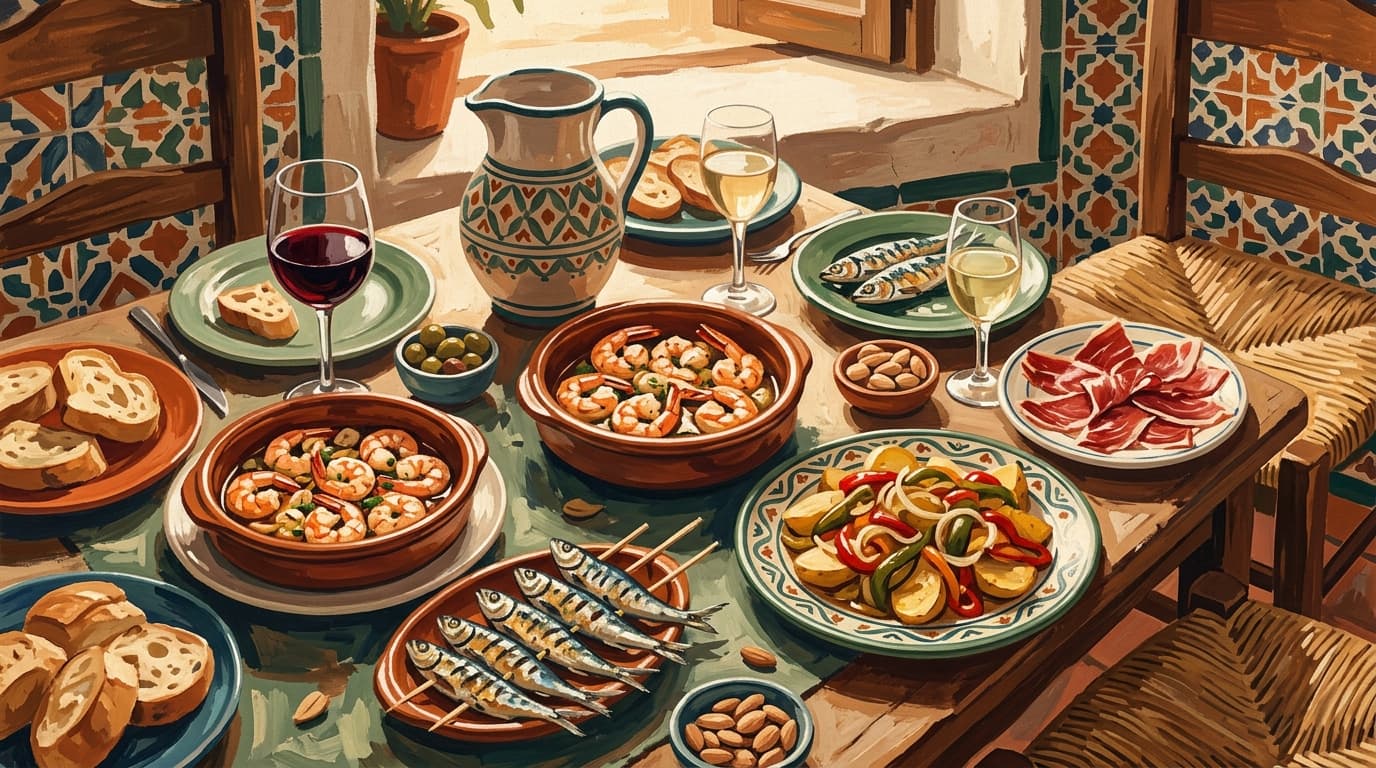
Almería is famous for its tapas culture, where a free small plate of food is served with every beer, wine, or soft drink ordered. Casa Puga on Calle Jovellanos is the oldest bar in the city and an essential stop for its traditional atmosphere and grilled prawns. For something more contemporary, Taberna Nuestra Tierra offers award-winning tapas that focus on local Almerían ingredients, such as ajoblanco and local sausages. If you prefer a formal setting, Restaurante Joseba Añorga in the Plaza de la Constitución serves Basque-inspired dishes with a Mediterranean twist in a refined environment.
Where to Stay
For a stay with historical character, Aire Hotel & Ancient Baths is located directly on Plaza Vieja. It features a rooftop pool with views of the Alcazaba and an Arabic-style hammam in the basement. Alternatively, Hotel Catedral Almería is housed in a restored 19th-century building right on the cathedral square. It offers spacious rooms and a terrace that looks directly onto the cathedral’s battlements, putting you in the heart of the historic quarter.