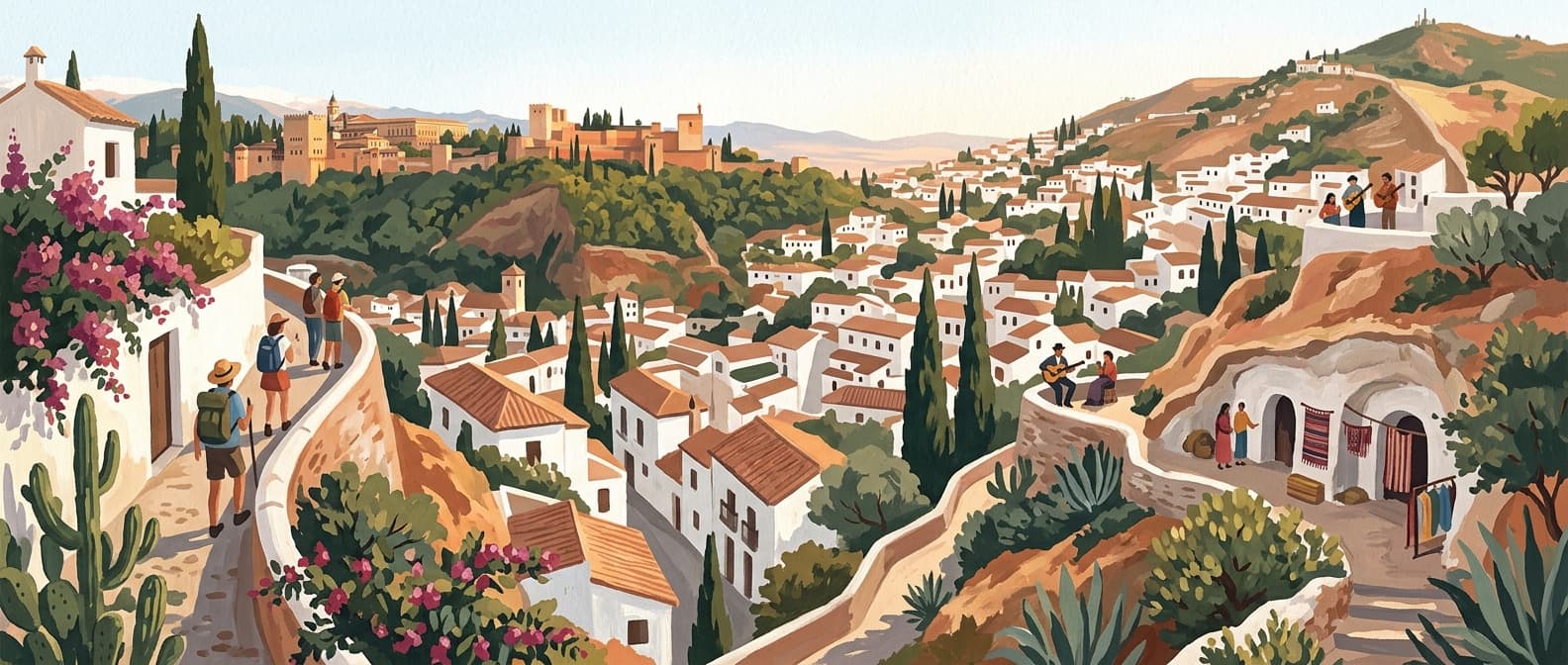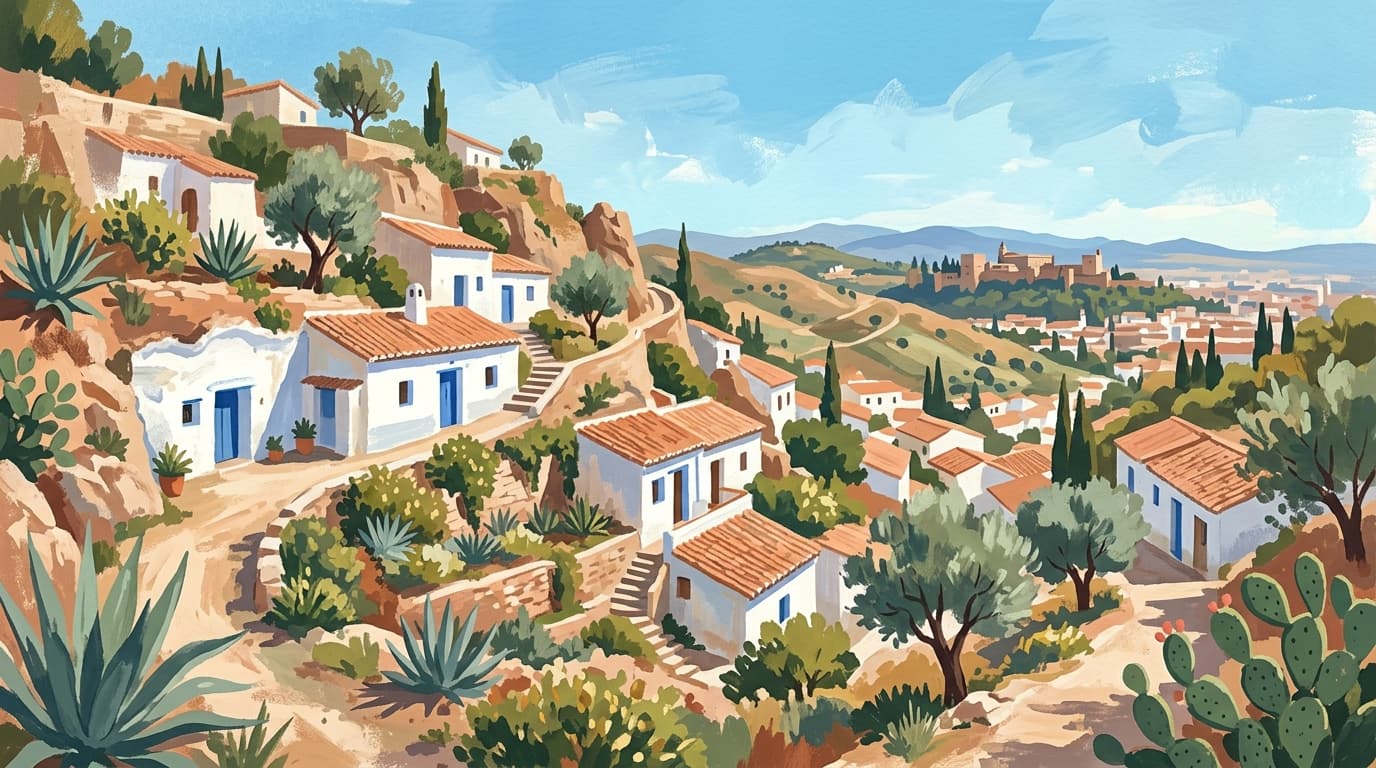
High above the Albaicín, Sacromonte offers a glimpse into a unique subterranean lifestyle where families have carved homes into the hillside for centuries. This is the spiritual heart of Granada's Roma community, where the sound of flamenco echoes through the cacti-lined slopes each evening.
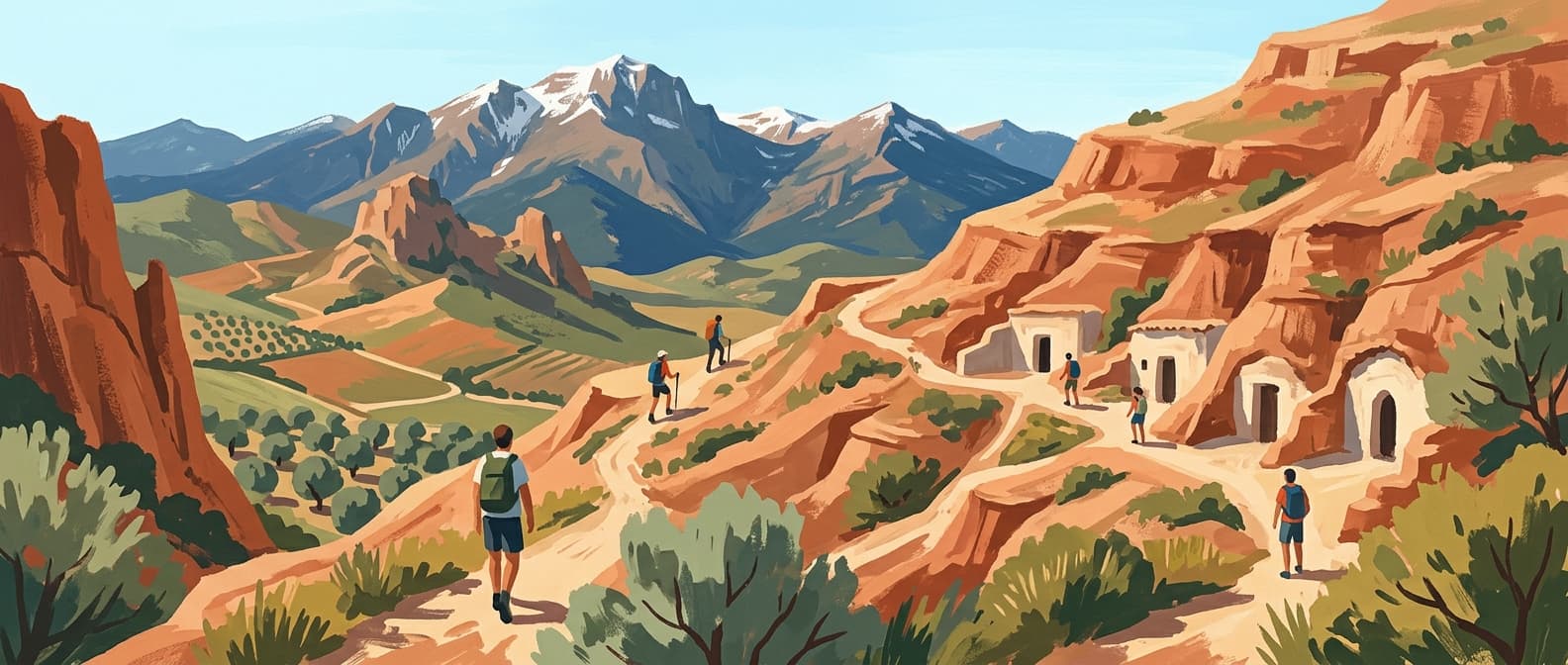
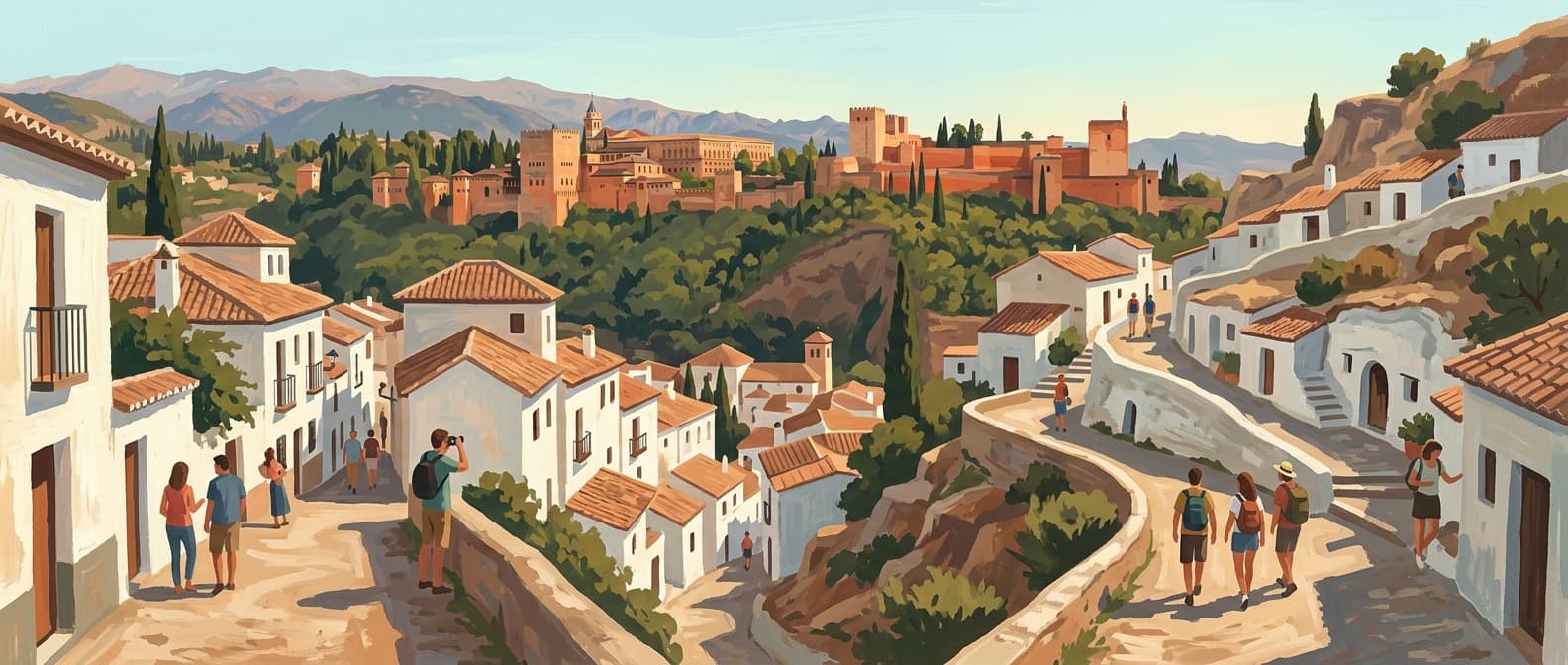
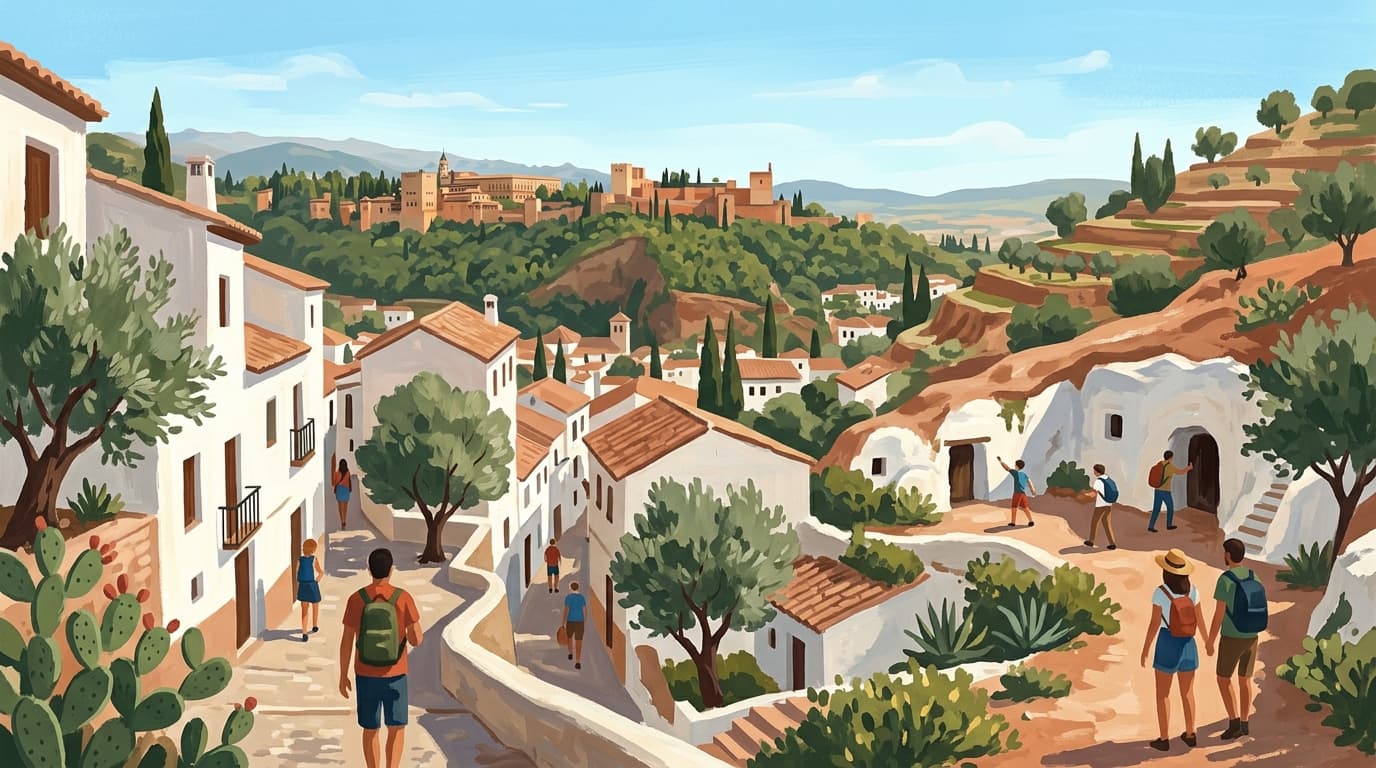
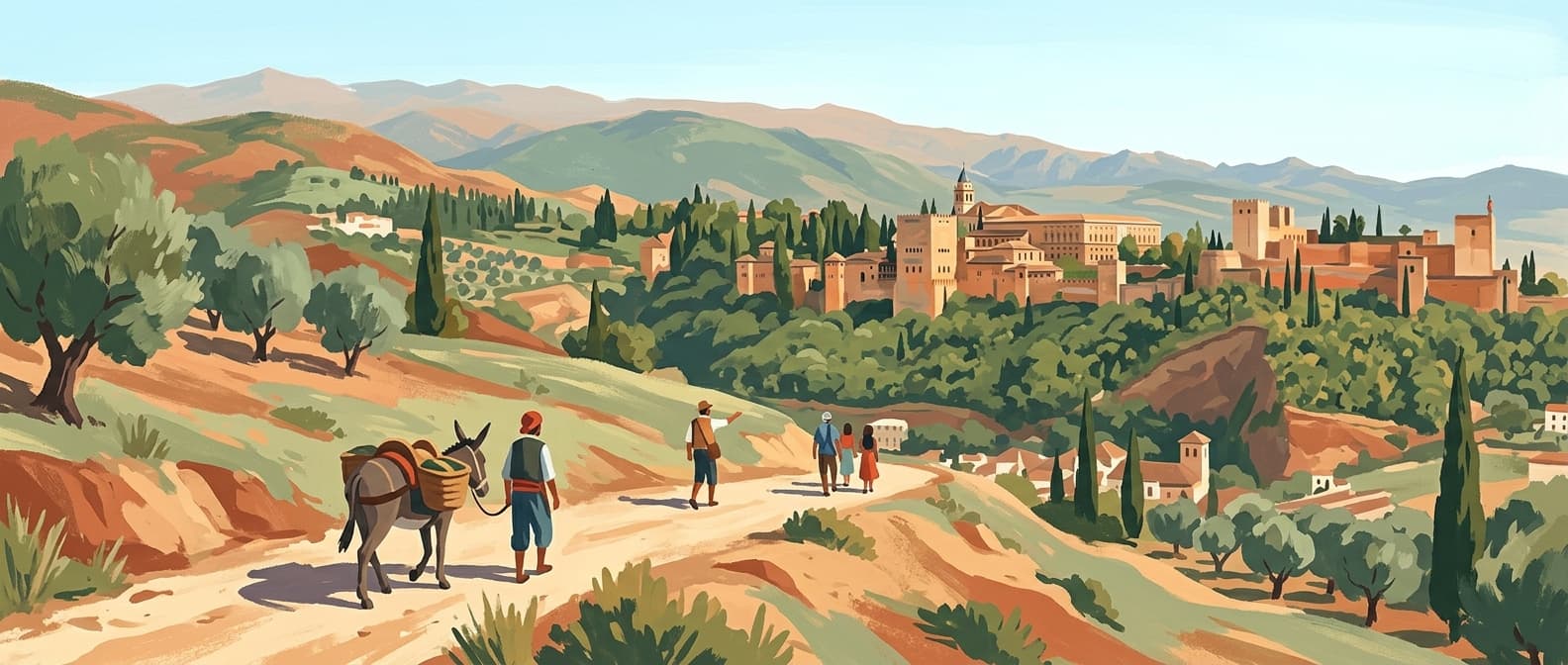
To walk through Sacromonte is to step into a side of Granada that feels entirely removed from the grand Renaissance cathedrals and Gothic chapels of the city centre. Located on the Valparaíso hill, overlooking the Darro valley and the Alhambra, this neighbourhood is defined by its white-washed cave dwellings, or cuevas. While it has become a focal point for tourism, it remains a living, breathing district with a distinct identity rooted in Gitano (Spanish Roma) culture. The landscape here is rugged, marked by steep paths, prickly pear cacti, and a sense of verticality that dictates the pace of life.
The origins of the neighbourhood date back to the 15th century, following the Reconquista. As Jewish and Muslim populations were displaced from the city, they found refuge on these slopes alongside the arriving Roma people. They discovered that the soft, sedimentary rock of the hill was perfect for excavation, allowing them to carve out homes that stayed cool in the scorching Andalusian summer and retained warmth during the crisp winters. Today, these caves range from humble, single-room dwellings to elaborate, multi-level homes and professional flamenco venues.
What to See and Do
Abadía del Sacromonte (Sacromonte Abbey)
Sitting at the very top of the hill, the Abadía del Sacromonte is a site of immense religious and historical importance. Built in the 17th century, it was established following the discovery of the "Lead Books" (Libros Plúmbeos) and the remains of Saint Cecil (San Cecilio), the patron saint of Granada, in the nearby catacombs. While the books were later revealed to be a complex forgery intended to reconcile Islam with Christianity, the Abbey remains a site of pilgrimage.
A guided tour takes you through the quiet cloisters and into the Holy Caves (Santa Cuevas), where you can see the small chapels carved into the earth. The Abbey museum also houses a significant collection of art and maps, including one of the oldest maps of Granada. The walk up to the Abbey is steep, but the reward is a panoramic view of the Alhambra and the Generalife that few other vantage points can match.
Museo Cuevas del Sacromonte
To understand the mechanics of cave living, the Museo Cuevas del Sacromonte is essential. This ethnographic museum consists of eleven restored caves that demonstrate how residents lived and worked. Each cave is dedicated to a different aspect of local life, such as traditional pottery, basket weaving, and blacksmithing. You will learn about the "bioclimatic" nature of the caves, which maintain a steady temperature of around 18-20 degrees Celsius year-round without any modern heating or cooling. The museum also provides excellent context on the local flora and fauna, explaining how the landscape shaped the diet and industry of the neighbourhood.
Experience a Zambra Flamenca
Sacromonte is the birthplace of the Zambra, a style of flamenco specific to the Granada Roma. Unlike the large stage productions found elsewhere, a Zambra is traditionally performed inside a cave, with the audience sitting in close proximity to the dancers and musicians. The word itself derives from the Arabic zamra (flute) or zamra (party). While many venues on the main road are geared towards tourists, the intensity of the performance in such a confined, acoustic space remains a powerful experience. Cueva de la Rocío and Venta el Gallo are two of the most established venues, often hosting families who have been performing these specific steps for generations.
Walk the Verea de Enmedio
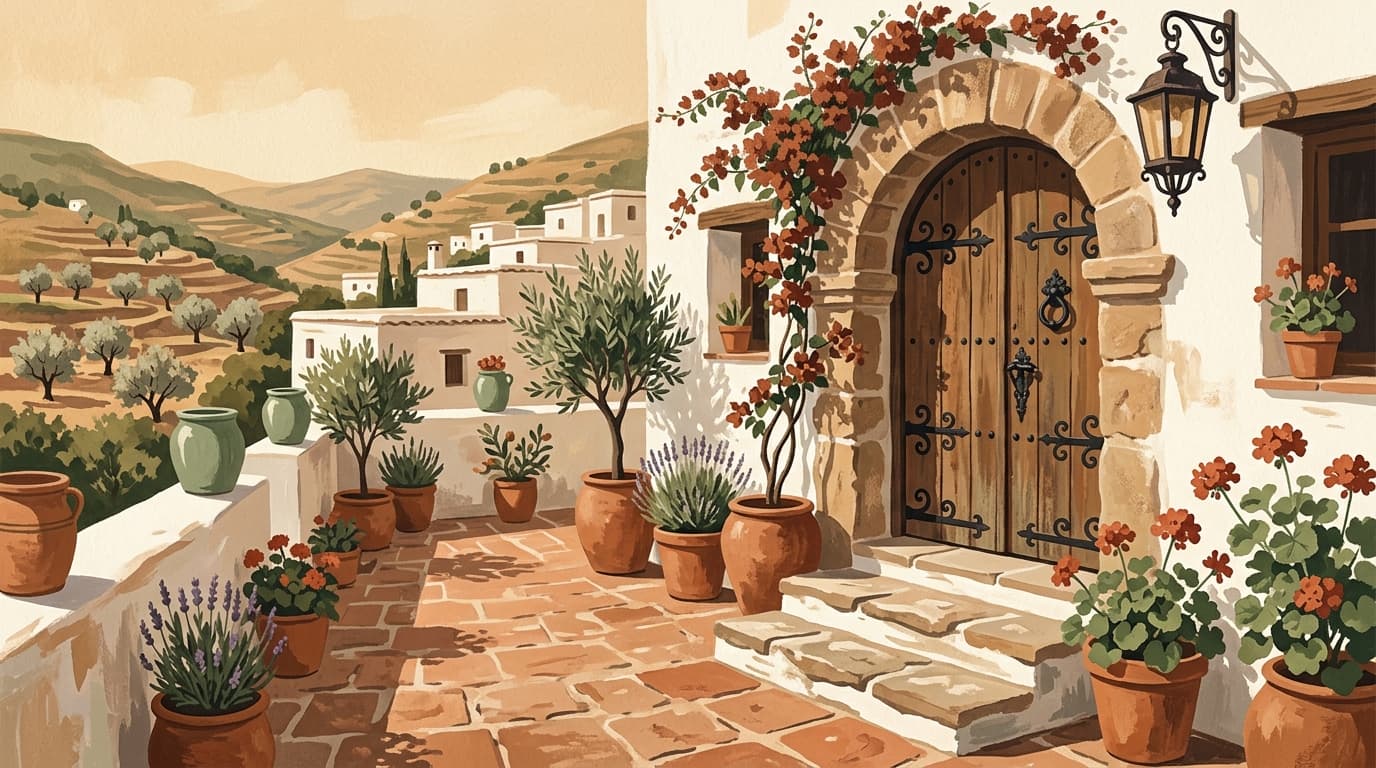
For a quieter experience away from the main road (Camino del Sacromonte), take a stroll along the Verea de Enmedio. This narrow, pedestrian path runs parallel to the main street but sits higher up the hill. It offers a more intimate look at the residential caves, many of which are decorated with traditional blue and white ceramics and overflowing pots of geraniums. It is also one of the best places to catch the sunset, as the Alhambra turns a deep crimson across the valley.
Practical Information
How to Get There
Accessing Sacromonte requires a bit of effort. The easiest way is to take the C34 minibus, which runs from Plaza Nueva in the city centre up through the Albaicín and into Sacromonte. If you prefer to walk, the route from Plaza Nueva via the Carrera del Darro is beautiful but involves a steady incline. It takes approximately 20 to 30 minutes to reach the heart of the neighbourhood on foot.
Driving and Parking
Driving is strongly discouraged. The roads are exceptionally narrow, and much of the district is restricted to residents or public transport. If you have a car, leave it in one of the underground car parks in the city centre (such as Parking San Agustín) and use the bus or a taxi.
Tickets and Opening Times
- Sacromonte Abbey: Open daily. General admission is approximately €6.00, which includes a guided tour. Tours usually run hourly between 10:30 and 18:00, though it is wise to check the official website as times can vary seasonally.
- Cave Museum: Open daily from 10:00 to 18:00 (winter) or 20:00 (summer). Tickets cost €5.00.
- Flamenco Shows: These typically start from 20:00 onwards. Prices range from €20.00 to €35.00, often including a drink or dinner.
Where to Eat Nearby
Sacromonte is famous for the Tortilla del Sacromonte, a traditional omelette made with sun-dried tomatoes, peas, and, traditionally, lamb’s brains and sweetbreads. While it might sound challenging to the uninitiated, it is a local staple. Casa Juanillo offers this dish alongside incredible terrace views of the valley. For something more casual, Pibe is a popular spot with a terrace that looks directly at the Alhambra, perfect for a beer and a plate of locally cured ham. If you want a more refined experience, descend slightly toward the Albaicín to El Huerto de Juan Ranas, which serves elevated Andalusian cuisine.
Where to Stay
To fully immerse yourself, consider staying in a converted cave hotel. Apartamentos Turísticos Cueva del Gato and Cuevas el Abanico offer the chance to sleep inside the rock, providing a quiet, cool retreat with modern amenities. Most cave lodgings are located along the steep lanes, so expect a climb but also unparalleled views of the Alhambra. For those who prefer traditional buildings, the lower edge of the Albaicín offers several boutique hotels within a short walk of Sacromonte.