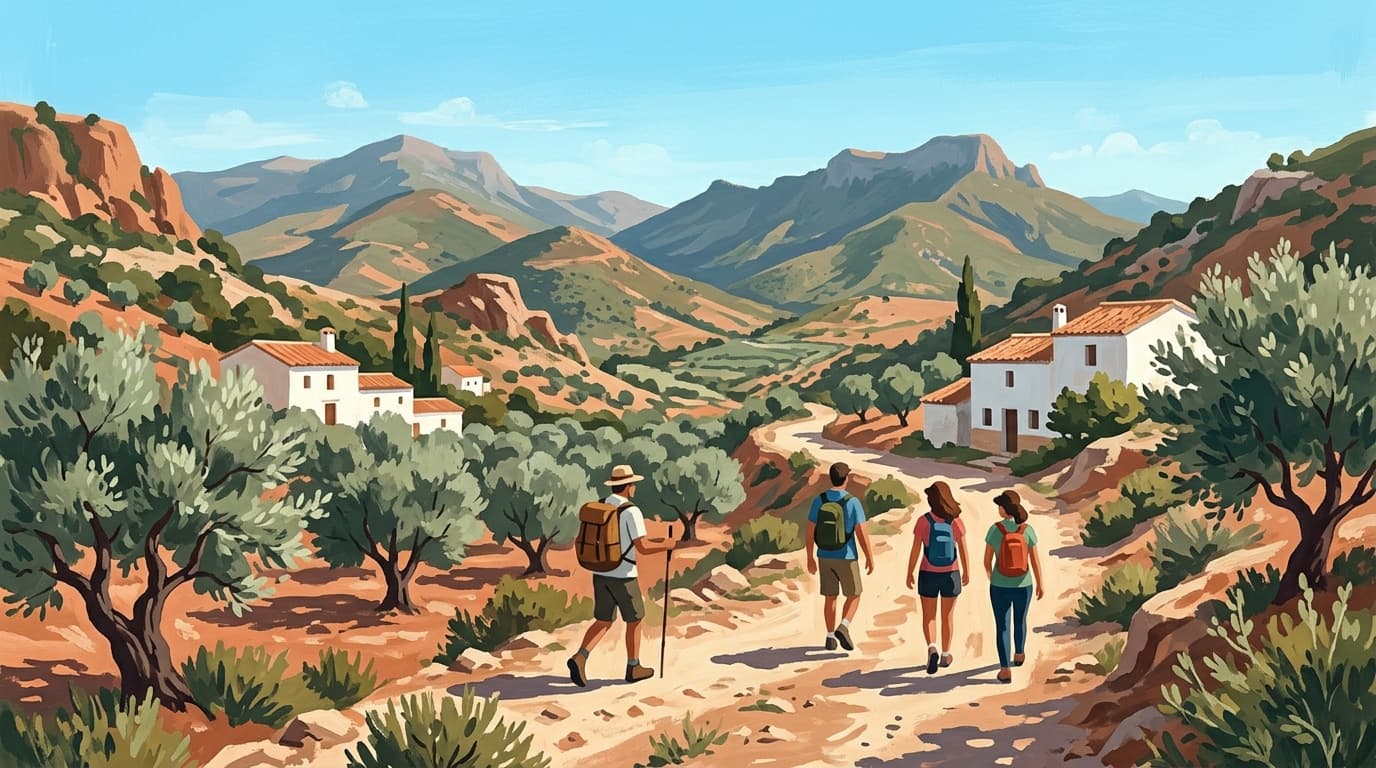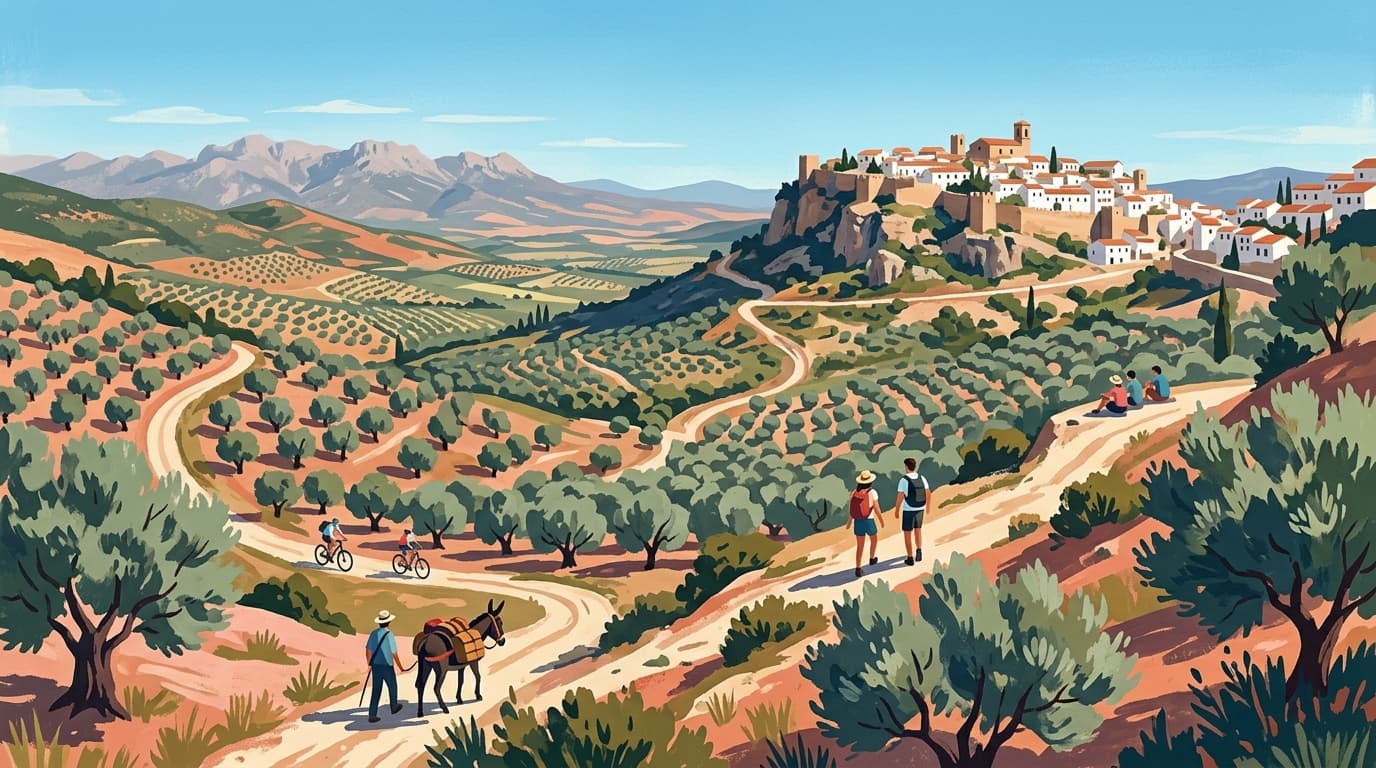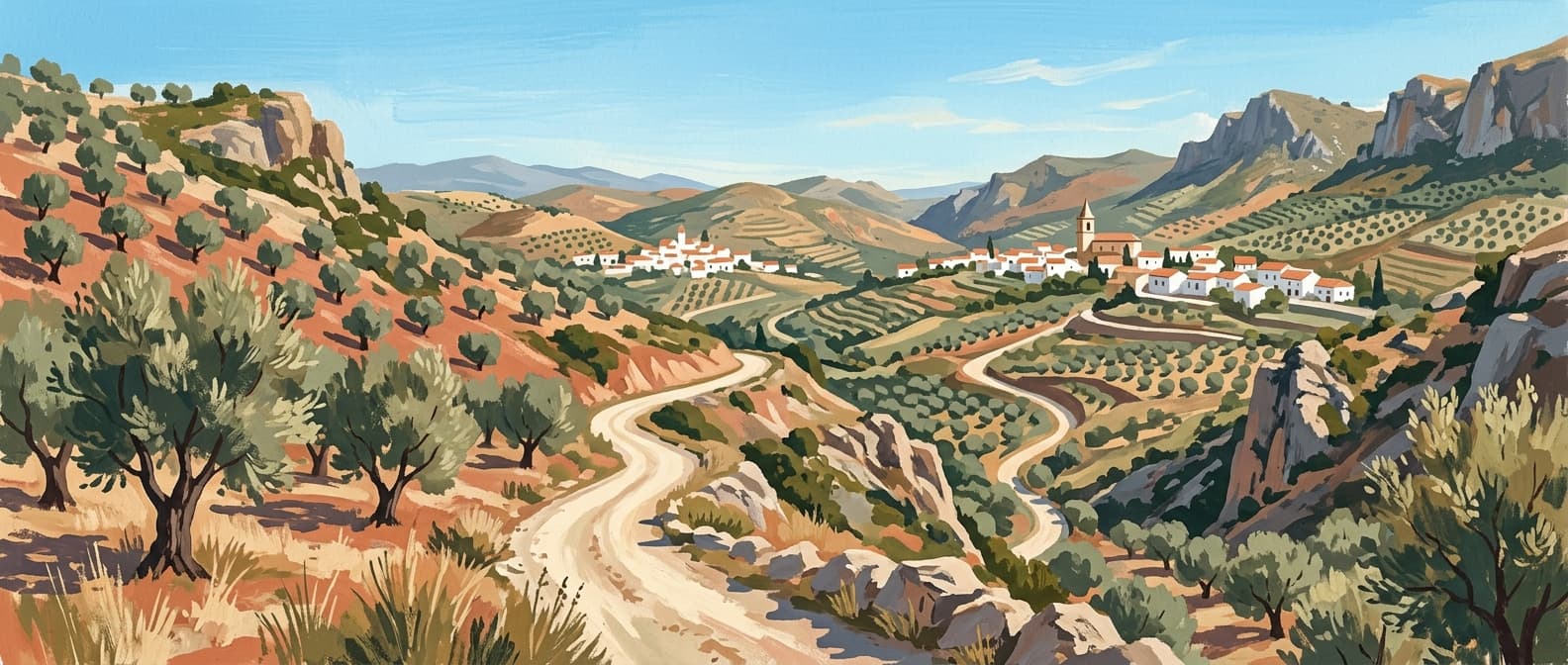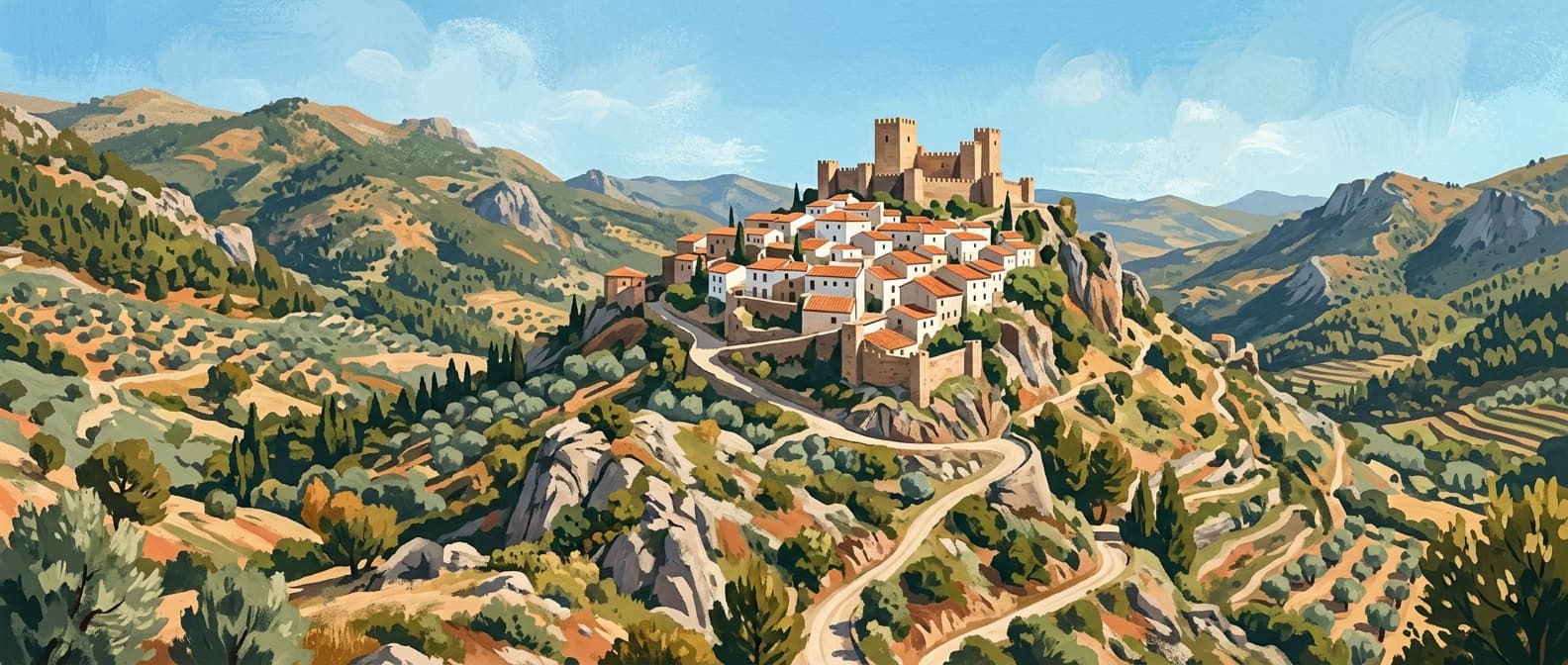
Perched on a jagged peak at 1,145 metres, Segura de la Sierra offers some of the most expansive views in Jaén. This fortified village preserves its medieval layout and remains the historical heart of the Sierra de Segura.
Approaching Segura de la Sierra requires a steady hand on the steering wheel as the road winds upwards through endless silver-green olive groves and dense pine forests. This village does not merely sit on the landscape; it dominates it. Crowned by a formidable Mudéjar castle, the town was once the impregnable headquarters of the Order of Santiago. Today, it is recognized as one of the most beautiful villages in Spain, a title earned through its steep, cobbled alleys and a sense of quietude that is increasingly rare in the more accessible parts of Andalucía.
Walking through the village is an exercise for the calves and the imagination. The air here is thin and crisp, carrying the scent of woodsmoke in winter and wild rosemary in summer. Despite its small size, Segura de la Sierra carries the weight of a frontier outpost that has survived centuries of conflict between Moorish and Christian forces. It is a place where every limestone wall and arched gateway has a purpose, designed for defence first and aesthetics second, though the result is undeniably striking.
What to See & Do
The Castillo de Segura de la Sierra
The castle is the defining feature of the skyline. Originally an Almohad fortress built on Roman foundations, it was significantly expanded by the Knights of the Order of Santiago after the Reconquista. Within its restored walls, you can explore the keep (Torre del Homenaje), the chapel, and the old parade ground. The interior now serves as an interpretation centre dedicated to the life of Jorge Manrique, the famed 15th-century poet who was born here. The real draw, however, is the rampart walk. From the battlements, the views stretch across the Guadalquivir valley and towards the peak of El Yelmo, often dotted with paragliders catching the thermals.
The Arab Baths (Baños Árabes)
Located on a narrow side street below the parish church, these 11th-century baths are among the best-preserved in the province. While smaller than those found in Granada or Córdoba, they follow the classic three-room structure: the frigidarium (cold room), tepidarium (warm room), and caldarium (hot room). The horseshoe arches and brick-vaulted ceilings with star-shaped skylights remain remarkably intact, offering a glimpse into the daily rituals of the village’s Moorish inhabitants.
Plaza de Toros and the Parish Church
The village bullring is one of the most unusual in Spain. Rather than a standard circle, it is rectangular and lacks permanent seating on all sides, as it was built into the slope of the mountain just below the castle. It is still used during the local festivals in October. Nearby, the Church of Nuestra Señora del Collado contains a 13th-century Romanesque carving of the Virgin, a rarity in a region where later Baroque and Renaissance styles usually predominate.
The Fountain of Carlos V
Standing near the entrance to the village, this Plateresque-style fountain was built in 1517. It features the imperial coat of arms of Carlos V and served as the primary water source for the village for centuries. It remains a focal point for the lower part of the town, marking the transition from the modern road to the medieval core.
Practical Information
Opening Times: The Castle and Arab Baths typically open from Wednesday to Sunday. Morning hours are 10:30 to 14:00. Afternoon hours vary by season: 16:30 to 19:00 in winter and 17:00 to 20:30 in July and August. Both sites are generally closed on Mondays and Tuesdays.
Ticket Prices: Entry to the castle is approximately €4 per person, which often includes access to the Arab Baths. Local guided tours are available for a slightly higher fee.
How to Get There: From Jaén or Úbeda, follow the N-322 towards Albacete, then take the A-310 and A-317 towards Segura de la Sierra. The drive from Úbeda takes about 90 minutes. There is no direct train service; the nearest major bus hub is in Orcera, from which you would need a taxi or a local connection.
Parking: Parking inside the village is extremely difficult due to the narrow, one-way streets. It is best to park in the designated area near the entrance (Plaza de la Encomienda) and walk the rest of the way.
Where to Eat Nearby
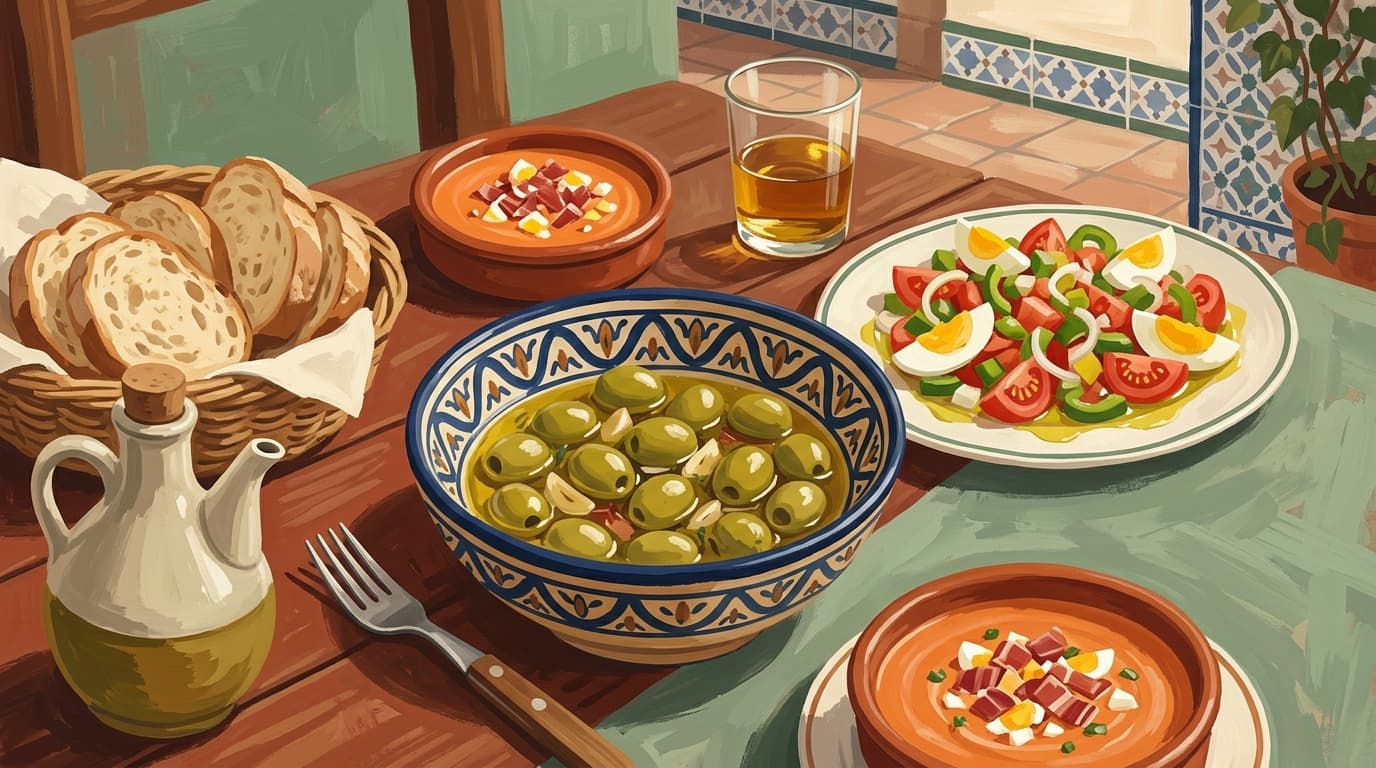
For a taste of authentic mountain cuisine, La Mesa Segureña is the local favourite. The menu focuses on cordero segureño (local lamb), which is prized for its flavour and texture. Their lamb chops grilled over olive wood are exceptional. Another excellent choice is Restaurante El Navega, which offers traditional stews and game dishes typical of the region. Expect hearty portions of ajoatao (a garlic and potato purée) served with local bread. Both establishments use the high-quality Sierra de Segura olive oil, which has its own Denominación de Origen.
Where to Stay
The Hotel Boutique Poeta Jorge Manrique provides a comfortable stay within a traditional stone building, offering rooms that overlook the valley. For those preferring more independence, Apartamentos Sierra de Segura offer well-equipped flats with fireplaces, ideal for the chilly mountain evenings. Staying overnight allows you to experience the village after the day-trippers have left, when the only sounds are the wind through the pines and the distant bells of livestock in the valley below.