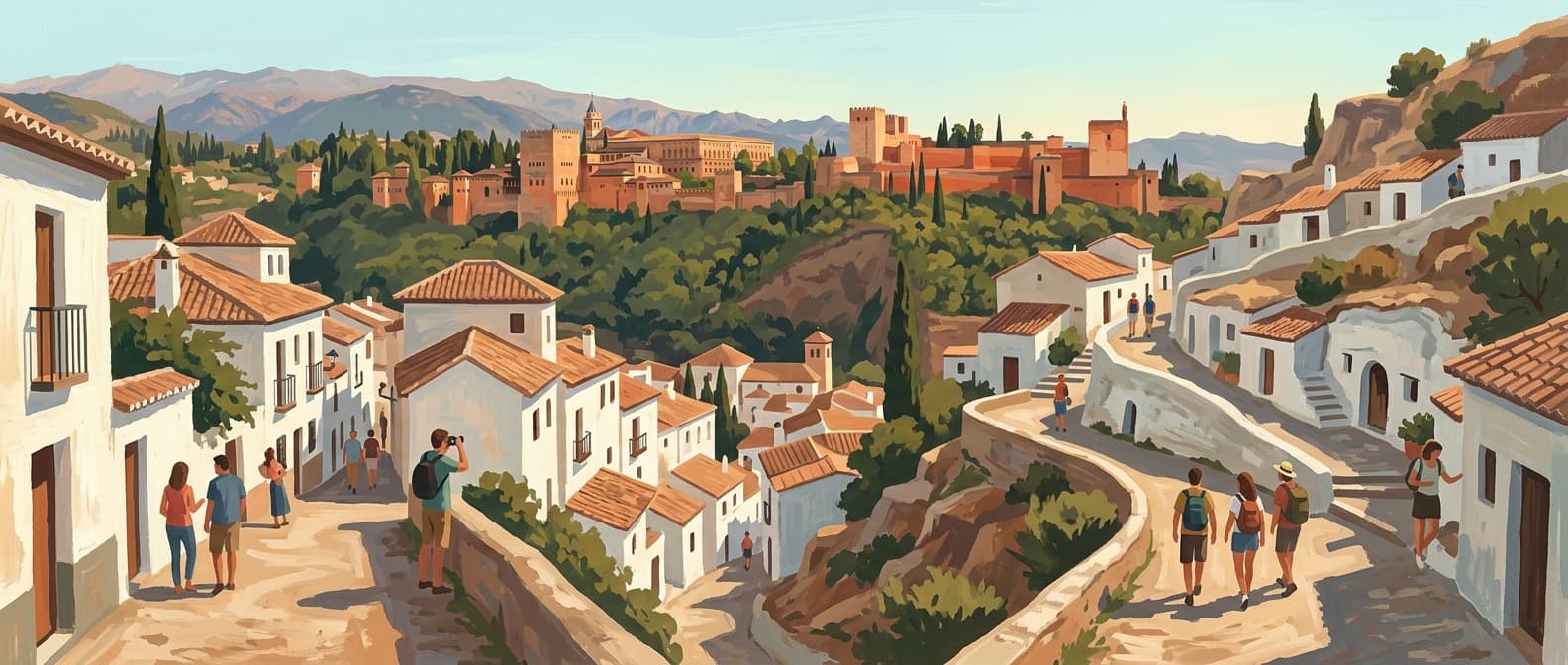
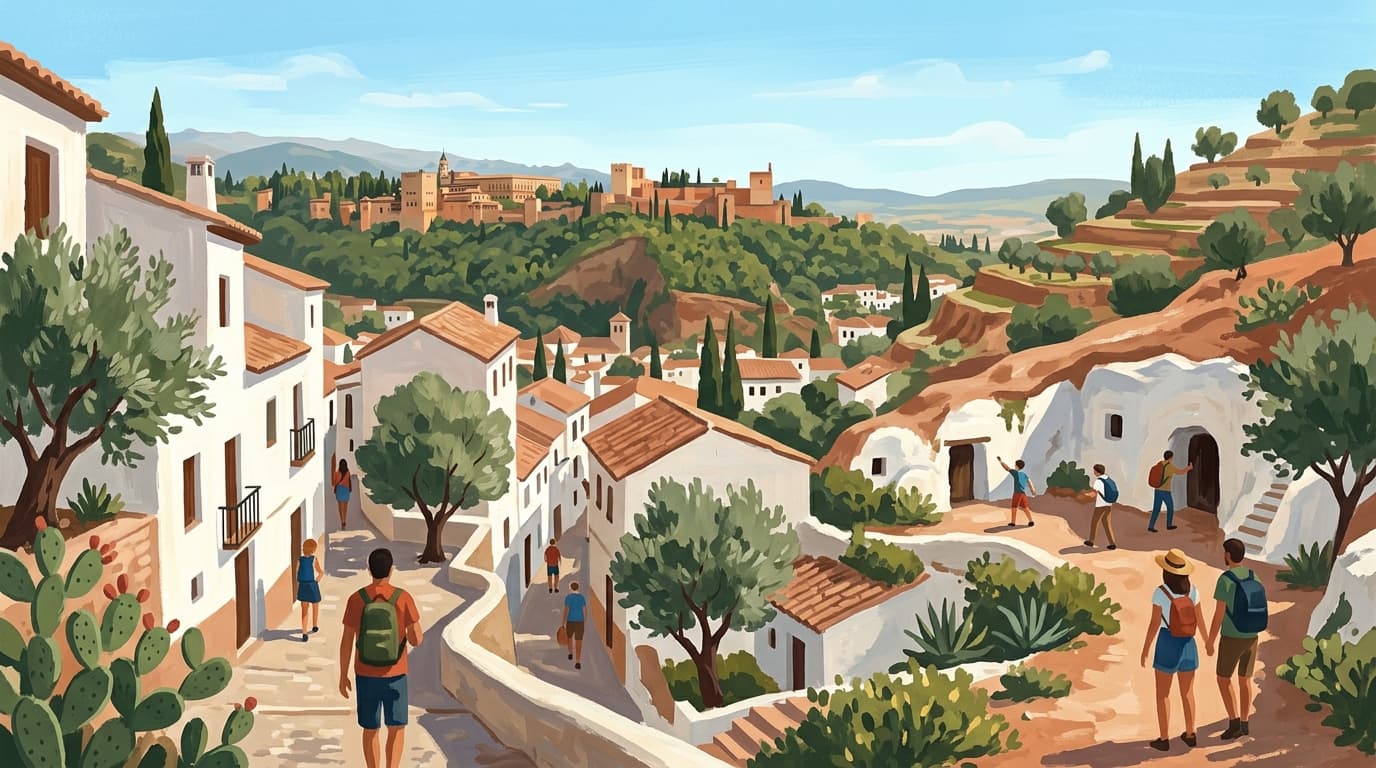
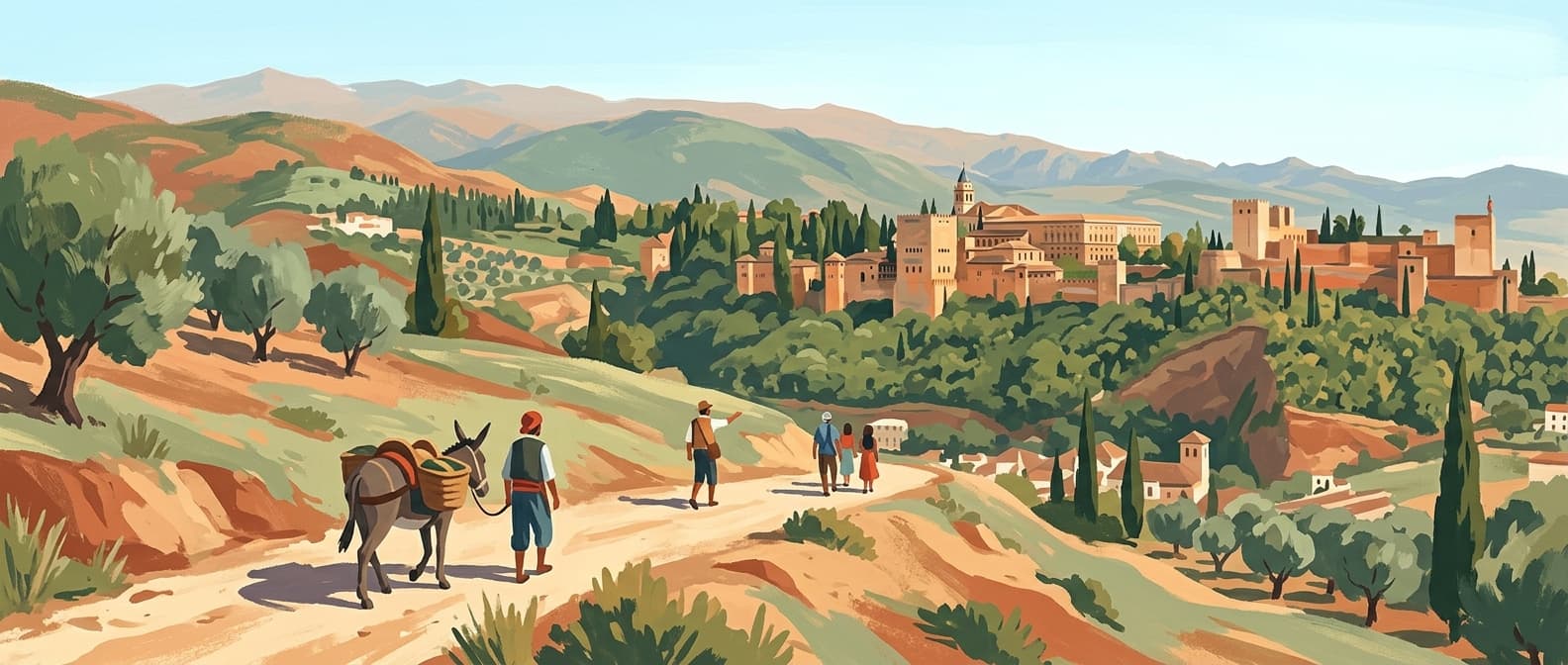
Almuñécar offers a distinct pace of life on the Granada coast, where Phoenician ruins sit alongside orchards of custard apples and avocados. It is a town defined by its microclimate, providing warm winters and a historic centre that feels authentically Spanish.
Situated roughly 80 kilometres south of Granada city, Almuñécar is the unofficial capital of the Costa Tropical. Unlike the more famous Costa del Sol to the west, this stretch of coastline is defined by steep cliffs and a unique microclimate created by the protective wall of the Sierra Nevada mountains. This geographical quirk allows the town to produce subtropical fruits that are rare elsewhere in Europe, including mangoes, papayas, and the green-skinned chirimoya (custard apple).
The town has a documented past that stretches back 3,000 years. Founded by the Phoenicians as 'Sexi', it has seen Romans, Moors, and Christians leave their mark on the landscape. Today, Almuñécar balances its identity as a relaxed holiday resort with its role as a living museum. Whether you are wandering through the narrow, whitewashed streets of the Old Town or relaxing on the pebbled shores of San Cristóbal beach, you are never more than a few steps away from a piece of ancient history.
What to See and Do
Castillo de San Miguel
The castle dominates the town’s skyline, perched on a rocky outcrop overlooking the sea. While the current fortifications are largely Moorish and Christian, the site has been used for defence since the Phoenician era. During the Nasrid period, the castle served as a strategic stronghold and a place of rest for the kings of Granada. Its history took a more violent turn during the Peninsular War, when it was heavily bombarded by the British Navy to dislodge French forces.
A walk through the castle grounds reveals thick stone walls, a deep moat, and several towers that offer panoramic views of the town and the Mediterranean. Inside the pavilion, a small museum explains the various stages of the fortress's evolution. One of the more haunting features is the dungeon, where prisoners were lowered through a hole in the ceiling. The climb up to the castle is steep, but the viewpoint at the top provides the best orientation of the coastline.
Parque del Majuelo and the Phoenician Fish-Salting Factory
At the foot of the castle lies Parque del Majuelo, a botanical garden that serves as the green heart of the town. It contains over 180 species of tropical and subtropical plants from every corner of the globe, including various types of palms, cacti, and exotic trees from Madagascar and the Philippines. The garden is also home to a series of 'province houses'—small artisan workshops representing different parts of Andalusia where you can buy local crafts.
The garden’s most significant feature, however, is the ruins of a Phoenician fish-salting factory dating back to the 4th century BC. This was the site where the Romans later produced 'garum', a highly prized fermented fish sauce that was exported across the Roman Empire. You can still see the stone basins where the fish was processed. The park frequently hosts concerts and festivals, including the renowned Jazz en la Costa, making it a central point for local culture.
Cueva de Siete Palacios Archaeological Museum
Tucked into the labyrinthine streets of the Barrio de San Miguel, this museum is as interesting for its architecture as for its contents. It is housed within a series of Roman vaults (the 'Cave of Seven Palaces') that once supported the platform of a massive Roman temple, likely dedicated to Minerva. The use of these underground spaces to support a public plaza above is a testament to Roman engineering.
The museum holds an impressive collection of artefacts found locally, but the standout piece is an Egyptian solid quartz vase. It dates back to the 17th century BC and features hieroglyphics that once belonged to the Pharaoh Apophis I. It is believed to have arrived in Almuñécar on a Phoenician trading vessel, highlighting the town's importance in ancient Mediterranean trade routes.
The Roman Aqueduct and Baths
Almuñécar features one of the most complete Roman aqueducts in the province of Granada. It was built in the 1st century AD to supply water to the fish-salting factory. While there are five distinct sections still visible, the most accessible is located in the Plaza Mayor. If you venture slightly inland to the Carrera de la Concepción, you can see a large section with two tiers of arches still standing tall among the chirimoya orchards. Nearby, the ruins of the Roman baths provide further evidence of the sophisticated infrastructure of the town’s ancient predecessors.
Peñones de San Cristóbal
This natural monument consists of three large rock formations that jut out into the sea, separating the beaches of San Cristóbal and Puerta del Mar. The largest rock, the Peñón del Santo, is topped by a large cross and offers an easily accessible viewpoint. It is a fantastic place to watch the sunset and offers a clear view of the castle and the white houses of the old town spilling down the hillside.
Loro Sexi Bird Park
Located on the slopes beneath the castle, this ornithological park is home to around 1,500 birds representing over 100 species. While it is particularly popular with families, it is also of interest to bird enthusiasts. You can see parrots, cockatoos, macaws, and even lemurs and meerkats. The park also includes a well-maintained cactus garden on its upper levels, offering another vantage point over the town.
Practical Information
Opening Times and Ticket Prices:
Castillo de San Miguel and Cueva de Siete Palacios are usually visited on a combined ticket. Prices are approximately €4.00 for adults and €2.50 for children and pensioners. Hours vary by season: typically Tuesday to Saturday from 10:00 to 13:30 and 17:00 to 19:30 (summer hours are later, often starting at 18:30). On Sundays, they are usually open only in the morning, and they are closed on Mondays.
Parque del Majuelo is free to enter and is generally open daily from 08:00 to 22:00. Loro Sexi Bird Park costs approximately €4.00 for adults and €2.00 for children, with hours similar to the castle.
How to Get There:
Almuñécar is well-connected by road via the A-7 motorway. From Granada city, the drive takes about an hour on the A-44. If you are travelling by public transport, ALSA runs frequent buses from both Granada and Málaga. The journey from Granada takes between 75 and 100 minutes depending on whether it is a direct service.
Parking:
Parking in the centre can be difficult during the peak summer months. The most convenient option is the large underground car park at Paseo del Altillo, which is located right on the seafront and is within easy walking distance of the Old Town and the castle.
Where to Eat Nearby
For a traditional seafood experience, head to Lute y Jesús on the Paseo del Altillo. They are famous for their fried fish platters and fresh shellfish, served in a lively environment overlooking the water. If you prefer something more refined, Restaurante El Árbol Blanco offers a contemporary take on Mediterranean flavours, often using the town’s famous tropical fruits in their dishes. For authentic tapas in the heart of the Old Town, Mesón Gala is highly regarded for its friendly service and generous portions of traditional Spanish fare, such as grilled octopus and local cheeses.
Where to Stay
Accommodation in Almuñécar ranges from traditional guesthouses to modern spa hotels. Hotel Casablanca is a characterful option near San Cristóbal beach, featuring Moroccan-inspired decor that reflects the town's Moorish heritage. For families, Hotel Victoria Playa provides extensive facilities including a swimming pool and organised activities, located just a short walk from the town centre. If you prefer a more luxurious stay, Hotel Albaicín del Mar offers large suites and a beautifully designed pool area featuring waterfalls and tropical plants.