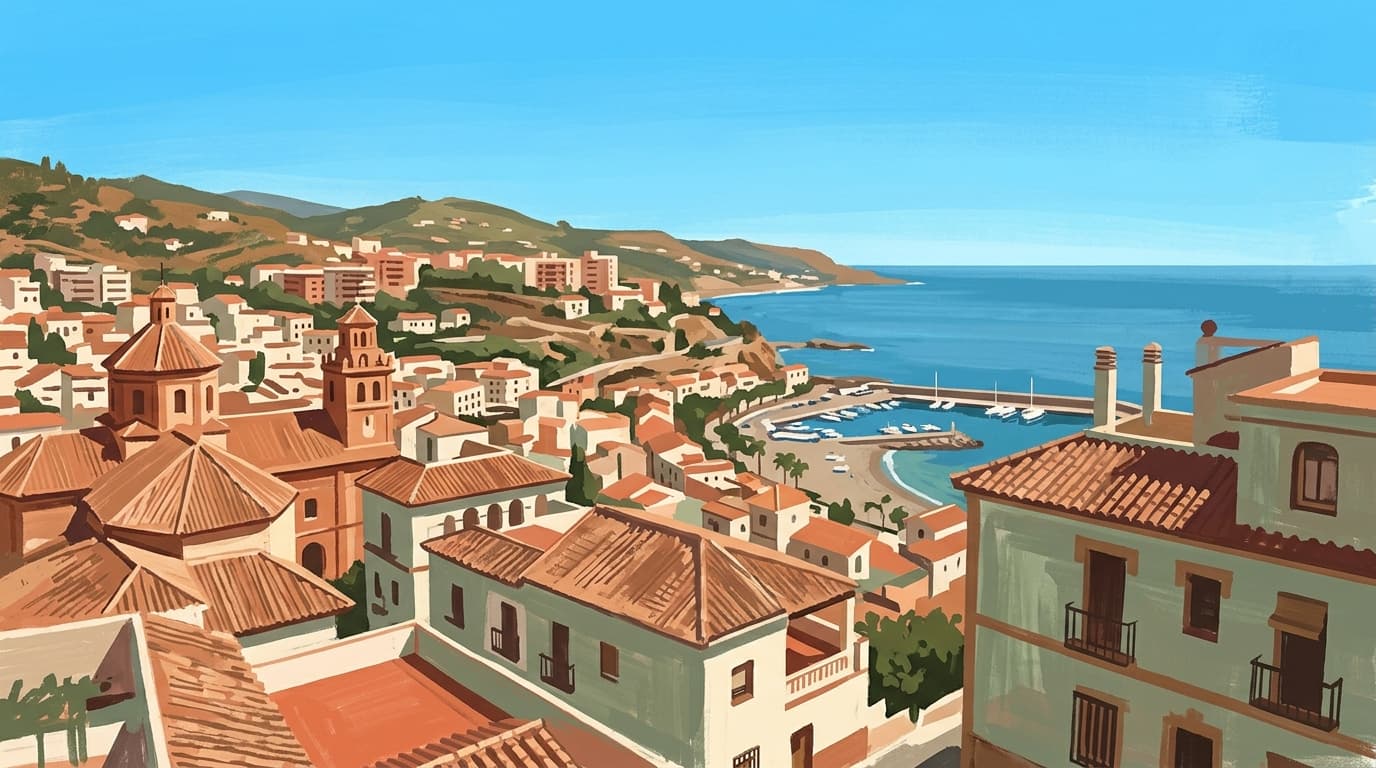
Motril serves as the unofficial capital of the Costa Tropical, offering a working-town energy and maritime character that sets it apart from more manicured tourist resorts. It is a place where the industrial history of sugar cane production meets a thriving commercial port and expansive Mediterranean beaches.
Motril is the largest town on the Granada coast, positioned between the foothills of the Sierra Luján and the Alboran Sea. Unlike many of its neighbours along the southern coast of Spain which rely almost exclusively on tourism, Motril maintains a productive hub with a deep-rooted agricultural and maritime identity. For centuries, this area was the heart of Europe’s sugar industry, and that legacy remains visible in the architecture, the museums, and the local economy today. Visitors find a balance of cultural sites in the town centre and leisure opportunities at the port and nearby beaches.
While the town centre sits slightly inland, a short drive or a long walk connects you to the port and the vast stretches of sand that define the shoreline. Motril provides an authentic slice of Andalucian life, where the tapas are generous, the seafood is exceptionally fresh, and the pace of life remains dictated by the seasons rather than the holiday calendar. Whether you are interested in the technical history of rum production or simply want to find a quiet spot on a wide beach, Motril offers a comprehensive coastal experience without the artifice of the more famous costas.
What to See & Do
Museo Preindustrial de la Caña de Azúcar
This is perhaps the most significant cultural site in Motril. The Pre-industrial Sugar Cane Museum is built over the remains of a 16th-century sugar mill, making it a unique archaeological site in Europe. It documents how Motril became a global leader in sugar production between the 13th and 18th centuries. The museum features life-sized replicas of the heavy wooden machinery used to crush the cane, along with detailed explanations of the refining process. It is an immersive way to understand how this crop shaped the landscape and the social structure of the Costa Tropical for half a millennium.
Ron Montero Distillery
Continuing the sugar legacy, the Ron Montero Distillery was founded in 1963 by Francisco Montero. The family-run business produces some of the most respected rum in Spain, including the famous Ron Pálido. Located on the outskirts of the town, the distillery offers tours that explain the "solera" system of aging spirits, which is more commonly associated with sherry production. You can walk among the rows of American oak barrels and learn about the specific distillation methods that give the local rum its distinct, smooth character. The smell of molasses and toasted wood in the warehouse is a highlight of the visit.
Santuario de Nuestra Señora de la Cabeza
Perched on a hill overlooking the town, this sanctuary is dedicated to the patron saint of Motril. The site has a layered history; it was originally built on the ruins of a Moorish palace that once belonged to the mother of Boabdil, the last Sultan of Granada. Although the church was heavily damaged during the Spanish Civil War and subsequently restored, it remains a focal point for local devotion. The climb to the sanctuary is rewarded with panoramic views across the town, the port, and the surrounding plains known as the Vega, where sugar cane once grew in abundance.
The Port and the Lonja
The Puerto de Motril is both a commercial gateway to North Africa and a leisure marina. Watching the ferries arrive from Melilla or Nador is a common local pastime, but the real interest for visitors is the Lonja (fish market). Early in the morning or late in the afternoon, you can observe the local fishing fleet landing their catch. This is the source of the famous Quisquilla de Motril, a small, blue-tinted shrimp that is highly prized by chefs across Spain for its sweet flavour and firm texture.
Playa de Poniente and Playa Granada
The coastline at Motril is divided into several distinct zones. Playa de Poniente is the most accessible from the town centre, characterized by its immense width and pebble-and-sand composition. It is lined with chiringuitos (beach bars) and has a long promenade popular with joggers and families. Further west lies Playa Granada, which has a more upscale feel. This area is home to the Los Moriscos Golf Club and was famously the summer retreat for King Baudouin and Queen Fabiola of Belgium. The beaches here are rarely crowded, offering plenty of space even in the peak of summer.
Charca de Suárez
For those interested in the natural world, the Charca de Suárez is a vital wetland reserve located right on the edge of the urban area. It is one of the few remaining freshwater wetlands on the Granada coast and serves as a crucial stopover for migratory birds. The reserve features several hides where you can spot species such as the purple swamphen or the rare white-headed duck. It is a quiet, green contrast to the industrial port nearby and shows the environmental diversity of the municipality.
Practical Information
Opening Times:
The Sugar Cane Museum generally opens Tuesday to Saturday from 10:00 to 14:00 and 16:00 to 19:00, and on Sundays from 10:00 to 14:00. Note that many smaller shops in the town centre close for the siesta between 14:00 and 17:30. The Ron Montero Distillery offers tours typically at 12:00 (English) and 13:00 (Spanish), but these must be booked in advance through their website.
Ticket Prices:
Entry to the Sugar Cane Museum is approximately €4 for adults, with discounts for children and retirees. Tours of the Ron Montero factory are often free of charge as part of their promotional efforts, though it is polite to purchase a bottle from the gift shop. Access to the Charca de Suárez is free, but opening hours are restricted to specific times to protect the wildlife.
How to Get There:
Motril is well-connected by road. From Granada city, it is a 45-minute drive south on the A-44 motorway. From Málaga, take the A-7 east, which takes about 1 hour and 15 minutes. ALSA operates regular bus services from Granada, Almería, and Málaga. The bus station in Motril is located on the northern side of the town centre.
Parking:
In the town centre, parking can be difficult. There is a large underground car park at Plaza de España which is convenient for the museum and town hall. If you are heading to the beach, there is ample free parking along the promenade and in large open lots near Playa de Poniente.
Where to Eat Nearby
For an authentic local experience, El Zarcillo in the town centre is a favourite. This gastro-bar focuses on high-quality local ingredients, particularly the local shrimp and seasonal vegetables from the Vega. Their wine list is one of the best in the area. Down at the beach, Chiringuito Hoyo 19 at Playa Granada offers excellent grilled fish and rice dishes in a relaxed setting. You must try the Espeto de Sardinas (sardines on a skewer) or the Quisquillas. Another reliable option is the Espacio Gastronómico inside the municipal market, where you can eat fresh produce straight from the stalls.
Where to Stay
For proximity to the sea, the Hotel Elba Motril Beach & Business Hotel is a solid choice, offering comfortable rooms and a pool right across from Playa de Poniente. If you prefer something with more character, Casa de los Bates is a boutique guest house located in a 19th-century mansion just outside the town. It features lush botanical gardens and views over the sea and the Sierra Nevada, providing a quieter, more historical atmosphere for your stay in the region.