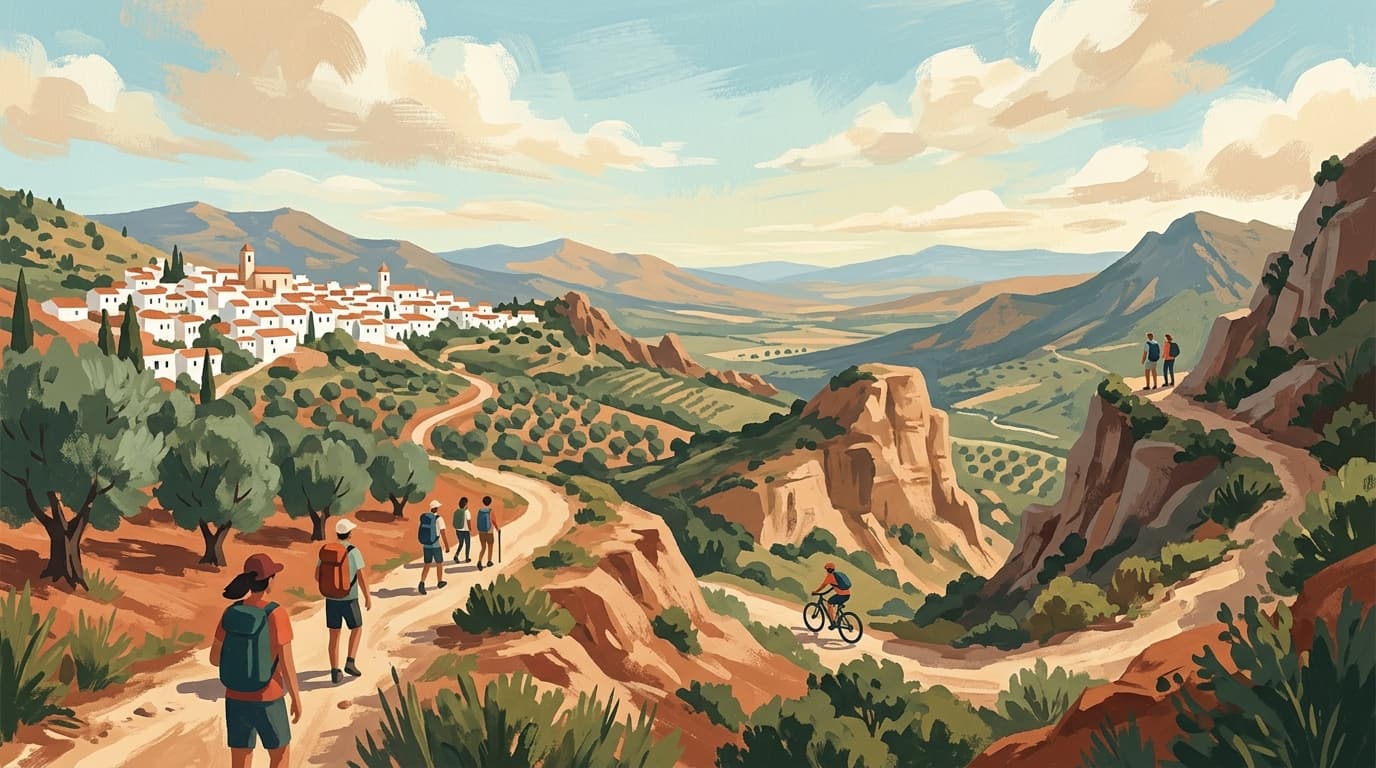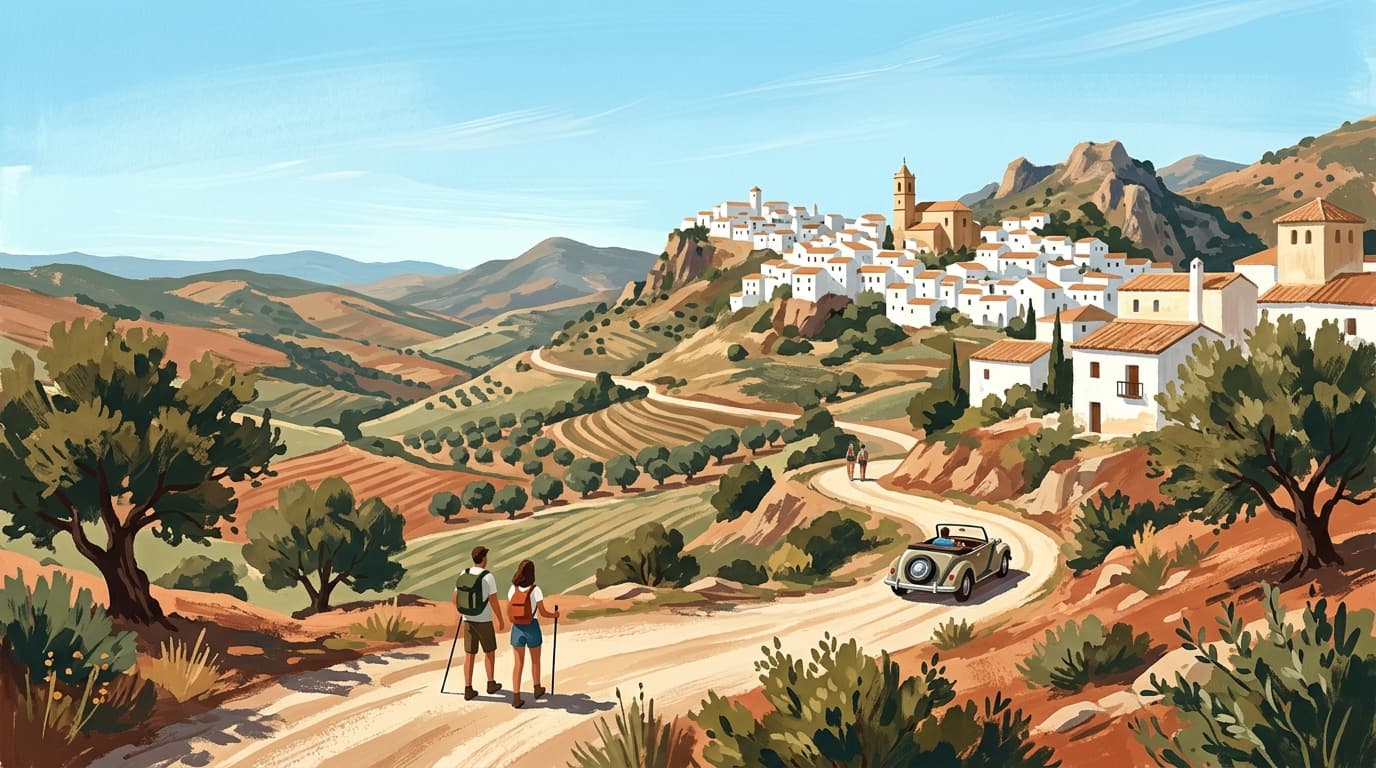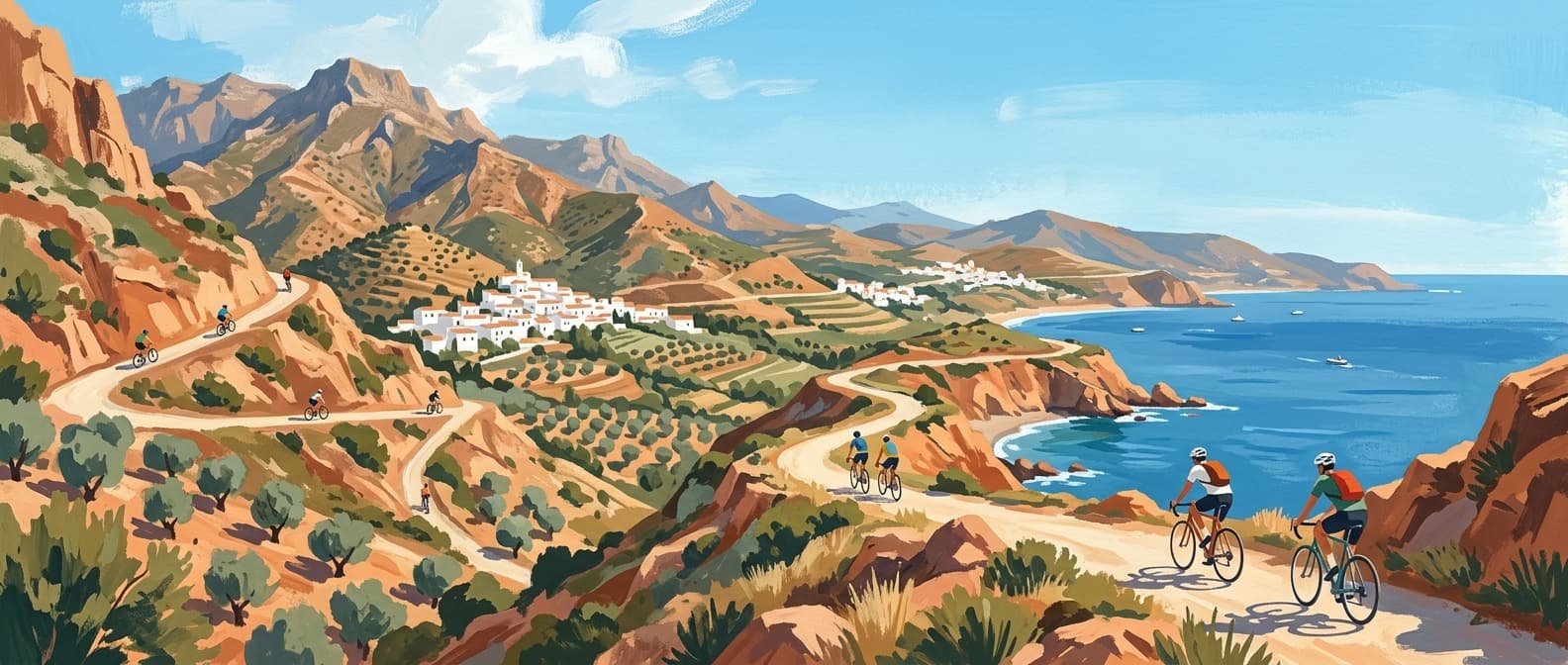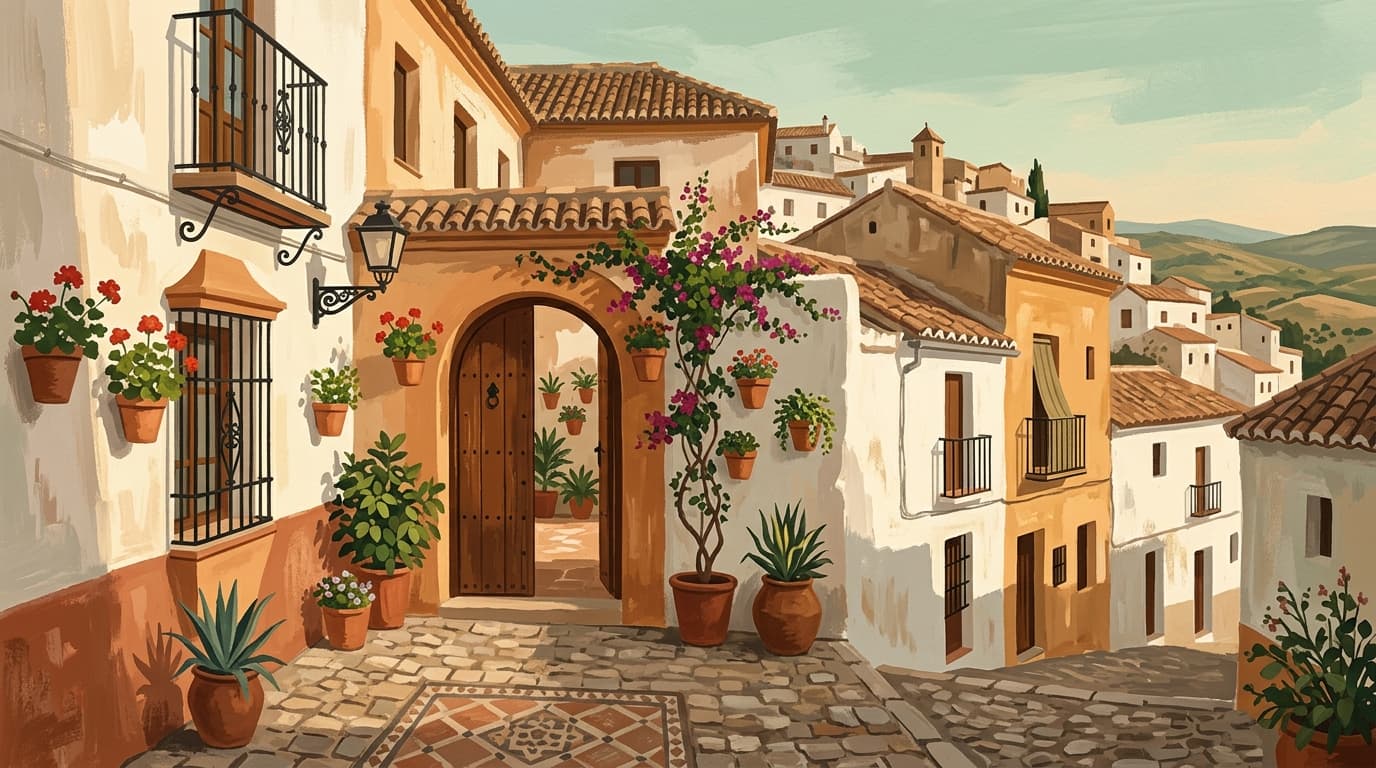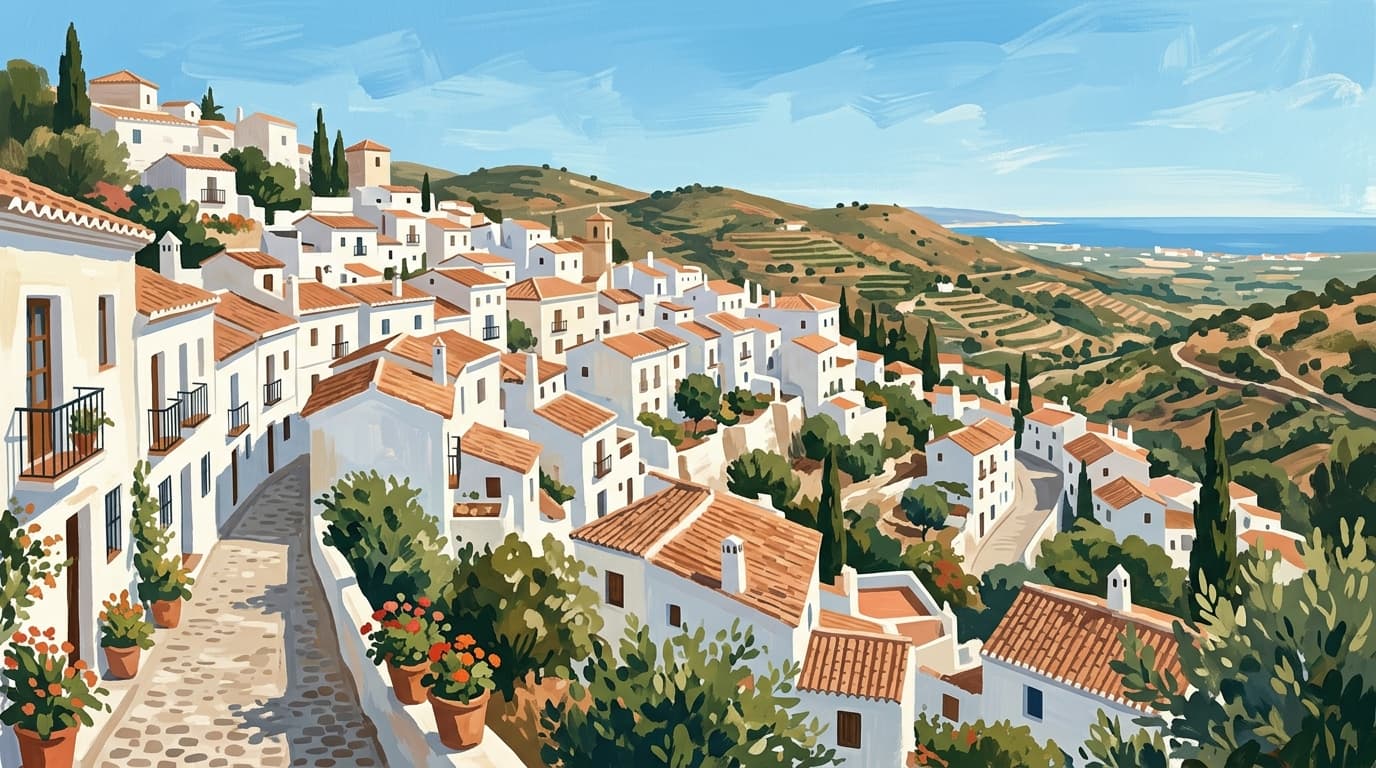
Often cited as the most beautiful village in Spain, Frigiliana is a steep labyrinth of whitewashed houses and cobalt-blue doors overlooking the Mediterranean. Its Moorish legacy remains etched into every winding alleyway and ceramic plaque found within the historic Mudéjar quarter.
High above the coastal resort of Nerja, Frigiliana sits on a ridge of the Sierra de Enmedio, part of the Tejeda and Almijara mountain range. At 300 metres above sea level, it provides a cooling respite from the heat of the Costa del Sol Oriental, while maintaining a clear view of the sea. The village is divided into two distinct sections: the lower, newer part (Barrio Bajo) and the historic upper section, known as the Barrio Mudéjar. This upper quarter is widely regarded as one of the best-preserved examples of Moorish domestic architecture in Spain, with its layout largely unchanged since the 16th century.
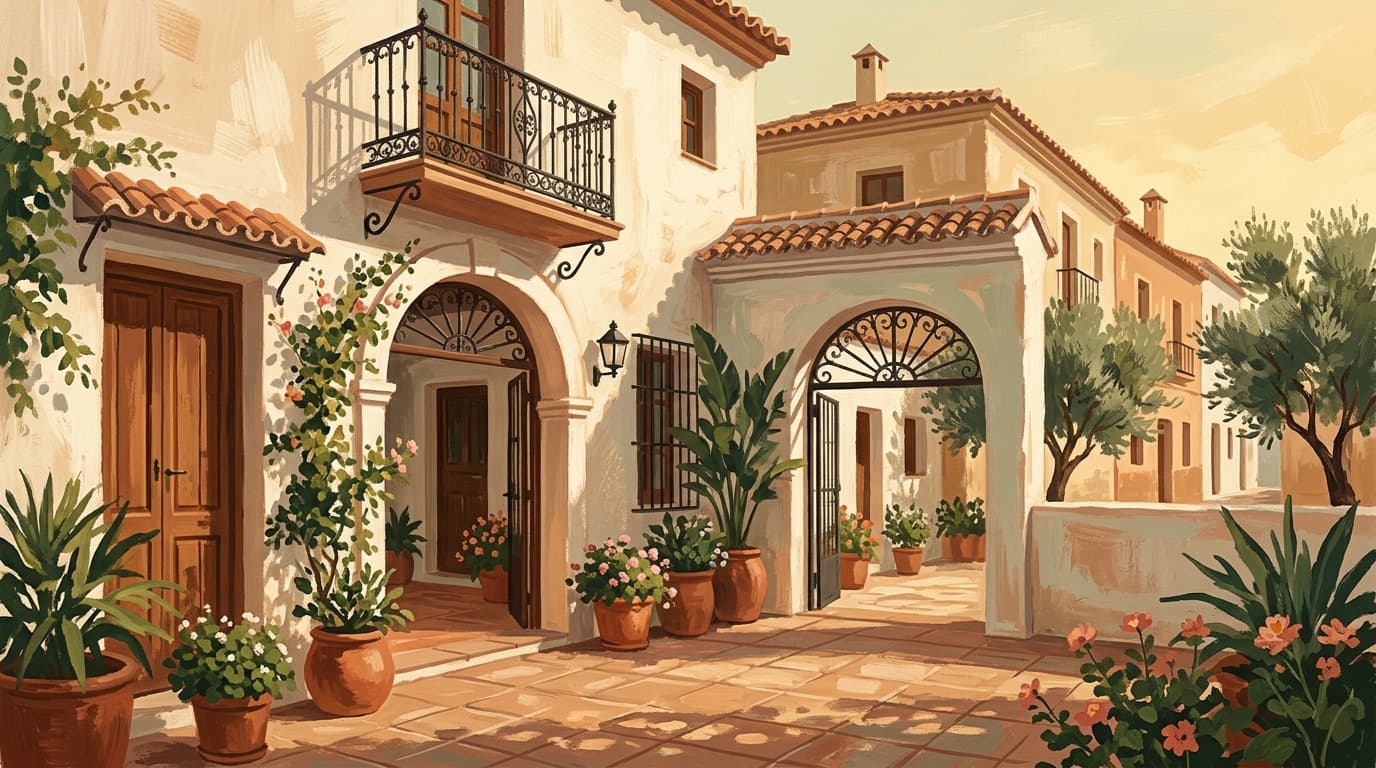
Visitors typically arrive at the southern end of the village, where the road from the coast terminates. From here, the village rises steeply. The visual impact is immediate: dazzlingly white walls, terracotta roof tiles, and an abundance of bougainvillaea and geraniums tumbling from wrought-iron balconies. While many coastal towns have succumbed to over-development, Frigiliana has retained its architectural integrity through strict local regulations, ensuring that every renovation respects the traditional aesthetic that has earned it numerous national awards for beauty.
What to See & Do
The Barrio Mudéjar
The primary reason to visit Frigiliana is to explore the Barrio Mudéjar. This is the oldest part of the village, a network of narrow, cobbled streets that climb the hillside. Many of these paths consist of shallow steps, designed to be navigated by mules and donkeys rather than modern vehicles. As you walk, you will notice the intricate stone patterns in the pavement, often depicting local motifs or geometric designs. This area is the site of the original Moorish settlement, and the architecture reflects a need for shade and defensive positioning, with houses built tightly together to keep the interiors cool during the long Andalucian summers.
The Twelve Ceramic Plaques
While wandering through the old town, look for a series of twelve ceramic plaques fixed to the walls. These are not merely decorative; they tell the story of the Battle of the Rock of Frigiliana, which took place in 1569 during the Morisco Rebellion. Each tile depicts a different stage of the conflict, from the initial uprising to the final defeat of the Moorish inhabitants by the Christian forces of the Marquis of Los Vélez. The plaques are written in old Spanish and offer a fascinating insight into the local heritage that shaped the village’s character. Following the trail of these tiles is an excellent way to ensure you see the most atmospheric corners of the village.
El Ingenio (The Molasses Factory)
At the entrance to the old quarter stands a grand 16th-century building known as El Ingenio. Originally the Renaissance palace of the Counts of Aguilar, it now houses Nuestra Señora del Carmen, the only traditional molasses factory currently operating in Europe. Here, juice is extracted from sugar cane to produce miel de caña (cane honey). While the factory itself is usually closed to public tours for safety and hygiene reasons, you can buy the dark, syrupy molasses in almost every shop in the village. The building itself is a striking example of Renaissance architecture, built using stones from the ruined Moorish castle that once stood on the summit of the hill above.
Plaza de las Tres Culturas
The Plaza de las Tres Culturas (Square of the Three Cultures) sits at the heart of the village. The name celebrates the coexistence of Islamic, Jewish, and Christian communities in Frigiliana during the Middle Ages. This theme is central to the village's identity, culminating in the annual Festival of the Three Cultures held every August. The square serves as a focal point for social life and offers a wide terrace with panoramic views down the valley towards the Mediterranean. Just off the square, the 17th-century Church of San Antonio de Padua is worth a visit for its simple but elegant interior and its historic wooden ceiling.
Botanical Garden Santa Fiora
Located on the edge of the village, this botanical garden is dedicated to plants that have been useful to the inhabitants of Frigiliana throughout history. It includes species used for food, medicine, and crafts, such as esparto grass, which is still used by local artisans to weave mats and baskets. The garden provides a tranquil walk along the hillside and offers a different perspective on the surrounding landscape, highlighting how the local population lived in harmony with the rugged terrain of the Axarquía.
Practical Information
Frigiliana is well-connected but requires some planning regarding transport and parking. The easiest way to reach the village is from Nerja, which is just 6 kilometres away. If you are driving from Málaga, take the A-7 motorway and exit at junction 292 for Nerja and Frigiliana. Follow the MA-5105 uphill for approximately ten minutes.
Parking: Parking inside the narrow streets of the old town is impossible. There is a large, paid underground municipal car park located at the Plaza de las Tres Culturas. There is also limited free parking along the approach roads, but these spaces fill up very early, especially during the summer and on weekends. It is highly advisable to use the municipal car park to avoid the stress of navigating the steep, dead-end streets.
Public Transport: A regular shuttle bus runs between the Nerja bus station and Frigiliana. The journey takes about 15 minutes and costs approximately €1.20 per person each way. Buses generally run every hour from 07:00 until 21:00, though the frequency is reduced on Sundays and public holidays. This is often the most convenient option if you wish to enjoy a glass of local wine with lunch.
Opening Times: Most shops and the tourist office (located in the Casa del Apero) are open from 10:00 to 14:00 and then from 16:00 to 19:00. Note that many businesses close on Sunday afternoons. Walking the streets of the village is, of course, free and can be done at any time, though the early morning or late afternoon provides the best light for photography and more comfortable temperatures for climbing the hills.
Where to Eat Nearby
The Garden: Located high in the Barrio Mudéjar, this restaurant is famous for its terrace views. It serves a mix of Mediterranean and international dishes, often incorporating local ingredients like molasses and goat’s cheese. It is an excellent spot for a sunset dinner.
El Casino: Situated near the main square, this is a traditional Spanish establishment with a relaxed atmosphere. It offers a range of local specialities, including choto al ajillo (kid goat in garlic sauce), which is a staple of the Axarquía region. The prices are reasonable and the service is friendly.
La Bodeguilla: For a more casual experience, this small bar is perfect for sampling local sweet wines. They serve traditional tapas and small plates. Try the local raisins and wine, which have been the backbone of the area's economy for centuries.
Where to Stay
For those wishing to stay overnight, Hotel Villa Frigiliana is the largest hotel in the village, located at the entrance to the Barrio Bajo. It offers comfortable rooms with balconies overlooking the mountains. For a more authentic experience, there are many boutique guest houses and self-catering apartments tucked away in the Barrio Mudéjar. These traditional houses often feature roof terraces with spectacular views, though they may require a steep walk to reach.