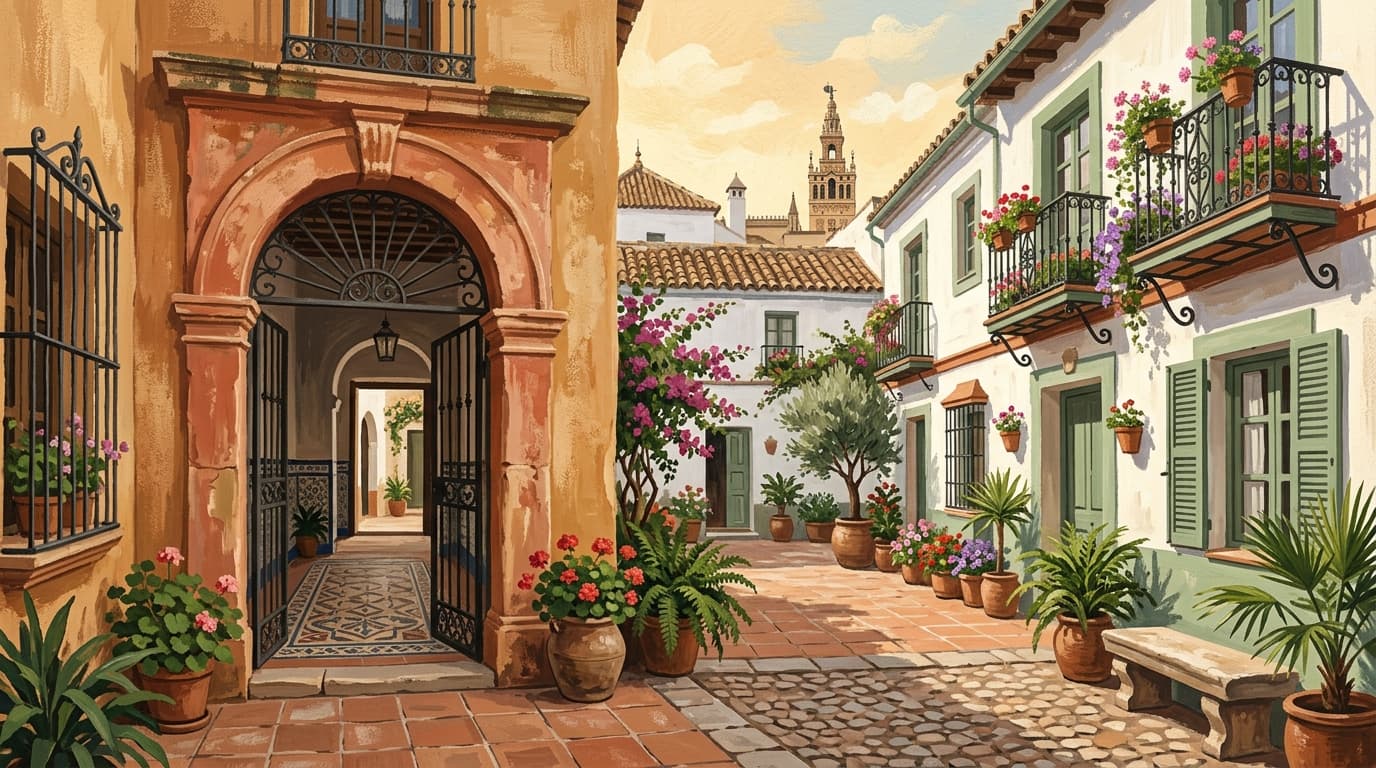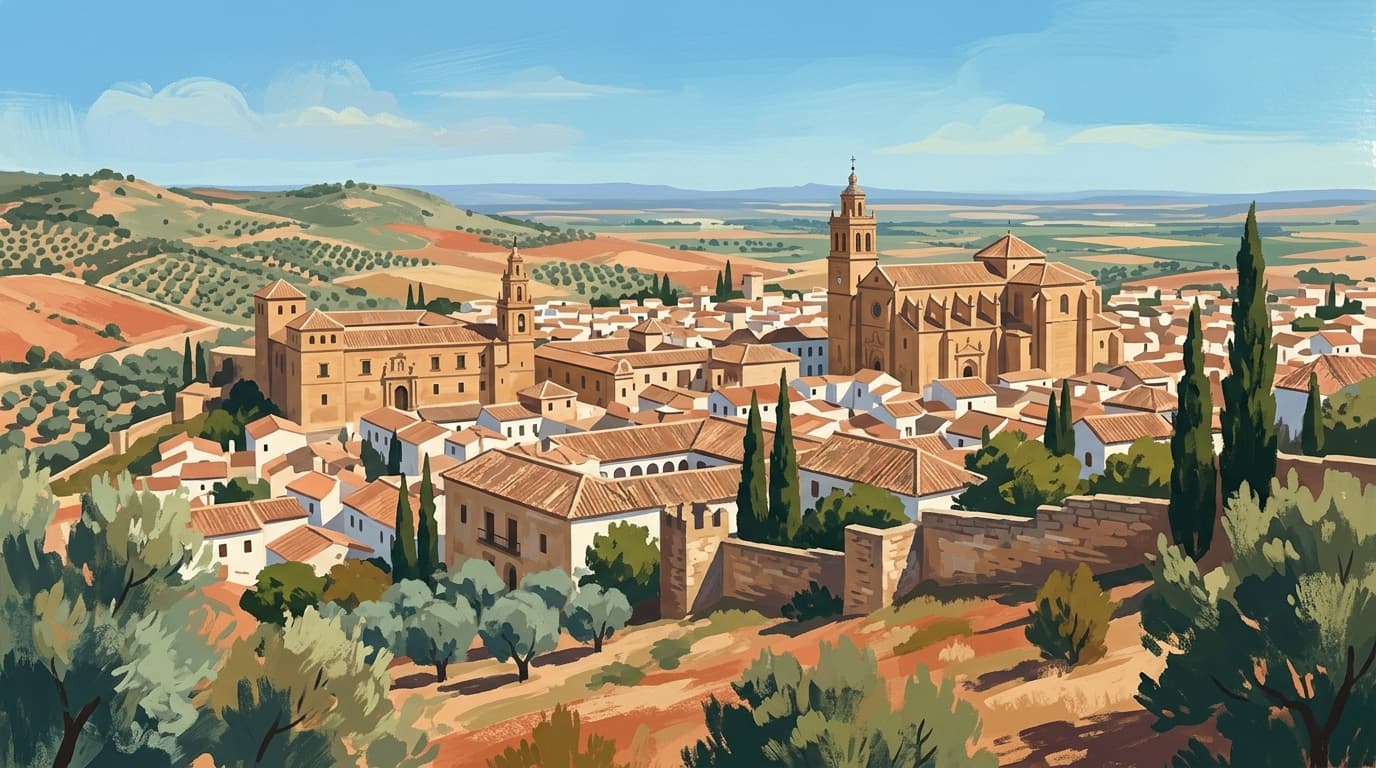
A town of honey-coloured stone and Baroque palaces, Osuna served as a powerful seat for the Dukes of Osuna, leaving behind a skyline of grand churches and one of Spain’s oldest universities.
Osuna rises from the rolling plains of the Campiña Sevillana, a town of monumental proportions that feels far more significant than its population of 17,000 might suggest. Located halfway between Seville and Granada, it was for centuries the ancestral seat of the Dukes of Osuna, one of the most powerful noble families in Spain. This legacy is visible in every street corner, from the carved stone escutcheons above palace doorways to the trio of grand monuments that crown the hill overlooking the town.
While many visitors arrive in the province of Seville looking for white-washed villages, Osuna offers something different. Its architecture is defined by the warm, golden limestone quarried from the surrounding hills, used to build some of the finest Baroque and Renaissance structures in Andalusia. Whether you are a history enthusiast, an architecture photographer, or a fan of contemporary television looking for filming locations, the town provides a quiet, dignified atmosphere that feels remarkably authentic and untouristed.
What to See & Do
The Colegiata de Nuestra Señora de la Asunción
The crown of Osuna is the Collegiate Church, a massive 16th-century temple that appears more like a cathedral. Built by the fourth Count of Ureña, it serves as the final resting place for the Dukes of Osuna. Inside, the art collection is staggering. The church holds five paintings by José de Ribera, also known as El Spagnoletto, including his famous 'Christ of the Expiation'.
The guided tour takes you beneath the main altar into the Pantheon of the Dukes. This is arguably the most impressive part of the visit; the subterranean chapel is a masterclass in Plateresque style, featuring intricate carvings and a circular courtyard that is considered the smallest Renaissance cloister in the world. The atmosphere here is somber and grand, a physical representation of the power the family once wielded.
The University of Osuna
Opposite the Colegiata stands the Antigua Universidad de la Purísima Concepción. Founded in 1548, it operated as an independent seat of learning for nearly three centuries. The building is distinct for its four ceramic-tiled towers and its elegant central courtyard. While part of the building still functions as a modern university centre, visitors can explore the chapel and the old hall, which features original 16th-century frescoes and a magnificent Mudéjar coffered ceiling. It remains one of the best-preserved Renaissance universities in the country.
Calle San Pedro and Baroque Palaces
UNESCO once described Calle San Pedro as one of the most beautiful streets in Europe. It is a long, sloping thoroughfare lined with aristocratic mansions and palaces. The standout is the Palacio de los Cepeda, which now serves as the local courthouse. Look up to see the ornate stone carvings and the heavy wooden doors that characterize the Andalusian Baroque style. Walking down this street provides a sense of the town's golden age in the 18th century, when the local nobility competed to build the most impressive facades.
The Plaza de Toros and Game of Thrones
Osuna gained international fame when its bullring was chosen as the filming location for 'Daznak’s Pit' in the fifth season of Game of Thrones. The Plaza de Toros is a solid, circular structure built in 1904 using stone from the ancient Roman quarries. Even if you aren't interested in the television series, the bullring is worth a visit for its small museum and the sheer scale of the stone construction. Local fans and the town council have embraced the connection, and you will find several nods to the show throughout the town, including a dedicated exhibition in the Museum of Osuna on Calle Sevilla.
Coto de las Canteras
Often referred to as the 'Petra of Andalusia', this ancient quarry on the outskirts of town is a sight of immense scale. Stone has been extracted here since before the Roman era, but today the interior has been hollowed out to create a massive subterranean auditorium. The entrance is flanked by large-scale modern reliefs carved directly into the rock face by local artist Francisco Valdivia. It is used for concerts and weddings, but during the day, you can explore the cavernous interior and appreciate the sheer volume of stone removed to build the town below.
Monasterio de la Encarnación
This 16th-century convent was originally a Jesuit school before being converted. The interior is famous for its courtyard, which is lined with 18th-century Sevillian tiles depicting biblical scenes, hunting motifs, and everyday life. The museum inside holds a collection of religious art and ornate statues, often explained with great pride by the resident cloistered nuns who manage the site.
Practical Information
Opening Times & Tickets
Most monuments in Osuna operate on a split schedule typical of southern Spain. They are generally open from 10:00 to 14:00 and reopen in the afternoon from 16:00 to 18:00 (winter) or 17:00 to 19:00 (summer). Many sites are closed on Mondays.
- The Colegiata: Entry is roughly €5, which includes a guided tour (usually in Spanish, though printed guides are available).
- The University: Entry is approximately €4.
- Combined Tickets: You can often purchase a combined ticket for the Colegiata, the University, and the Monastery for around €10-€12, available at the tourist office or the monuments themselves.
How to Get There
By Car: Osuna is excellently connected via the A-92 motorway. It is a 1-hour drive (90km) from Seville and roughly 1 hour 15 minutes (115km) from Málaga. Parking is generally manageable; look for spaces near the Plaza de Toros or the fairgrounds (Recinto Ferial) if the narrow central streets look daunting.
By Train: Osuna sits on the medium-distance line between Seville and Almería. Several trains run daily from Seville's Santa Justa station, taking about 1 hour and 10 minutes. The train station is a 15-minute walk from the town centre.
By Bus: The ALSA bus service connects Osuna with Seville and Málaga multiple times a day, though the train is generally more comfortable and reliable.
Where to Eat Nearby
For a traditional experience, head to Casa Curro on Calle Plaza Mayor. This institution is famous for its 'porra osunense' (a thicker version of salmorejo) and local stews. It was also a favourite haunt for the Game of Thrones cast during filming.
For something slightly more contemporary, Cantina La Quince offers excellent tapas with a focus on local produce. If you are near the university, Hospedería del Monasterio provides a beautiful setting with a terrace overlooking the town, serving classic Sevillian dishes like Carrillada (braised pork cheek) and locally sourced olive oils.
Where to Stay
The Palacio de la Galvana is a standout choice for those wanting to immerse themselves in the town's history. This converted 18th-century palace retains many original features and is located near the main monumental area. For a more boutique feel, Hospedería del Monasterio offers a rooftop pool with incredible views of the Colegiata, making it an ideal spot to relax after a day of climbing the steep streets of the old ducal quarter.