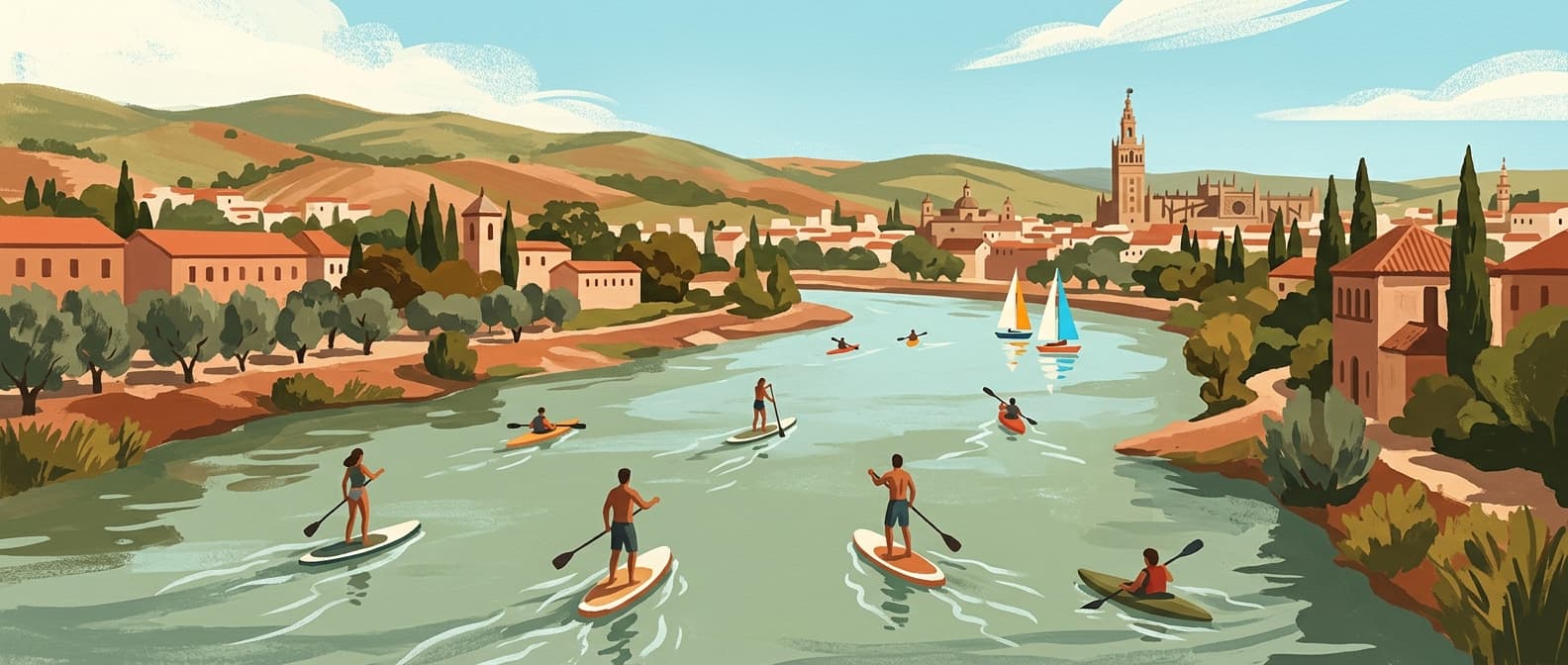
Separated from Seville’s main tourist hub by the Guadalquivir river, Triana maintains a fierce sense of independence and a distinct identity as the home of sailors, potters, and flamenco artists. Crossing the iconic iron bridge reveals a neighbourhood of tile-fronted houses and traditional patios that offers an authentic look at the city’s working-class heritage.
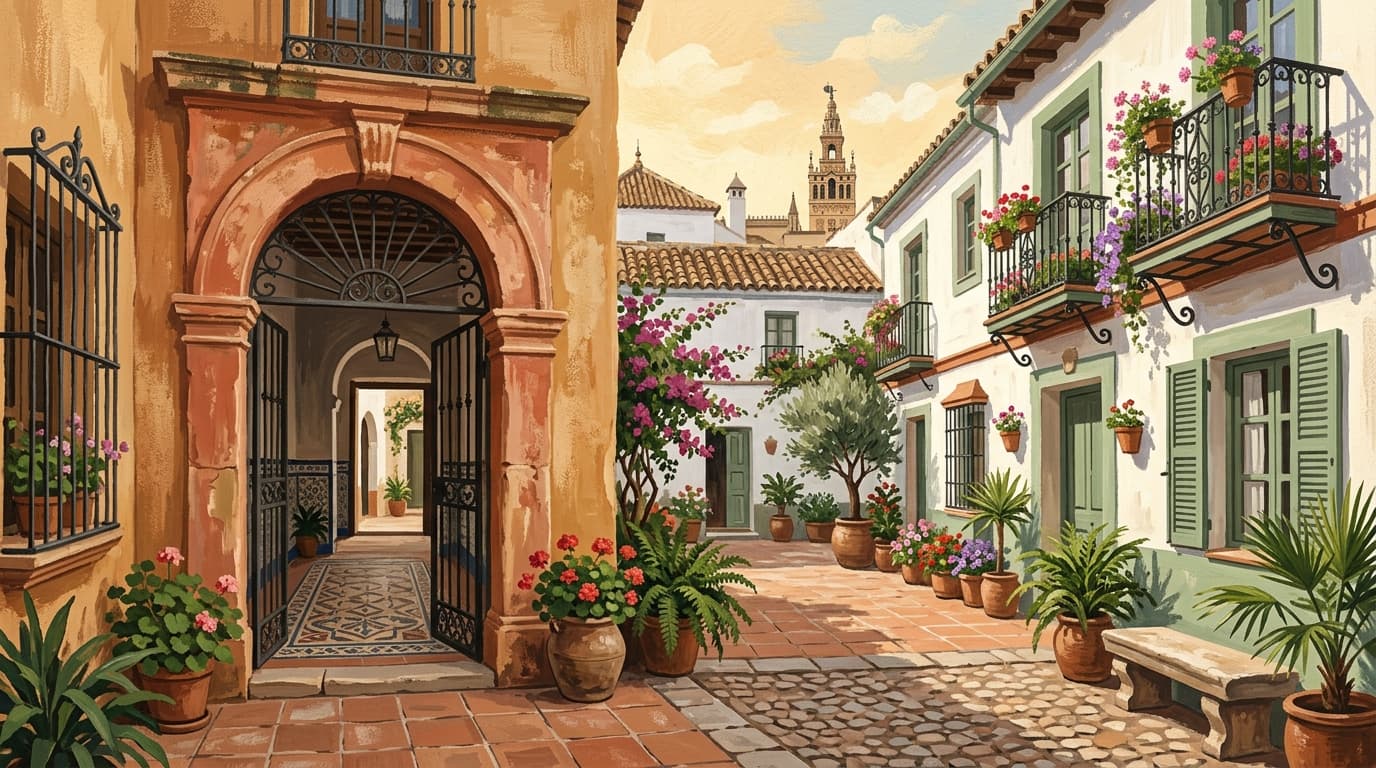
Triana is not merely a neighbourhood; for many of its residents, it is a separate entity entirely. Locally referred to as the “Republic of Triana,” this district has historically turned its back on the aristocratic centre of Seville to cultivate its own unique culture. For centuries, it was the gateway to the city for maritime trade, inhabited by the sailors who manned the Spanish fleets and the Roma families who pioneered the soulful art of flamenco in the communal courtyards known as corrales de vecinos.
Today, while the city has modernised, Triana remains the spiritual heart of Seville's artisanal traditions. Its streets are lined with workshops producing the glazed azulejo tiles that decorate the region’s grandest monuments. Exploring Triana requires a slower pace, moving from the river views of Calle Betis to the ceramic ovens of the old pottery district and the busy stalls of its historic market.
What to See & Do
Puente de Isabel II (Triana Bridge)
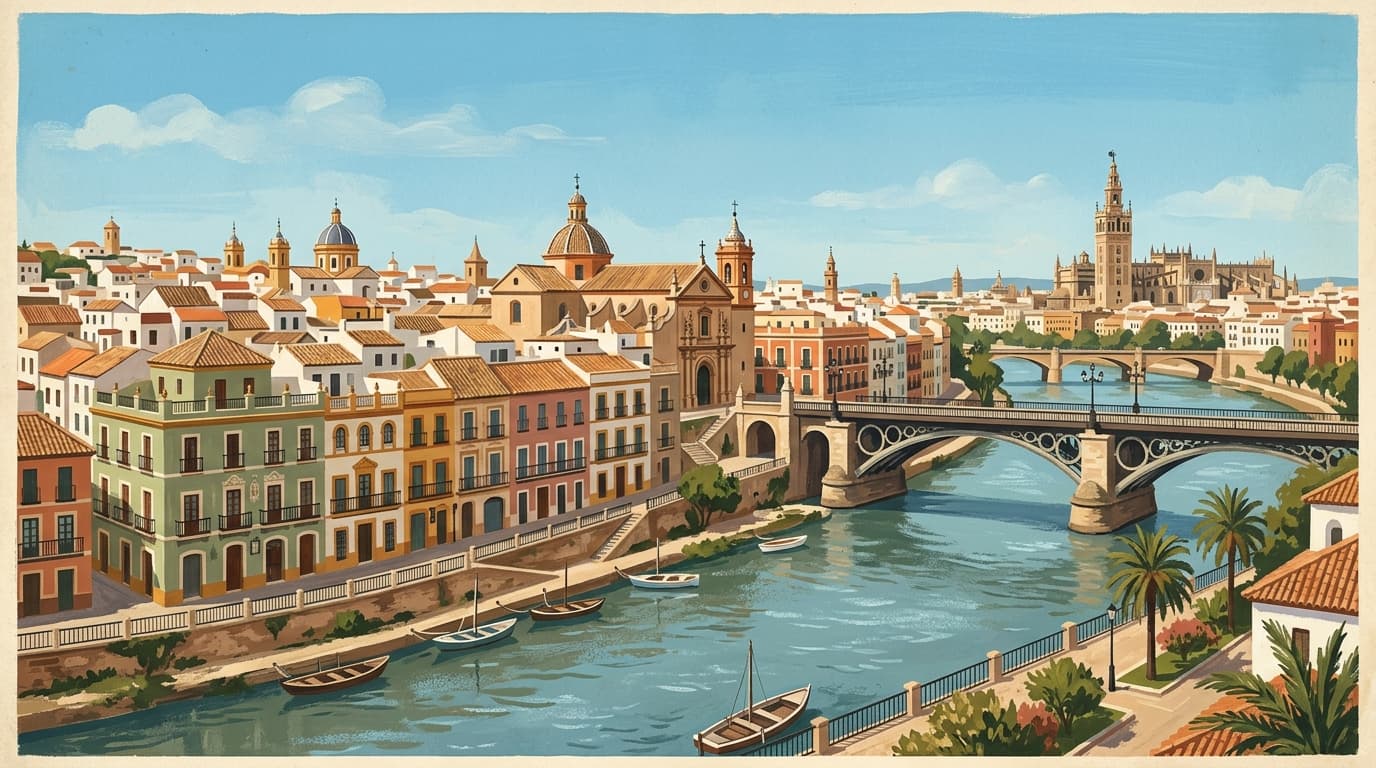
The most direct link between Triana and the rest of Seville is the Puente de Isabel II, though everyone in the city calls it the Triana Bridge. Completed in 1852, this cast-iron structure replaced an ancient bridge of boats that had stood since the 12th century. It is the oldest iron bridge in Spain and serves as more than just a thoroughfare; it is a symbolic threshold. Standing on the bridge at sunset provides one of the most celebrated views in Andalucía, with the Torre del Oro and the Giralda reflected in the water. For visitors, crossing the bridge marks the transition from the monumental Seville of the Cathedral and Alcázar to the more intimate, lived-in atmosphere of the west bank.
Mercado de Triana and the Castillo de San Jorge
Immediately to the right after crossing the bridge is the Mercado de Triana. This is a working food market where residents still haggle over the catch of the day, cured hams, and local olives. It is an excellent place to observe daily life, but it also sits atop a darker piece of history. Beneath the market stalls lie the remains of the Castillo de San Jorge, which served as the headquarters of the Spanish Inquisition for over three centuries. While the archaeological site itself is currently undergoing restoration and has limited access, the lobby serves as a tourist information point where you can learn about the castle’s role as a prison and tribunal. The contrast between the lively market above and the somber ruins below is a testament to the layers of history that define the district.
Centro Cerámica Triana
Triana’s identity is inseparable from its clay. For centuries, the neighbourhood was the centre of Seville’s ceramic industry, using the mud from the banks of the Guadalquivir to produce everything from simple kitchenware to the elaborate tiles of the Plaza de España. The Centro Cerámica Triana, located on Calle Antillano Campos, is housed in the former Santa Ana factory. This museum preserves the historic kilns, some dating back to the 16th century, and explains the intricate process of shaping and painting the pottery. It is an essential stop for understanding why so many houses in the area feature such colourful façades. After the museum, a walk down the nearby Calle Alfarería reveals several surviving workshops where you can still buy hand-painted pieces.
Parroquia de Santa Ana
Often called the “Cathedral of Triana,” the Parroquia de Santa Ana is the oldest parish church in Seville, founded in 1276 by King Alfonso X. According to local legend, the King built the church in honour of Saint Anne after she cured him of a persistent eye disease. The building is a masterful example of Gothic-Mudéjar architecture, featuring a striking red-brick exterior and an interior filled with significant artworks. Of particular interest is the “Daza Tomb,” which locals believe grants luck to those who kick the recumbent figure of the knight. The church serves as the focal point for many of the neighbourhood's religious festivals, including the Velá de Santa Ana in July.
The Streets of Triana: Betis and San Jacinto
To experience the social life of Triana, one must visit its two most famous streets. Calle Betis runs parallel to the river and is famous for its brightly coloured house fronts and its row of bars and restaurants. It is a favoured spot for an evening walk at dusk. In contrast, Calle San Jacinto is the neighbourhood’s commercial spine. Much of this street is pedestrianised, making it a natural gathering point for families. Here, the traditional tapas bars are less focused on visitors and more on the local regulars. Look out for the small shrines and ceramic altars built into the walls of the buildings, representing the deep-seated religious devotion that still permeates the district.
Practical Information
Triana is easily accessible on foot from Seville’s historic centre; the walk from the Cathedral to the bridge takes roughly 15 minutes. For those using public transport, the Metro Line 1 has a station at Plaza de Cuba, which is at the southern end of the neighbourhood. Several bus lines, including the 40, 43, and C3, serve the area. If you are driving, parking can be exceptionally difficult due to the narrow streets. The most reliable options are the underground car parks at Plaza del Altozano (next to the market) or the Paseo de Colón on the opposite bank and walking across.
- Centro Cerámica Triana: General admission is €2.10. It is open Tuesday to Saturday from 10:00 to 19:00, and Sundays from 10:00 to 19:00. Residents of Seville enter for free.
- Parroquia de Santa Ana: Entry for cultural visits usually requires a small donation of €3.00 and is possible Monday to Friday between 10:30–13:30 and 16:30–19:00.
- Mercado de Triana: Fresh produce stalls generally open from 09:00 to 15:00, Monday to Saturday. The market restaurants remain open later for lunch and dinner.
Where to Eat Nearby
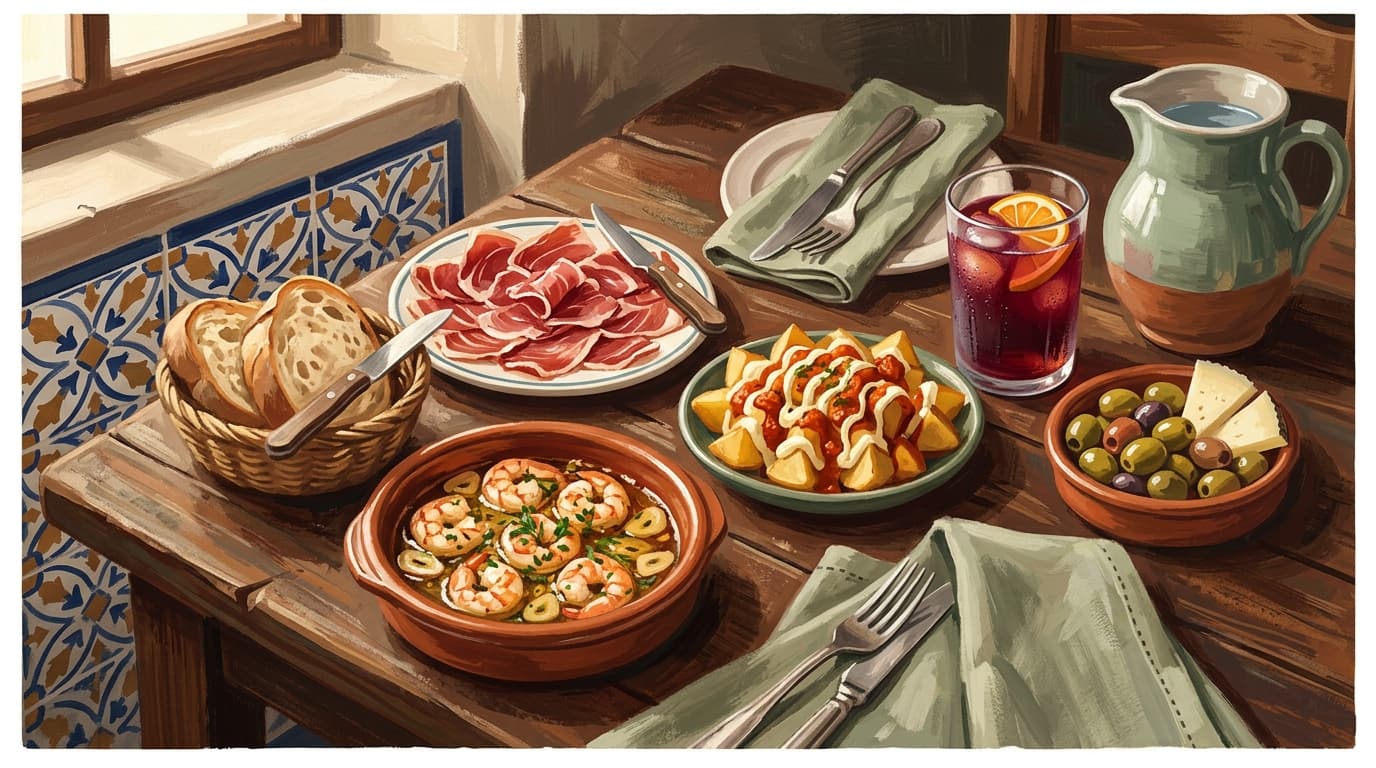
For a quintessential Triana experience, head to Las Golondrinas on Calle Antillano Campos. This multi-level bar is famous for its puntas de solomillo (grilled sirloin tips) and grilled mushrooms with aioli. Another stalwart is Casa Cuesta, located near the market, which has served traditional Andalusian fare since 1880; their spinach with chickpeas is a local favourite. For a more casual meal, the Mercado de Triana itself has several stalls serving fresh oysters, sushi, and traditional fried fish. Finally, Blanca Paloma on Calle San Jacinto offers excellent tapas in an authentic setting that is always popular with locals.
Where to Stay
Staying in Triana allows you to experience the city’s most soulful district after the day-trippers have left. Hotel Ribera de Triana offers modern rooms with expansive views across the river toward the Giralda. For a more traditional atmosphere, Zenit Sevilla features a classic Andalusian courtyard and is centrally located for exploring the pottery workshops. Numerous boutique apartments are also available in the historic corrales, providing a unique opportunity to live alongside the residents of this proud and historic quarter.