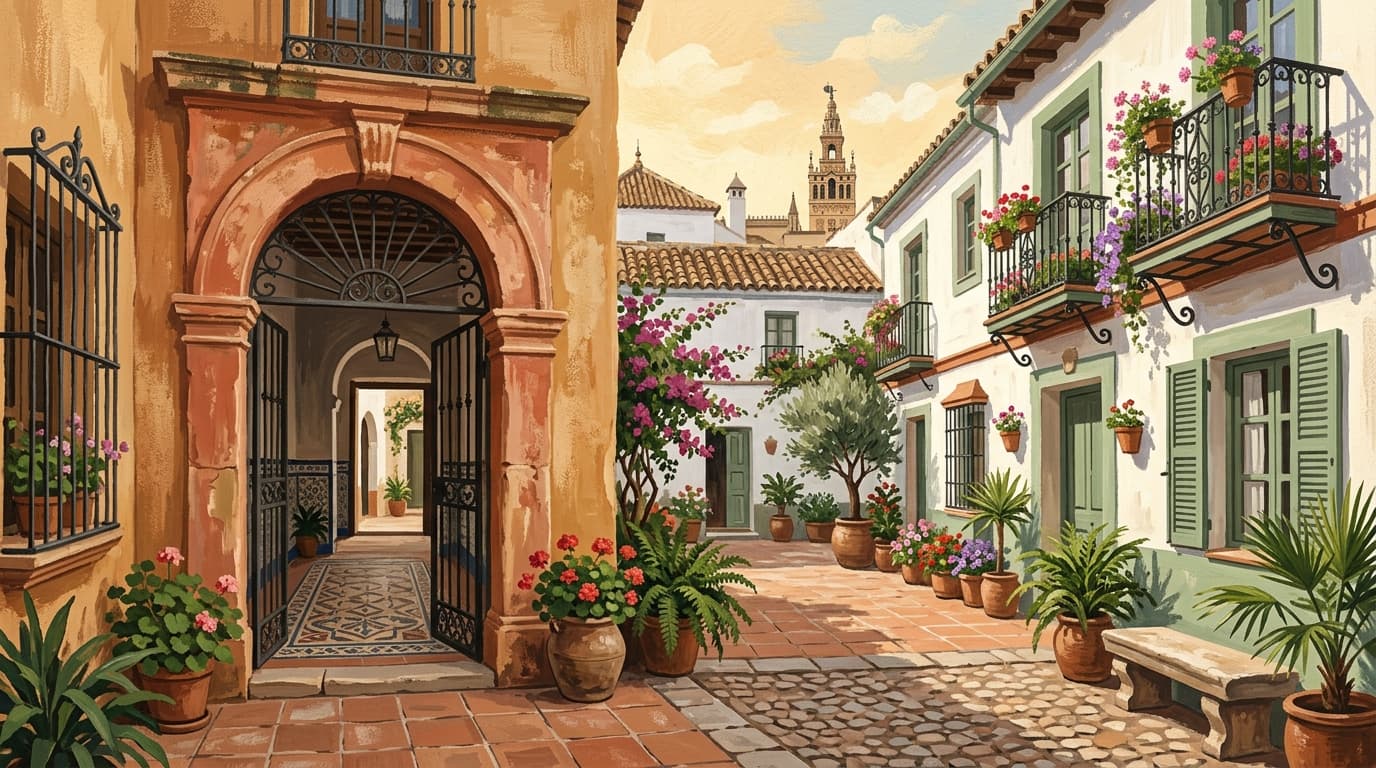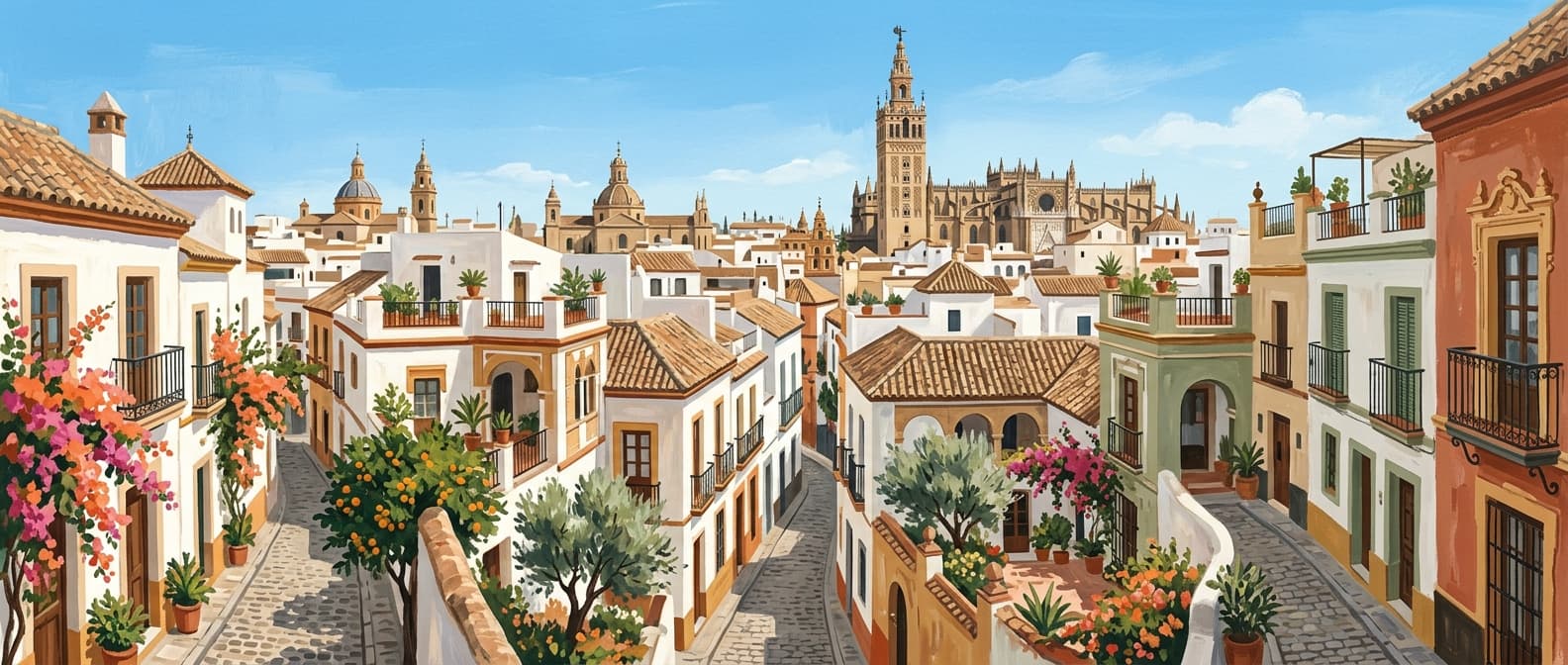
Once the city’s medieval Jewish quarter, the Barrio Santa Cruz is a labyrinth of lime-washed walls and orange-scented squares. It remains the most atmospheric corner of Seville, where the shadows of the past linger in narrow alleys designed to trap the cool breeze.
Walking through the Barrio Santa Cruz is an exercise in losing one’s way, and that is precisely the point. This district, bound by the walls of the Reales Alcázares and the towering presence of the Cathedral, was once the Judería (Jewish Quarter) of Seville. Following the Christian conquest of the city in 1248, King Ferdinand III confined the Jewish population to this area, which flourished until the late 14th century. Today, the neighbourhood is a romantic puzzle of interconnected plazas, wrought-iron balconies dripping with bougainvillaea, and whitewashed facades that reflect the fierce Andalucian sun.
The layout of Santa Cruz is no accident of history. The streets were purposely built to be exceptionally narrow, ensuring that even during the height of a Sevillian summer, the pavements remain shaded. This architectural foresight creates a natural cooling system, making it one of the few places in the city where a midday stroll is comfortable in July. As you navigate these lanes, you will find that the district manages to feel both intimate and grand, transitioning from tiny, quiet courtyards to open squares filled with the sound of trickling fountains.
What to See & Do
Plaza de los Venerables
This is one of the central hubs of the barrio. At its heart sits the Hospital de los Venerables, a 17th-century Baroque building originally designed as a residence for retired priests. The building is renowned for its central courtyard, which features a sunken circular fountain—a rare design in Seville. Inside, the church is decorated with frescoes by Valdés Leal and his son, Lucas Valdés. While the building has recently undergone transitions in its management, it remains a primary example of Sevillian Baroque architecture.
Callejón del Agua
Running alongside the high stone walls of the Alcázar gardens, the "Alley of Water" is so named because it once housed the pipes that carried water to the royal palace. It is a wonderfully cool, shaded passage. On one side, you have the historic fortifications; on the other, the rear patios of grand houses, often visible through heavy iron gates (rejas). These private courtyards, filled with lush greenery and ceramic tiles, offer a glimpse into the traditional domestic life of the city’s aristocracy.
Plaza de Doña Elvira
Widely considered the most beautiful square in the quarter, Plaza de Doña Elvira is the definition of Sevillian charm. It is paved with traditional bricks and tiles, surrounded by orange trees, and lined with benches covered in blue and yellow ceramics. Legend suggests this square was the site of the house of Don Gonzalo de Ulloa, the father of Doña Elvira in the tale of Don Juan Tenorio. It is an ideal spot to sit for twenty minutes and simply soak in the scent of orange blossom.
Jardines de Murillo
Located on the edge of the barrio, these gardens were once part of the Alcázar’s private grounds. They were gifted to the city in the early 20th century and named after the famous painter Bartolomé Esteban Murillo, who lived nearby. The gardens are characterised by their giant ficus trees, whose tangled roots create a sculptural landscape, and a large monument dedicated to Christopher Columbus. It serves as a peaceful transition between the tight streets of the old quarter and the wider avenues of the modern city.
Plaza de Santa Cruz
This quiet square is the site where the original Parish Church of Santa Cruz once stood before it was demolished during the Napoleonic occupation. Today, the square is dominated by the Cruz de Cerrajería, an intricate 17th-century wrought-iron cross. It is also the resting place of Murillo, though his exact remains are unmarked following the destruction of the original church. The square is usually quieter than Plaza de los Venerables and provides a more reflective atmosphere.
Practical Information
The Barrio Santa Cruz is a pedestrian-only zone. While the main thoroughfares like Calle Mateos Gago are accessible, the inner labyrinth is difficult for those with limited mobility due to uneven cobbles and narrow passages.
- How to Get There: The easiest way to arrive is on foot from the Cathedral or the Archivo de Indias. If coming from further afield, take the T1 Tram to the Archivo de Indias stop or the Metro (Line 1) to Puerta de Jerez.
- Parking: Do not attempt to drive into the barrio. The nearest reliable car parks are Parking Cano y Cueto (located near the Murillo Gardens) and Parking Paseo de Colón. Expect to pay around €2.50 per hour or €20–€25 for a full day.
- Hospital de los Venerables: Generally open Monday to Saturday 10:00–19:00 and Sunday 10:00–15:00. Tickets are approximately €10–€12, which typically includes an audio guide. Note that parts of the building may be closed for refurbishment until 2027, so check locally for access to the chapel.
Where to Eat Nearby
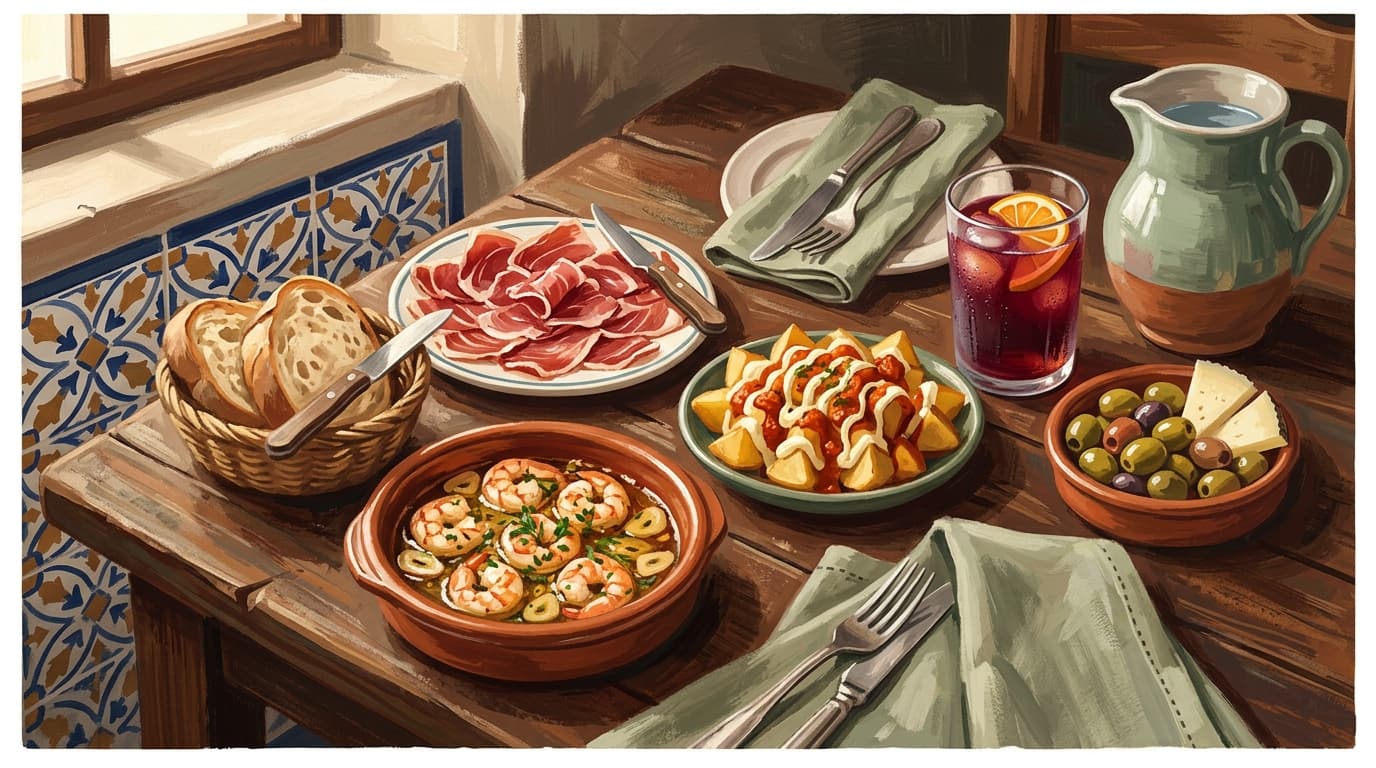
For a traditional experience, Las Teresas (Calle Santa Teresa, 2) is an institution. Established in 1870, it is famous for its jamón ibérico, which hangs in rows from the ceiling. It is best enjoyed standing at the zinc bar with a glass of chilled manzanilla sherry. For something more social, Bodega Santa Cruz (locally known as "Las Columnas") on Calle Rodrigo Caro offers a chaotic, authentic atmosphere where the waiters still chalk your bill directly onto the wooden counter. Try the montadito de pringá (a small sandwich of slow-cooked meats) or the spinach with chickpeas.
Where to Stay
To fully experience the district, stay at Las Casas de la Judería. This is not a single building but a collection of 27 traditional houses linked by a series of tunnels and courtyards. It offers a sense of living in a village within the city. For a more boutique feel with views of the Giralda, Hotel Doña Elvira provides restored rooms situated directly on the barrio's most famous square, allowing you to wake up to the sound of birds in the orange trees.