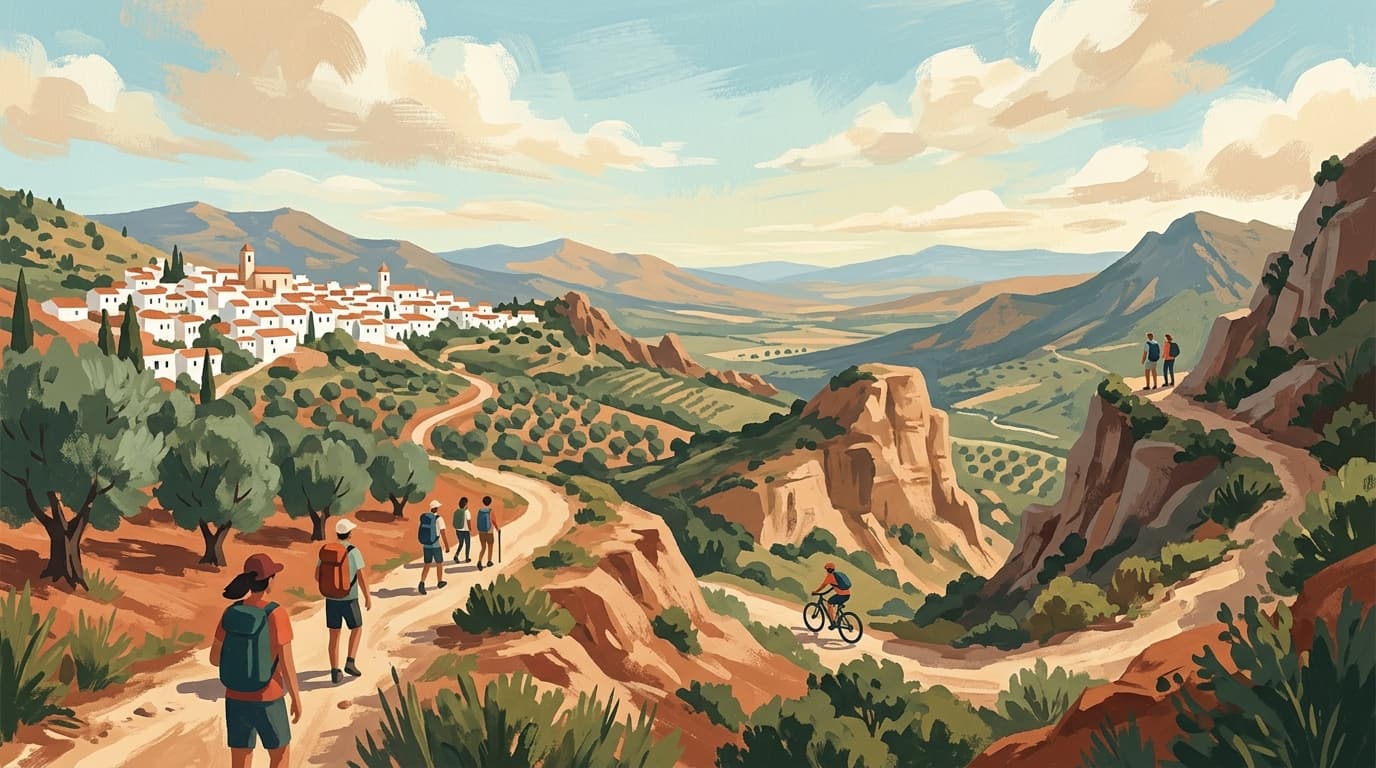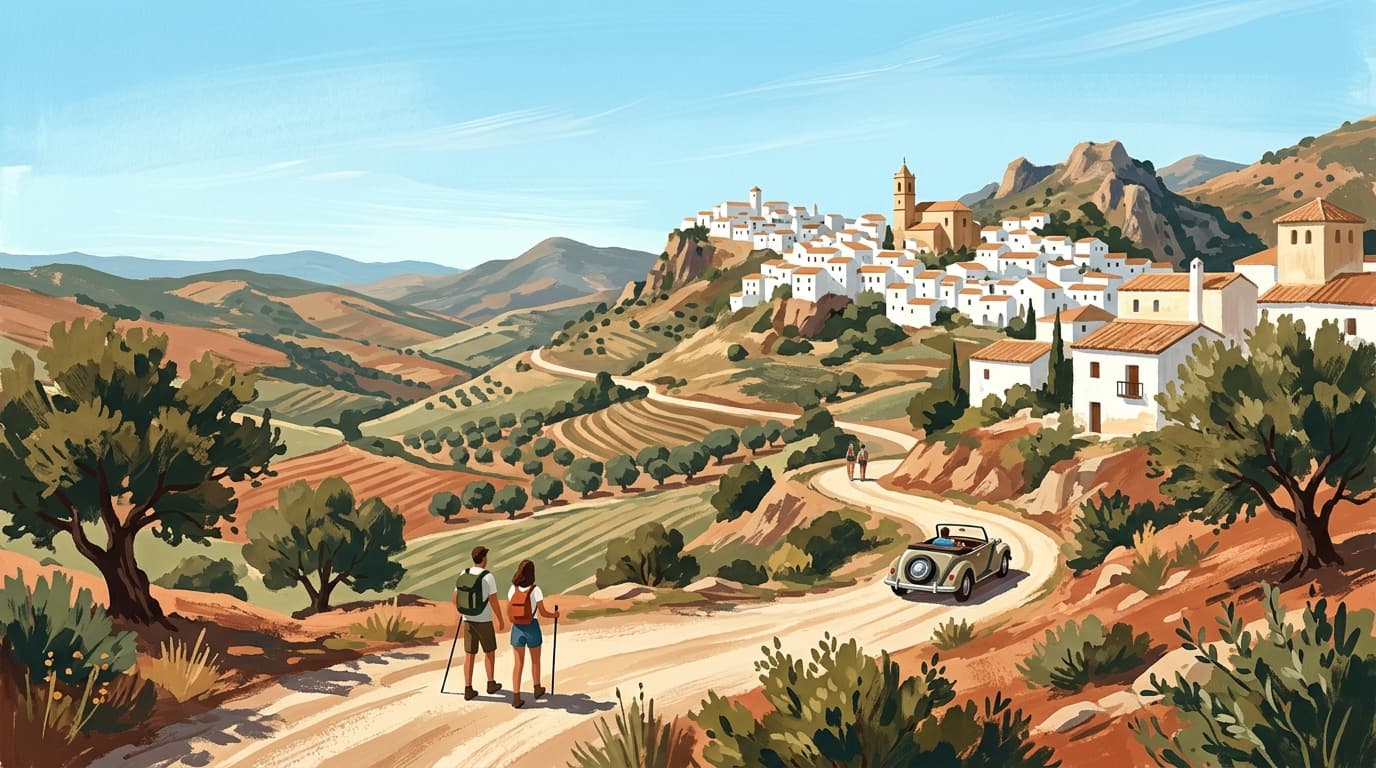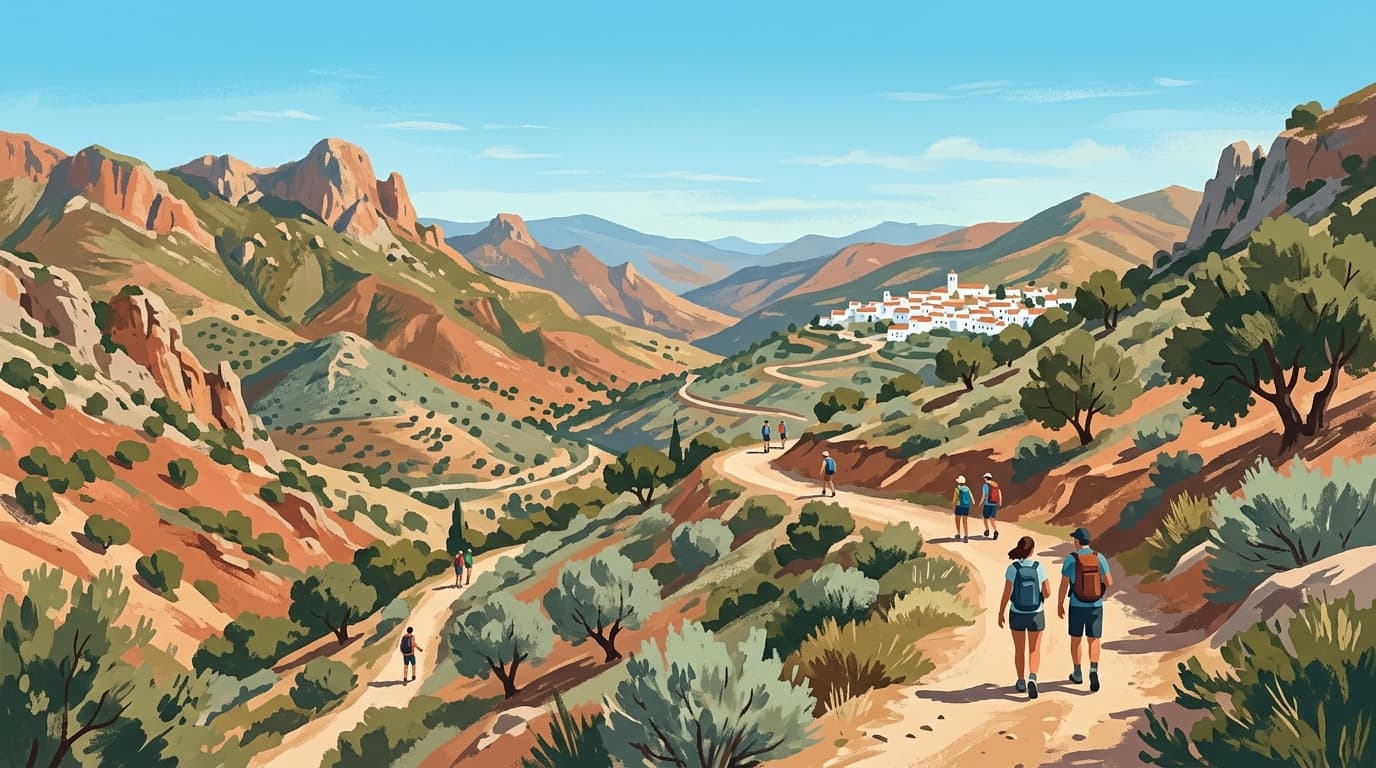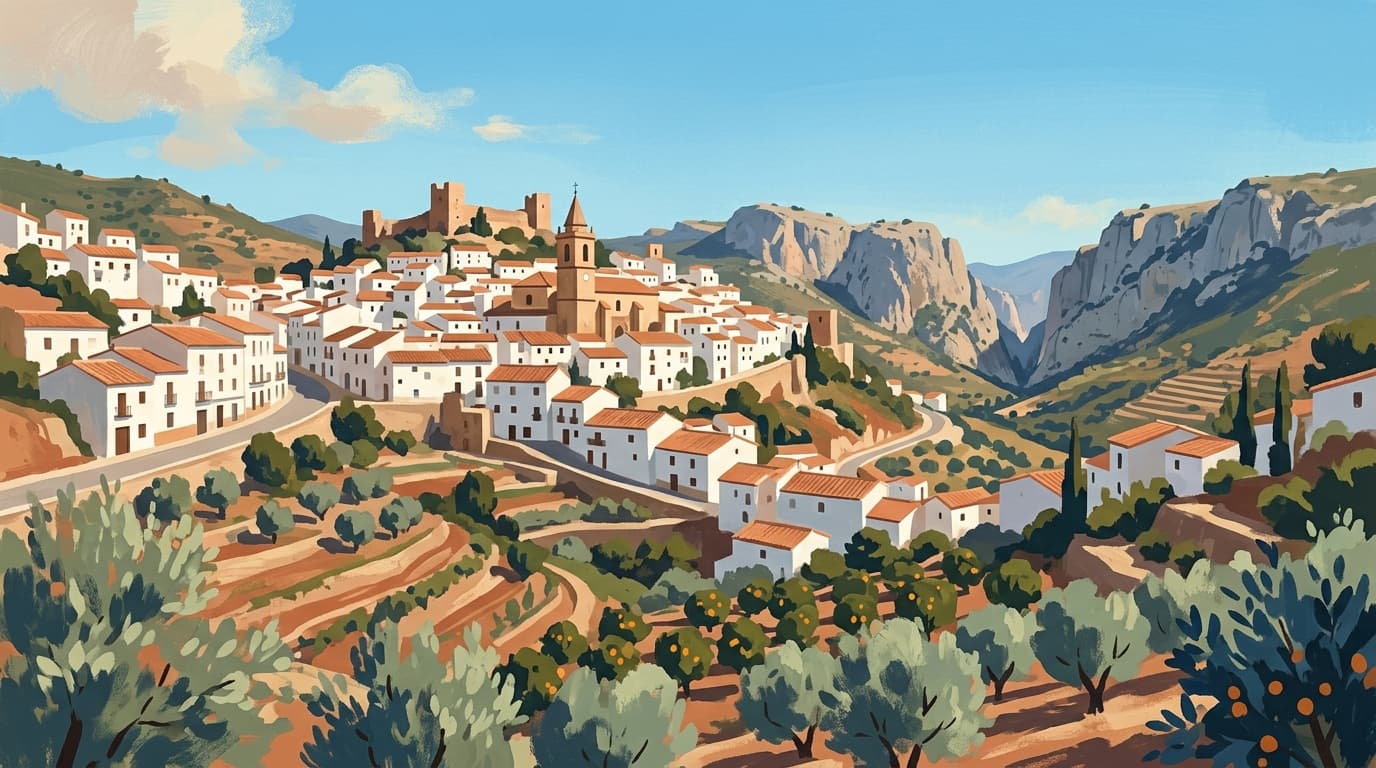
Perched on a limestone ridge above the Guadalhorce Valley, Álora serves as the gateway to the dramatic El Chorro gorge. This landscape of turquoise reservoirs and vertical cliffs provides some of the most impressive outdoor adventure opportunities in southern Spain.
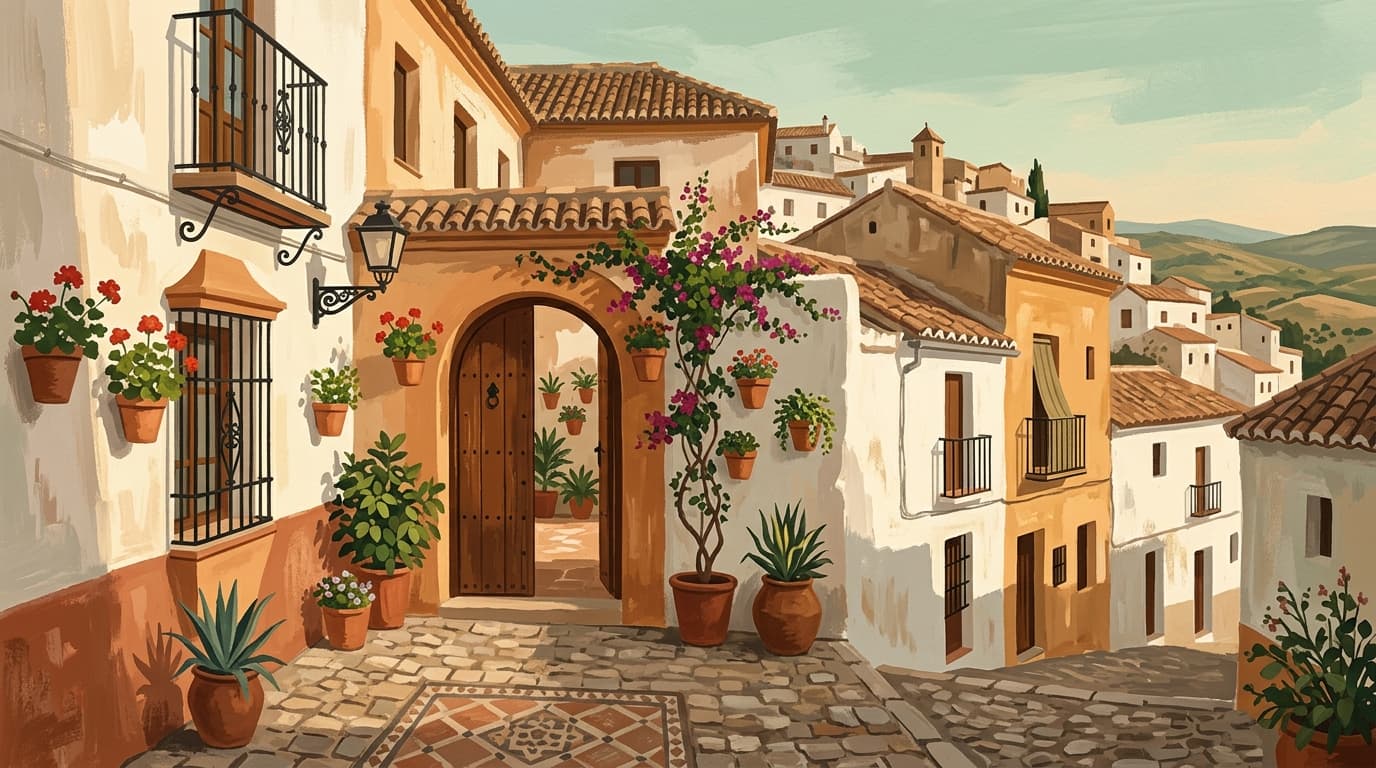
Located roughly 40 kilometres north of Málaga, the municipality of Álora occupies a strategic position where the fertile plains of the Guadalhorce river meet the rugged foothills of the Sierra de Huma. While the town itself is a classic white-washed Andalucían settlement, its outlying hamlet, El Chorro, has evolved into an international hub for climbers, hikers, and nature enthusiasts. The area is defined by its remarkable geology, specifically the Desfiladero de los Gaitanes, a narrow canyon carved by the river over millions of years.
Visitors often arrive expecting only the adrenaline of the Caminito del Rey, but the region offers a deeper experience. From the Moorish history of Álora’s hilltop fortress to the tranquil pine forests surrounding the Conde de Guadalhorce reservoir, the area encourages a slower pace of exploration alongside its high-octane activities. Whether you are navigating the hanging walkways of the gorge or sampling the local citrus-heavy cuisine in a village plaza, this part of inland Málaga provides a stark and welcome contrast to the coastal resorts of the Costa del Sol.
What to See & Do
The Caminito del Rey
Once known as one of the most dangerous paths in the world, the Caminito del Rey (The King's Little Path) was completely restored and reopened in 2015. It is now a safe, though still exhilarating, linear walk that clings to the vertical walls of the Gaitanes Gorge. The path was originally built between 1901 and 1905 to provide access for workers at the hydroelectric plants between Chorro Falls and Gaitanejo Falls. It earned its name after King Alfonso XIII crossed it in 1921 to inaugurate the Conde del Guadalhorce dam.
The route is roughly 7.7 kilometres long, with the most famous section consisting of wooden boardwalks suspended 100 metres above the river. The walk is downwards from the northern entrance (Ardales) to the southern exit (El Chorro). Highlights include the glass floor sections and the final suspension bridge that spans the gorge, offering a dizzying view of the railway line and the emerald water below. You will need to wear a provided safety helmet throughout the trek, and it is essential to book your entry slot well in advance, as tickets often sell out weeks ahead.
Rock Climbing in El Chorro
El Chorro is widely regarded as one of the premier winter rock climbing destinations in Europe. The limestone cliffs offer thousands of bolted sport routes across a variety of sectors, ranging from beginner-friendly slabs to world-class overhangs at sectors like Makinodromo. The sheer variety of aspects means climbers can find shade or sun at almost any time of day. The local climbing community is centred around the El Chorro train station and nearby campsites, where you can find gear shops and experienced guides for hire.
Castillo de las Torres and Álora Village
The village of Álora itself deserves half a day of exploration. Dominating the skyline is the Castillo de las Torres, a fortress with Phoenician, Roman, and Visigothic foundations, though the visible remains are predominantly Moorish. The castle features a unique horseshoe arch, one of the few of its kind remaining in the province. From the ramparts, the view extends across the "Valle del Sol," filled with lemon and orange groves. Adjacent to the castle is the Chapel of Las Torres, which houses the image of the Virgen de las Flores. After visiting the heights, walk down to the Plaza Baja de la Despedía to visit the Museo de Álora, located in a former 16th-century hospital, to understand the archaeological heritage of the Guadalhorce valley.
The Reservoirs and Gaitanejo
To the north of the gorge lie three large reservoirs: Conde de Guadalhorce, Guadalhorce, and Guadalteba. These man-made lakes are surrounded by pine forests and offer a cooler microclimate during the summer months. The Conde de Guadalhorce reservoir is the most popular for visitors, featuring designated picnic areas and several "playas" (beaches) where you can swim or rent kayaks and paddleboards. It is a peaceful spot for birdwatching, with sightings of grey herons and various birds of prey common in the area. The Gaitanejo dam, smaller and more industrial in appearance, marks the starting point for the Caminito del Rey and offers a look at the early 20th-century engineering that transformed this region.
Practical Information
Caminito del Rey Tickets: General entry is €10, while guided tours are usually €18. Tickets must be booked via the official website. The site is closed on Mondays, 1st January, and 24th, 25th, and 31st December. If tickets are sold out online, some local hotels and agencies in Álora often have small allocations for their guests.
Opening Times: The Caminito typically opens at 09:00, with the last entry varying between 15:30 and 17:00 depending on the season. The Álora Castle is generally open from 10:00 to 14:00 and 16:00 to 18:00 (later in summer), though it is wise to check locally as hours can fluctuate.
How to Get There: From Málaga city, the C1 Cercanías train runs to Álora village. For El Chorro and the Caminito del Rey, take the regional Media Distancia train (direction Seville or Ronda) which stops at the "El Chorro-Caminito del Rey" station. The journey takes approximately 40 minutes. If driving from Málaga, take the A-357 towards Cartama and follow signs for Álora and then El Chorro.
Parking & Shuttle Bus: If you are doing the Caminito del Rey, it is best to park at the visitor centre (located between the reservoirs and the northern access) for a fee of €2. A shuttle bus (€2.50) runs regularly between the southern exit in El Chorro and the northern entrance in Ardales, allowing you to return to your vehicle or the train station.
Where to Eat Nearby
For a traditional experience in Álora, Restaurante Los Caballos is a local institution. They specialise in Sopa Perota, a hearty peasant dish made with bread, tomatoes, peppers, and onions, traditionally served to field workers. It is usually accompanied by seasonal fruits like grapes or citrus. Down in El Chorro, Restaurante La Garganta offers a more elevated dining experience with a terrace overlooking the gorge. Their menu features local meats, such as slow-cooked goat (chivo lechal) and wild boar. For a quick bite, Restaurante El Mirador near the reservoirs provides simple grilled meats and salads with excellent views of the turquoise water.
Where to Stay
For those focused on the Caminito del Rey or climbing, the Complejo Turístico La Garganta is the most convenient option, situated in a converted flour mill right next to the El Chorro train station. It offers apartments and rooms with industrial-chic decor. For a more traditional feel, look for rural guest houses in the outskirts of Álora village, such as Hostal Durango, or boutique rural hotels that provide easy access to the surrounding hiking trails and the village’s evening tapas scene.